
Catalogue Search | MBRL


Are you sure you want to remove the book from the shelf?

{{itemTitle}}
1,092
result(s) for
"Telephone Emergency reporting systems."
Sort by:

Mobile technology and the transformation of public alert and warning
\"This timely book provides the inside story of the development of mobile public alert and warning technology in the United States and addresses similar systems being used in Australia, Canada, Japan, and the Netherlands\"-- Provided by publisher.
Book
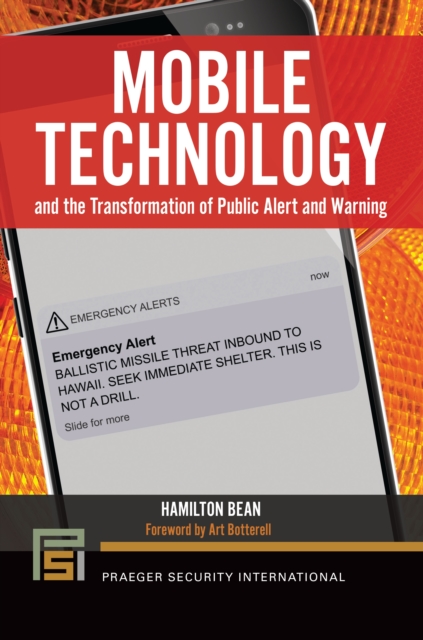
Mobile Technology and the Transformation of Public Alert and Warning
This timely book provides the inside story of the development of mobile public alert and warning technology in the United States and addresses similar systems being used in Australia, Canada, Japan, and the Netherlands. This book provides a comprehensive account of how mobile-smartphone systems are transforming the practice of public alert and warning in the United States. Recent events have vaulted mobile alert and warning technology to the forefront of public debates concerning the hazards of the digital age. False alarms of ballistic missile attacks on Hawaii and Japan, the non-use of mobile alerts during the Northern California wildfires, and the role this technology plays in supporting police manhunts and counterterrorism efforts have prompted reconsideration of how these systems are used. Drawing upon interviews with officials, executives, experts, and citizens, the book provides an in-depth analysis of the events and contexts influencing the trajectory of mobile public alert and warning and charts a course for its improvement. The book first introduces readers to the high stakes involved in the transformation of public alert and warning, explaining how new research is revealing the benefits, limitations, and risks of mobile technology in the disaster communication context. Three case studies then illustrate issues of risk, trust, and appropriateness in mobile public alert and warning.
eBook
Telephone triage protocols for nurses
Performing triage requires the ability to make quick, evidence-based decisions based on limited information.Nurses are often required to preform triage either over the phone, in urgent care settings, in the emergency department, and even in office settings.This reference provides over 200 triage protocols for evaluating a person's symptoms.
eBook

Telephone triage protocols for nurses
\"Performing telephone triage requires the ability to make quick and effective decisions based on limited information.This rapid-access resource delivers over 200 triage protocols for evaluating patients' symptoms over the telephone. Each symptom entry lists questions, grouped by urgency level, to determine whether the caller should seek emergency care immediately, seek medical care the same day, call back for appointment, or follow home care instructions. Detailed home care instructions are then provided. Simple, direct, and useful, it is the most comprehensive and user-friendly telephone triage book available. This new edition features several new protocols--Swine Flu (H1N1 virus), Bedbug Problems, Tattoo Problems, and Emergency Contraception--as well as new information in the introductory chapter about program development, management issues, and staff development, including training. Also featured is a new reminder about documentation in each protocol as well as a new anatomic Table of Contents and expanded home care instructions\"--
eBook

Increasing emergency number utilisation is not driven by low-acuity calls: an observational study of 1.5 million emergency calls (2018–2021) from Berlin
Background
The Emergency Medical Service (EMS) in Germany is increasingly challenged by strongly rising demand. Speculations about a greater utilisation for minor cases have led to intensive media coverage, but empirical evidence is lacking. We investigated the development of low-acuity calls from 2018 to 2021 in the federal state of Berlin and its correlations with sociodemographic characteristics.
Methods
We analysed over 1.5 million call documentations including medical dispatch codes, age, location and time using descriptive and inferential statistics and multivariate binary logistic regression. We defined a code list to classify low-acuity calls and merged the dataset with sociodemographic indicators and data on population density.
Results
The number of emergency calls (phone number 112 in Germany) increased by 9.1% from 2018 to 2021; however, the proportion of low-acuity calls did not increase. The regression model shows higher odds of low-acuity for young to medium age groups (especially for age 0–9, OR 1.50 [95% CI 1.45–1.55]; age 10–19, OR 1.77 [95% CI 1.71–1.83]; age 20–29, OR 1.64 [95% CI 1.59–1.68] and age 30–39, OR 1.40 [95% CI 1.37–1.44];
p
< 0.001, reference group 80–89) and for females (OR 1.12 [95% CI 1.1–1.13],
p
< 0.001). Odds were slightly higher for calls from a neighbourhood with lower social status (OR 1.01 per index unit increase [95% CI 1.0–1.01],
p
< 0.05) and at the weekend (OR 1.02 [95% CI 1.0–1.04,
p
< 0.05]). No significant association of the call volume with population density was detected.
Conclusions
This analysis provides valuable new insights into pre-hospital emergency care. Low-acuity calls were not the primary driver of increased EMS utilisation in Berlin. Younger age is the strongest predictor for low-acuity calls in the model. The association with female gender is significant, while socially deprived neighbourhoods play a minor role. No statistically significant differences in call volume between densely and less densely populated regions were detected. The results can inform the EMS in future resource planning.
Journal Article

Spatial agglomeration in the use of emergency telephone consultation services in a prefecture of Japan: a geographic information system-based spatial statistical analysis
Background
Emergency telephone consultation (ETC) services are telephone triage systems used in emergency care. The number of local governments introducing these services has gradually increased in Japan, and approximately 47% of the population can access it. However, ETC use is known to be low in Japan and may be unevenly distributed among municipalities. This study examines the spatial agglomeration of ETC use with spatial statistical analysis.
Methods
This study evaluated ETC service users during the first year of its introduction in Saitama Prefecture, Japan (2014–2015). The number of age-adjusted ETC service users per 1,000 individuals by municipality during the observational period was calculated by the direct method, using the 2015 Model Population of Japan as the standard. The spatial patterns of ETC service usage were analyzed using spatial autocorrelation and hot spot analyses. Based on hot spot analysis, municipalities were categorized as hot spots, cold spots, and intermediate (other) spots. The population density of the three groups was analyzed by multiple comparisons.
Results
Overall, 22,073 ETC users were recorded during the study period. After excluding users with missing information, 15,257 users (69%) (median age = 43 [interquartile range: 32–61] years, men = 44%) were included in the analysis. The mean number of age-adjusted ETC service users per 1,000 individuals by municipality was 1.8 (range: 0.13–4.31). Spatial autocorrelation analysis revealed spatial agglomeration in ETC use (Global Moran’s I = 0.58, z-score = 7.27,
p
< 0.001). Hot spot analysis detected hot and cold spots in municipalities in the eastern (urban cities) and western (mountainous areas) parts of the prefecture, respectively. The hot spot areas exhibited significantly higher population density than the intermediate and cold spot areas (
p
= 0.009 and
p
< 0.001, respectively).
Conclusions
The use of ETC services was higher in urban areas than in mountainous areas. Further research is required to determine the causes of the uneven regional distribution of ETC use. However, these findings offer insights into strategies for promoting ETC services in different areas. Increased publicity activities are required in the mountainous areas to encourage residents to use ETCs.
Journal Article

Methods for improving the identification of acute stroke during ambulance calls: A scoping review
Accurately identifying strokes during ambulance calls remains challenging, leading to low diagnostic accuracy and delays in dispatching appropriate services. Limited evidence exists regarding methods for improving call handlers' stroke recognition. This scoping review explores methods for enhancing stroke identification during emergency calls in ambulance control centres (ACCs).
We conducted a scoping review following the methodology of the Joanna Briggs Institute and adhered to PRISMA-ScR guidelines. A systematic search was performed across five databases: Embase, Medline, Scopus, Web of Science, and CINAHL, also grey literature sources, covering publications from January 1964 to July 2024. We included studies that examined methods to improve stroke identification during emergency calls in ACCs. To assess the effectiveness of these methods, eligible studies must evaluate at least one of the following outcomes: accuracy of stroke diagnosis, time to diagnosis, effectiveness of staff training, and acceptability of identification techniques. Two reviewers independently screened the studies, extracted the data, and conducted an inductive thematic analysis to identify common themes.
Of the 3,619 studies identified, seven met the inclusion criteria. Included studies focused on technology and algorithms (n = 3), training and educational programs (n = 2), and improved triage tools (n = 2) to enhance stroke identification during emergency calls to ACCs. Studies on technology and algorithms have reported increased stroke identification sensitivity and positive predictive value (PPV) when using new algorithms compared to standard protocols. Training programs have led to improved dispatcher sensitivity in stroke recognition. Improved triage tools also reduce time-to-diagnosis and facilitate quicker emergency responses.
This review highlights several methods for improving stroke identification in ACCs. Despite improvements in PPV, sensitivity, and diagnosis time, the lack of generalised standards, single-centre studies, and various population characteristics hinder broader impact. Future research should prioritise well-designed studies with standardised benchmarks to determine effectiveness, enabling effective prehospital stroke identification strategies.
Journal Article
Significant acceleration of emergency response using smartphone geolocation data and a worldwide emergency call support system
When patients are disorientated or experience language barriers, it is impossible to activate the emergency response system. In these cases, the delay for receiving appropriate help can extend to several hours.
A worldwide emergency call support system (ECSS), including geolocation of modern smartphones (GPS, WLAN and LBS), was established referring to E911 and eCall systems. The system was tested for relevance in quickly forwarding abroad emergency calls to emergency medical services (EMS).
To verify that geolocation data from smartphones are exact enough to be used for emergency cases, the accuracy of GPS (global positioning system), Wi-Fi (wireless LAN network) and LBS (location based system) was tested in eleven different countries and compared to actual location. The main objective was analyzed by simulation of emergencies in different countries. The time delay in receiving help in unsuccessful emergency call cases by using the worldwide emergency call support system (ECSS) was measured.
GPS is the gold standard to locate patients with an average accuracy of 2.0 ± 3.3 m. Wi-Fi can be used within buildings with an accuracy of 7.0 ± 24.1 m. Using ECSS, the emergency call leads to a successful activation of EMS in 22.8 ± 10.8 min (Median 21 min). The use of a simple app with one button to touch did never cause any delay.
The worldwide emergency call support system (ECSS) significantly improves the emergency response in cases of disorientated patients or language barriers. Under circumstances without ECSS, help can be delayed by 2 or more hours and might have relevant lifesaving effects. This is the first time that Wi-Fi geolocation could prove to be a useful improvement in emergencies to enhance GPS, especially within or close to buildings.
Journal Article

Protocol for an observational prospective study on the use and impact of over-the-phone interpretation in 911 calls with language discordance
Background
There are more than 25.9 million people in the U.S. who experience limited English proficiency (LEP). Compared with English-speaking callers, LEP individuals contacting 911 are less likely to receive and perform prearrival instructions and are more likely to experience delays and adverse health outcomes. While we know that using interpreters in clinics improves care delivery, patient satisfaction, and health outcomes, no similar gold standard has been established for overcoming language barriers in emergency 911 calls. The objective of this study is to examine the relationships between the use of over-the-phone interpretation (OPI) and various call characteristics, communication strategies, and dispatch outcomes to better inform public safety telecommunicator (PST) decision making on when and when not to connect to OPI.
Methods
This is an observational prospective study based on the Feldman-Stewart Framework of Patient-Provider communication. Through meticulous coding, we will transform linguistic data from a sample of 660 real-life LEP 911 calls collected from four Emergency Communication Centers (ECCs) into quantitative data which will be used to examine the relationships between caller characteristics, OPI use, and associated communication and dispatch outcomes. Primary outcome measures are the time to first dispatch, the time to delivering medically relevant prearrival instructions, and triage errors. Primary analyses will use multilevel linear and logistic regression models to examine the relationships between the outcome variables and various predictors, including the use of and time to accessing OPI, in addition to alternative strategies for establishing language concordance (e.g., asking for a lay interpreter). Secondary analyses will explore possible mediators and effect modifiers including but not limited to caller emotionality, the severity and complexity of the primary complaint, and other caller- and context-specific characteristics.
Discussion
The results of this study will shed light on the call characteristics that are associated with the use of OPI and better dispatch outcomes for LEP callers. Our findings will inform future training and policy for 911 PSTs and LEP language communities, with the goal of reducing delays and disparities that result from language barriers in the context of emergency dispatch.
Journal Article

Medical dispatchers’ perception of the interaction with the caller during emergency calls - a qualitative study
Background
Medical dispatching is a highly complex procedure and has an impact upon patient outcome. It includes call-taking and triage, prioritization of resources and the provision of guidance and instructions to callers. Whilst emergency medical dispatchers play a key role in the process, their perception of the process is rarely reported. We explored medical dispatchers’ perception of the interaction with the caller during emergency calls. Secondly, we aimed to develop a model for emergency call handling based on these findings.
Methods
To provide an in-depth understanding of the dispatching process, an explorative qualitative interview study was designed. A grounded theory design and thematic analysis were applied.
Results
A total of 5 paramedics and 6 registered nurses were interviewed. The emerging themes derived from dispatchers’ perception of the emergency call process were related to both the callers and the medical dispatchers themselves, from which four and three themes were identified, respectively. Dispatchers reported that for callers, the motive for calling, the situation, the perception and presentation of the problem was influencing factors. For the dispatchers the expertise, teamwork and organization influenced the process. Based on the medical dispatchers´ perception, a model of the workflow and interaction between the caller and the dispatcher was developed based on themes related to the caller and the dispatcher.
Conclusions
According to medical dispatchers, the callers seem to lack knowledge about best utilization of the emergency number and the medical dispatching process, which can be improved by public awareness campaigns and incorporating information into first aid courses. For medical dispatchers the most potent modifiable factors were based upon the continuous professional development of the medical dispatchers and the system that supports them. The model of call handling underlines the complexity of medical dispatching that embraces the context of the call beyond clinical presentation of the problem.
Journal Article