
Catalogue Search | MBRL


Are you sure you want to remove the book from the shelf?

{{itemTitle}}
1,522
result(s) for
"Telescopes History."
Sort by:

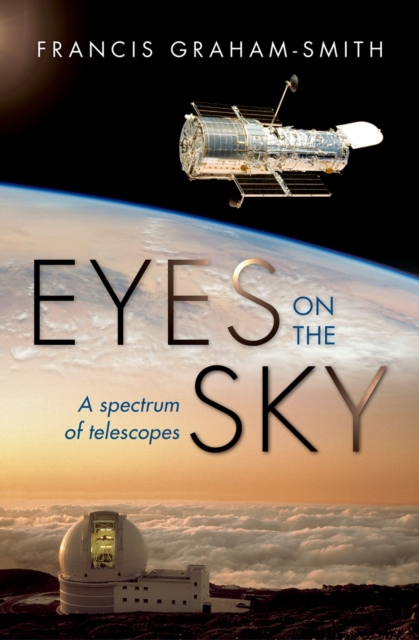
Eyes on the sky : a spectrum of telescopes
Astronomy is experiencing a golden age, with a new generation of innovative telescopes yielding a flood of information on the Universe. This book traces the development of telescopes from Galileo to the present day, and explains the basic principles of telescopes that operate in different parts of electromagnetic spectrum.
eBook

Classic telescopes : a guide to collecting, restoring, and using telescopes of yesteryear
This text describes the telescopes built by such renowned makers as Dollond, Alvan Clark, Thomas Cooke & Sons, Carl Zeiss and others. It includes interviews with collectors of classic telescopes, and tips for readers on prospecting for and acquiring their own.
Book
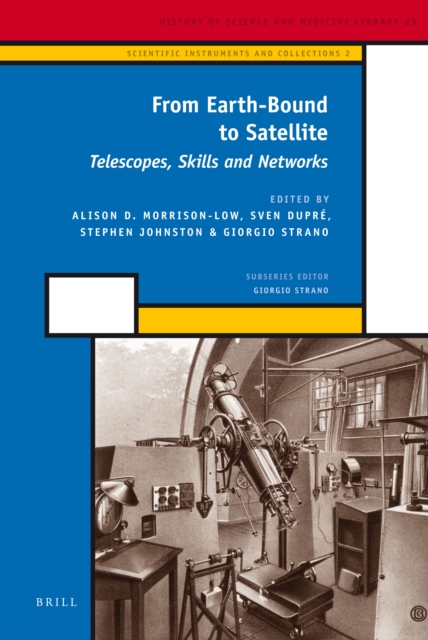
From earth-bound to satellite : telescopes, skills and networks
Marking the anniversary of the telescope's invention, these collected essays highlight a number of significant historical episodes concerning this well-loved instrument, which has played a crucial role in Man's thinking about his position - literally and philosophically - in the universe.
eBook

A history of optical telescopes in astronomy
\"This book is uniquely about the relationship between the optical telescope and astronomy as they developed together. It covers the time between the telescope's pivotal invention in the 1600's up to the modern era of space-based telescopes. Over the intervening centuries, there were huge improvements in the optical resolution of telescopes, along with changes in their positioning and nature of application that forever altered the course of astronomy. For a long time, the field was an exclusive club for self-motivated stargazers who could afford to build their own telescopes. Many of these leisure-time scholars left their mark by virtue of their meticulous observations and record keeping. Although they would now be considered amateurs, these figures and their contributions were pivotal and are covered in this book alongside professionals, for the first time giving a complete picture of the history of telescopic science.\"--Back cover.
Book

The telescope : a short history
\"As an instrument of science and navigation the telescope was at the forefront of discovery. Even today it is vital to modern understanding of space and the origins of matter. The story of its development is a fascinating narrative of scientific endeavour, exploration and ingenuity, encompassing the lives of scientists and astronomers such as Galileo, Newton, William Herschel and Edmund Halley as well as the exploits of naval officers and explorers like Cloudisley Shovell and James Cook. Richard Dunn presents an engaging historical survey that traces the telescope from its invention in 1608 to its contemporary applications in astrophysics. Profusely illustrated with exquisite examples of telescopes and other prints, drawings and artworks, The Telescope will appeal to all those with an interest in science, discovery and exploration, maritime history, seafaring or astronomy\" -- Publisher description.
Book


Working at the boundary
This study shows how occupational, organizational and institutional boundaries can be reworked to enable innovation. Based on an historical case study of NASA’s Spitzer Space Telescope, which spanned three decades and two dozen organizations, I show how megaproject members made boundaries a target of strategic action. Megaprojects, in particular, require us to think about boundaries at multiple levels as they commonly draw on expertise and resources from different disciplines, organizations, and institutional domains. This case reveals several mechanisms by which boundaries can be modified to coordinate diverse innovation partners, from reconfiguring the ways members relate to one another (splicing, fitting and channeling) to reshaping the environment they work in (softening, fusing and corralling). Overall, this study contributes to our understanding of how actors make room for new ideas and cause institutional change as part of innovation processes. By treating boundaries as malleable and multiplex, I extend organizational theory, which tends to view boundaries as given and things to be spanned. I extend the STS literature that takes boundaries as fluid, identifying several mechanisms of making and unmaking them. A more dynamic treatment of boundaries is called for in both innovation research and practice, and this study opens a path for research that looks not only at boundary objects but also boundary actions, and moves from boundary organizations to boundary organizing.
Journal Article