
Catalogue Search | MBRL


Are you sure you want to remove the book from the shelf?

{{itemTitle}}
4,432
result(s) for
"Television Philosophy."
Sort by:

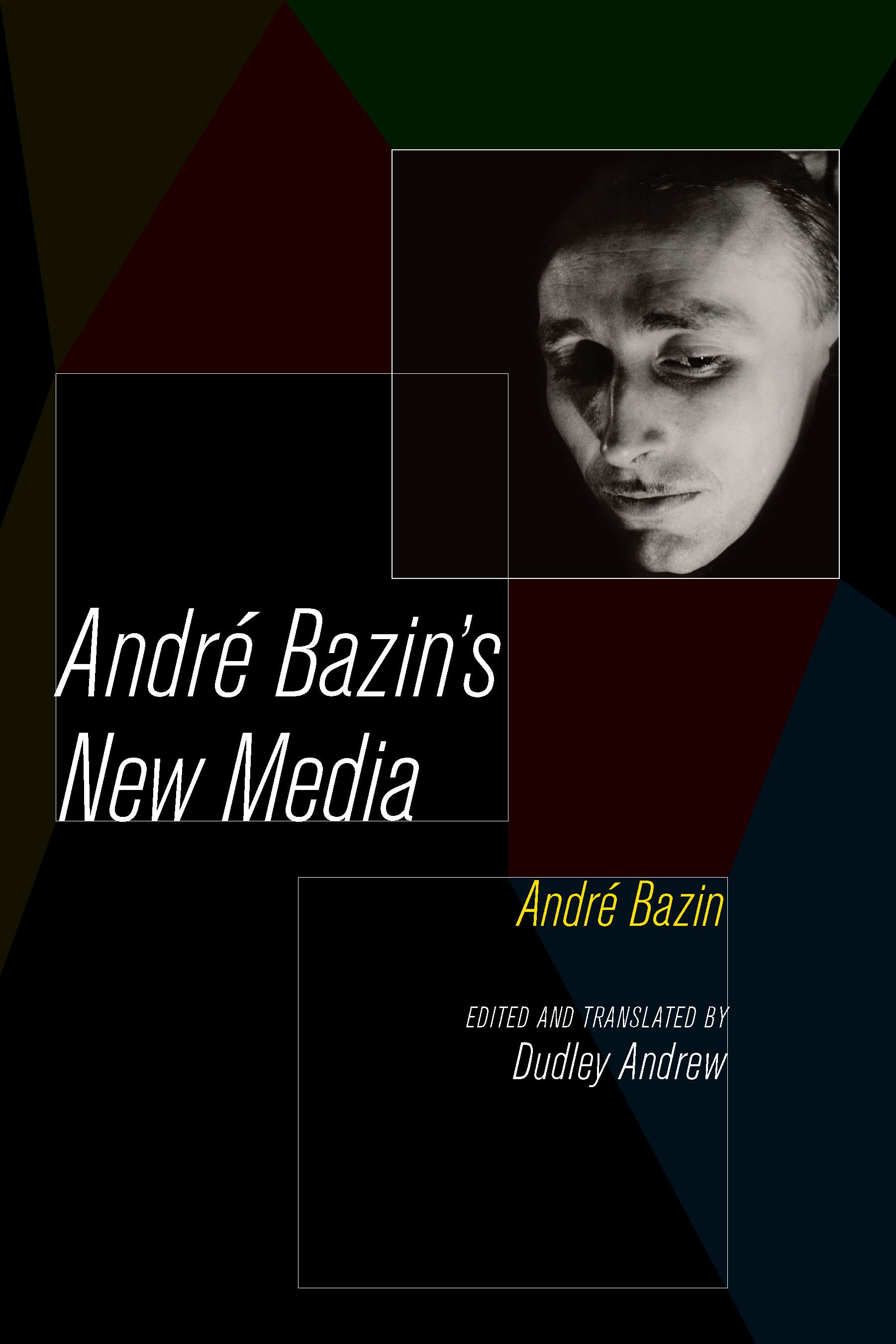
Andre Bazin's new media
André Bazin's writings on cinema are among the most influential reflections on the medium ever written. Even so, his critical interests ranged widely and encompassed the \"new media\" of the 1950s, including television, 3D film, Cinerama, and CinemaScope. Fifty-seven of his reviews and essays addressing these new technologies-their artistic potential, social influence, and relationship to existing art forms-have been translated here for the first time in English with notes and an introduction by leading Bazin authority Dudley Andrew. These essays show Bazin's astute approach to a range of visual media and the relevance of his critical thought to our own era of new media. An exciting companion to the essentialWhat Is Cinema?volumes,André Bazin's New Mediais excellent for classroom use and vital for anyone interested in the history of media.
eBook


Television and the public sphere : citizenship, democracy and the media
Peter Dahlgren clarifies the underlying theoretical concepts of civil society and the public sphere, and relates these to a critical analysis of the practice of television as journalism, as information and as entertainment. He demonstrates the limits and the possibilities of the television medium and the formats of popular journalism.
eBook

Law and tv series
The aim of this essay is to analyse TV series from the point of view of philosophical aesthetics. Aiming to show how philosophy may contribute to \"seriality studies\", Andrzejewski and Salwa focus on seriality as a factor which defines the structure of TV series, their aesthetic properties, as well as their modes of reception. TV series have been studied within media theory and cultural studies for quite a long time, but they have been approached mainly in terms of their production, distribution, and consumption across various and changing social contexts. Following the agenda of philosophical aesthetics Andrzejewski and Salwa claim instead seriality implies a sort of normativity, i.e. that it is possible to indicate what features a television show has to have in order to be a serial show as well as the manner in which it should be watched if it is to be experienced as a serial work.
Book
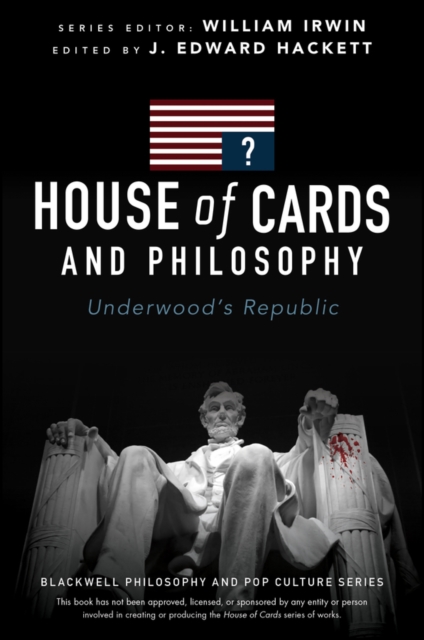
House of Cards and Philosophy
Is Democracy overrated?
Does power corrupt? Or do corrupt people seek power?
Do corporate puppet masters pull politicians' strings?
Why does Frank talk to the camera?
Can politics deliver on the promise of justice?
House of Cards depicts our worst fears about politics today. Love him or loathe him, Frank Underwood has charted an inimitable course through Washington politics. He and his cohorts depict the darkest dealings within the gleaming halls of our most revered political institutions.
These 24 original essays examine key philosophical issues behind the critically-acclaimed series—questions of truth, justice, equality, opportunity, and privilege. The amoral machinations of Underwood, the ultimate anti-hero, serve as an ideal backdrop for a discussion of the political theories of philosophers as diverse as Plato, Aristotle, Nietzsche, Machiavelli, Hobbes, and Marx. From political and corporate ethics, race relations, and ruthless paragmatism to mass media collusion and sexual politics, these essays tackle a range of issues important not only to the series but to our understanding of society today.
eBook


Complex TV
Over the past two decades, new technologies, changing viewer practices, and the proliferation of genres and channels has transformed American television. One of the most notable impacts of these shifts is the emergence of highly complex and elaborate forms of serial narrative, resulting in a robust period of formal experimentation and risky programming rarely seen in a medium that is typically viewed as formulaic and convention bound.
Complex TVoffers a sustained analysis of the poetics of television narrative, focusing on how storytelling has changed in recent years and how viewers make sense of these innovations. Through close analyses of key programs, includingThe Wire, Lost, Breaking Bad, The Sopranos, Veronica Mars, Curb Your Enthusiasm, and Mad Menthe book traces the emergence of this narrative mode, focusing on issues such as viewer comprehension, transmedia storytelling, serial authorship, character change, and cultural evaluation. Developing a television-specific set of narrative theories,Complex TVargues that television is the most vital and important storytelling medium of our time.
eBook

The Big bang theory and philosophy : rock, paper, scissors, Aristotle, Locke
\"There are books that debate math, science, and history; there are books that help you build walls or even pyramids; there are even books that discuss Neanderthals with tools and autotrophs that drool. This book discusses philosophy. But you don't need an IQ of 187 to enjoy it. I swear to cow! As you'll see, the philosophy is theoretical, but the fun is real\"-- Provided by publisher.
Book
