
Catalogue Search | MBRL


Are you sure you want to remove the book from the shelf?

{{itemTitle}}
1,094
result(s) for
"Television and women United States History."
Sort by:

Stealing the show : how women are revolutionizing television
\"Shonda Rhimes, Lena Dunham, Tina Fey, Amy Schumer, Mindy Kaling: these ... women have shaken up the entertainment landscape, making it look like an equal opportunity dream factory. But things weren't always this rosy. It took decades of determination in the face of preconceived ideas and outright prejudice to reach this new era. In this ... book, veteran journalist Joy Press tells the story of the maverick women who broke through the barricades, starting with Roseanne Barr (Roseanne) and Diane English (Murphy Brown), whose iconic shows redefined America's idea of 'family values' and incited controversy that reached as far as the White House\"-- Provided by publisher.
Book

Domesticating the airwaves : broadcasting, domesticity and femininity
Using case studies and analytical overviews this book explores the relationship between broadcasting and the intimate domestic sphere into which it is broadcast.It focuses on the period from the 1920s, when broadcasting was established in the UK, to the present day when both domesticity and broadcasting have become areas of anxiety and.
eBook

Gladiators in suits : race, gender, and the politics of representation in Scandal
\"\"Gladiators in Suits\" is a contributed volume that provides an opportunity to analyze the communication, politics, stereotypes, and genre techniques featured in the television series \"Scandal\" while raising key questions about the intersections of race, gender, sexuality, and viewing audiences. The essays included range from critical looks at various members of Scandal's ensemble, to in-depth analyses of the show's central themes, to audience reception studies via interviews and social media analysis. Additionally, the volume contributes to research on femininity, masculinity, and representations of Black womanhood on television\"-- Provided by publisher.
Book

Watching Women's Liberation, 1970
In 1970, ABC, CBS, and NBC--the \"Big Three\" of the pre-cable television era--discovered the feminist movement. From the famed sit-in at Ladies Home Journal to multi-part feature stories on the movement's ideas and leaders, nightly news broadcasts covered feminism more than in any year before or since, bringing women's liberation into American homes. In Watching Women's Liberation, 1970: Feminism's Pivotal Year on the Network News , Bonnie J. Dow uses case studies of key media events to delve into the ways national TV news mediated the emergence of feminism's second wave. First legitimized as a big story by print media, the feminist movement gained broadcast attention as the networks eagerness to get in on the action was accompanied by feminists efforts to use national media for their own purposes. Dow chronicles the conditions that precipitated feminism's new visibility and analyzes the verbal and visual strategies of broadcast news discourses that tried to make sense of the movement. Groundbreaking and packed with detail, Watching Women's Liberation, 1970 shows how feminism went mainstream--and what it gained and lost on the way.
eBook


Addicted to Rehab
Winner of the 2018 Book Award from the American Society of Criminology's Division of Critical Criminology and Social Justice Winner of the 2018 Book of the Year Award from the American Society of Criminology's Division on Women and Crime After decades of the American “war on drugs” and relentless prison expansion, political officials are finally challenging mass incarceration. Many point to an apparently promising solution to reduce the prison population: addiction treatment. In Addicted to Rehab, Bard College sociologist Allison McKim gives an in-depth and innovative ethnographic account of two such rehab programs for women, one located in the criminal justice system and one located in the private healthcare system—two very different ways of defining and treating addiction. McKim’s book shows how addiction rehab reflects the race, class, and gender politics of the punitive turn. As a result, addiction has become a racialized category that has reorganized the link between punishment and welfare provision. While reformers hope that treatment will offer an alternative to punishment and help women, McKim argues that the framework of addiction further stigmatizes criminalized women and undermines our capacity to challenge gendered subordination. Her study ultimately reveals a two-tiered system, bifurcated by race and class.
eBook

Fourth wave feminism in science fiction and fantasy
\"\"Fourth wave feminism has entered the national conversation and established a highly visible presence in popular media, especially in cutting-edge science fiction and fantasy films and television series. Wonder Woman, the Wasp, and Captain Marvel headline superhero films while Black Panther celebrates nonwestern power. Disney princesses value sisterhood over conventional marriage. This first of two companion volumes addresses cinema, exploring how, since 2012, such films as the Hunger Games trilogy, Mad Max: Fury Road, and recent Star Wars installments have showcased women of action. The true innovation is a product of the Internet age. Though the web has accelerated fan engagement to the point that progressivism and backlash happen simultaneously, new films increasingly emphasize diversity over toxic masculinity. They defy net trolls to provide stunning role models for viewers across the spectrum of age, gender, and nationality.\"-Provided by publisher\"-- Provided by publisher.
Book
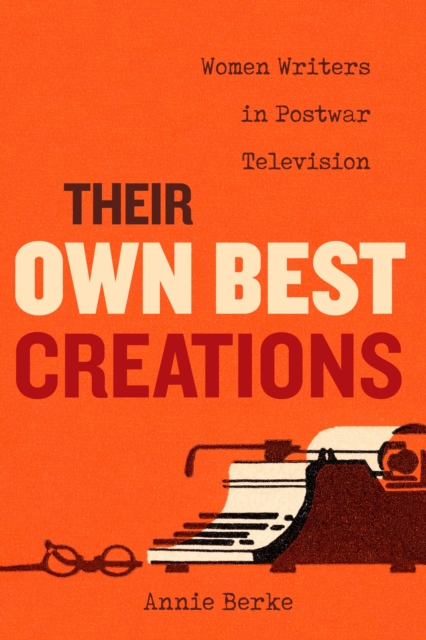
Their Own Best Creations
A rich account that combines media-industry history and cultural
studies, Their Own Best Creations looks at women writers'
contributions to some of the most popular genres of postwar TV:
comedy-variety, family sitcom, daytime soap, and suspense
anthology. During the 1950s, when the commercial medium of
television was still being defined, women writers navigated
pressures at work, constructed public personas that reconciled
traditional and progressive femininity, and asserted that a woman's
point of view was essential to television as an art form. The shows
they authored allegorize these professional and personal pressures
and articulate a nascent second-wave feminist consciousness. Annie
Berke brings to light the long-forgotten and under-studied stories
of these women writers and crucially places them in the historical
and contemporary record.
eBook

Branded women in u.s. television
Branded Women in U.S. Television examines how The Real Housewives of New York City, Martha Stewart, and other female entrepreneurs create branded televised versions of the iconic U.S. housewife. Using their television presence to establish and promote their own product lines, including jewelry, cookware, clothing, and skincare, they become the primary physical representations of these brands. While their businesses are serious and seriously lucrative, especially reality television enables a certain representational flexibility that allows participants to create campy and sometimes tongue-in-cheek personas. Peter Bjelskou explores their innovative branding strategies, specifically the complex relationships between their entrepreneurial endeavors and their physical bodies, attires, tastes, and personal histories. Generally these branded women speak volumes about their contemporaneous political environments, and this book illustrates how they, and many other women in U.S. television history, are indicative of larger societal trends and structures.
eBook

Adventures in Shondaland
Innovator Award for Edited Collection from the Central States Communication Association (CSCA) Shonda Rhimes is one of the most powerful players in contemporary American network television. Beginning with her break-out hit series Grey’s Anatomy, she has successfully debuted Private Practice, Scandal, How to Get Away with Murder, The Catch, For The People, and Station 19. Rhimes’s work is attentive to identity politics, “post-” identity politics, power, and representation, addressing innumerable societal issues. Rhimes intentionally addresses these issues with diverse characters and story lines that center, for example, on interracial friendships and relationships, LGBTIQ relationships and parenting, the impact of disability on familial and work dynamics, and complex representations of womanhood. This volume serves as a means to theorize Rhimes’s contributions and influence by inspiring provocative conversations about television as a deeply politicized institution and exploring how Rhimes fits into the implications of twenty-first century television.
eBook