
Catalogue Search | MBRL


Are you sure you want to remove the book from the shelf?

{{itemTitle}}
9,453
result(s) for
"Television broadcasting of films"
Sort by:

Television goes to the movies
\"Television and film have always been connected, but recent years have seen them overlapping, collaborating, and moving towards each other in ever more ways. Set amidst this moment of unprecedented synergy, this book examines how television and film culture interact in the 21st century. Both media appear side by side in many platforms or venues, stories and storytellers cross between them, they regularly have common owners, and they discuss each other constantly. Jonathan Gray and Derek Johnson examine what happens at these points of interaction, studying the imaginary borderlands between each medium, the boundary maintenance that quickly envelopes much discussion of interaction, and ultimately what we allow or require television and film to be. Offering separate chapters on television exhibition at movie theaters, cinematic representations of television, television-to-film and film-to-television adaptations, and television producers crossing over to film, the book explores how each zone of interaction invokes fervid debate of the roles that producers, audiences, and critics want and need each medium to play. From Game of Thrones to The TV Set, Bewitched to the Marvel Cinematic Universe, hundreds of TV shows and films are discussed. Television Goes to the Movies will be of interest to students and scholars of television studies, film studies, media studies, popular culture, adaptation studies, production studies, and media industries\"-- Provided by publisher.
BOOK

Broadcasting Hollywood
Broadcasting Hollywood: The Struggle Over Feature Films on
Early Television uses extensive archival research into the
files of studios, networks, advertising agencies, unions and
guilds, theatre associations, the FCC, and key legal cases to
analyze the tensions and synergies between the film and television
industries in the early years of television. This analysis of the
case study of the struggle over Hollywood's feature films appearing
on television in the 1940s and 1950s illustrates that the notion of
an industry misunderstands the complex array of
stakeholders who work in and profit from a media sector, and models
a variegated examination of the history of media industries.
Ultimately, it draws a parallel to the contemporary period and the
introduction of digital media to highlight the fact that history
repeats itself and can therefore play a key role in helping media
industry scholars and practitioners to understand and navigate
contemporary industrial phenomena.
eBook


Broadcasting Hollywood
Broadcasting Hollywood: The Struggle Over Feature Films on
Early Television uses extensive archival research into the
files of studios, networks, advertising agencies, unions and
guilds, theatre associations, the FCC, and key legal cases to
analyze the tensions and synergies between the film and television
industries in the early years of television. This analysis of the
case study of the struggle over Hollywood's feature films appearing
on television in the 1940s and 1950s illustrates that the notion of
an industry misunderstands the complex array of
stakeholders who work in and profit from a media sector, and models
a variegated examination of the history of media industries.
Ultimately, it draws a parallel to the contemporary period and the
introduction of digital media to highlight the fact that history
repeats itself and can therefore play a key role in helping media
industry scholars and practitioners to understand and navigate
contemporary industrial phenomena.
eBook

The Movie of the Week
Made-for-TV movies are unique in network television. Developed at a time when TV had ceased to be a novelty and the weekly schedule had become routine, these films became “must-see-special events,” something to be promoted as dramatically superior to series fare. More important, these movies were presented as socially charged documents, on the cutting edge of public debate, and, in fact, focal points for engaging the nation in issues in a much larger sphere--the real social world. The importance of made-for-TV movies to the networks increased as they continued to deal with socially vexed, controversial subjects. they became, says Rapping, cultural capital in the battle to have television taken seriously, often reflecting a somber, pseudocumentary tone and style (and refusing, with notable exceptions, to be ironic, cute, or intentionally silly). Subjects like slavery, domestic violence and incest, nuclear war, and corporate pollution, were first given dramatic representation in a TV movie. These productions crossed the line between fiction and fact, between drama and information, entering the realm of important social discourse not indirectly, through movie reviews, but quite directly through channels normally reserved for “real life” events. In The Movie of the Week, Elayne rapping places the TV movie in an historical and institutional framework first and then--in light of the political and cultural forces of production, and the contradictory nature of the media and hegemonic structure--analyzes the various, dominant types of TV movies in terms of narrative and textual strategies. In this first full-length study of its kind, The Movie of the Week analyzes a true “TV invention”--one that is not only fascinating but significant.
eBook
British TV and Film Culture in the 1950s
This book focuses on the emerging historical relations between British television and film culture in the 1950s. Drawing upon archival research, it does this by exploring the development of the early cinema programme on television - principally Current Release (BBC, 1952-3), Picture Parade (BBC, 1956) and Film Fanfare (ABC, 1956-7) - and argues that it was these texts which played the central role in the developing relations between the media. Particularly when it comes to Britain, the early co-existence of television and cinema has been seen as hostile and antagonistic, but in situating these programmes within the contexts of their institutional production, aesthetic construction and reception, the book aims to 'reconstruct' television's coverage of the cinema as crucial to the fabric of British film and television culture at the time. It demonstrates how the roles of cinema and television - as media industries and cultural forms, but crucially as sites of screen entertainment - effectively came together at this time in such a way that is unique to this decade.
eBook

Stephen King on the small screen
In this follow up to Stephen King on the Big Screen, Mark Browning turns his critical eye to the much-neglected subject of the best-selling author's work in television, examining what it is about King's fiction that makes it particularly suitable for the small screen.
By focusing on this body of work, from the highly successful The Stand and The Night Flier to the lesser-known TV films Storm of the Century, Rose Red, Kingdom Hospital, and the 2004 remake of Salem's Lot, Browning is able to articulate how these adaptations work and, in turn, suggest new ways of viewing them. This book is the first written by a film specialist to consider King's television work in its own right, and it rejects previous attempts to make the films and books fit rigid thematic categories. Browning examines what makes a written or visual text successful at evoking fear on a case-by-case basis, in a highly readable and engaging way. He also considers the relationship between the big and small screen. Why, for instance, are some TV versions more effective than movie adaptations and vice versa? In the process, Stephen King on the Small Screen is able to shed new light on what it is that makes King's novels so successful and reveal the elements of style and approach that have helped make King one of the world's best-selling authors.
eBook
Movies made for television, 2005–2009
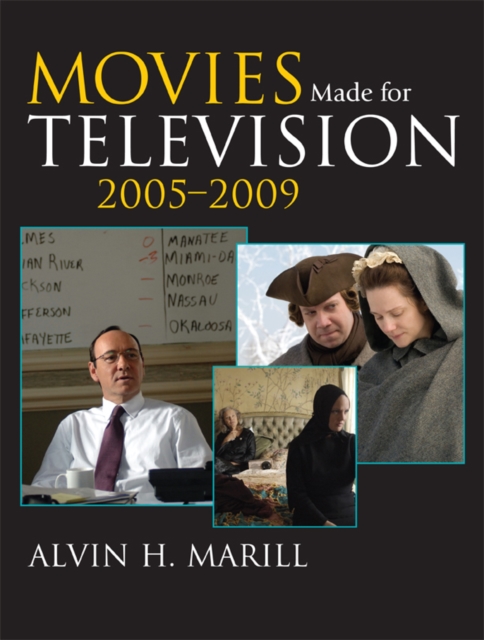
In 2005, Scarecrow published Movies Made for Television, 1964-2004, a five-volume reference set commemorating 40 years of every made for TV film since See How They Run debuted in 1964. These books provided a comprehensive listing of every television film and mini-series, detailing each film's original network, airdate, and length of broadcast. In this latest volume, Marill adds another five years of television films, providing information for an additional 400 works produced between 2005 and 2009. Along with a brief summary, entries also include extensive production credits (director, writer, producer, composer, director of photography, and editor) and a complete cast and character listing. With a chronology of the films, an appendix of movies adapted from other sources, and separate indexes for actors and directors, Movies Made for Television, 2005-2009 is a welcome addition to a resource highly regarded by scholars and historians of television and popular culture.
eBook
Encyclopedia of Television Film Directors
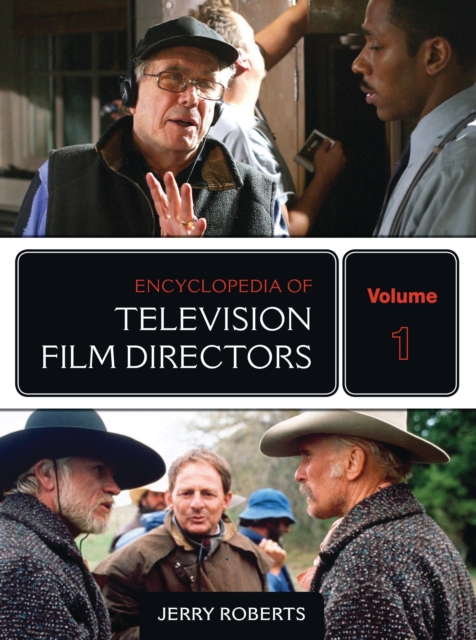
From live productions of the 1950s like Requiem for a Heavyweight to big budget mini-series like Band of Brothers, long-form television programs have been helmed by some of the most creative and accomplished names in directing. Encyclopedia of Television Film Directors brings attention to the directors of these productions, citing every director of stand alone long-form television programs: made for TV movies, movie-length pilots, mini-series, and feature-length anthology programs, as well as drama, comedy, and musical specials of more than 60 minutes. Each of the nearly 2, 000 entries provides a brief career sketch of the director, his or her notable works, awards, and a filmography. Many entries also provide brief discussions of key shows, movies, and other productions. Appendixes include Emmy Awards, DGA Awards, and other accolades, as well as a list of anthology programs. A much-needed reference that celebrates these often-neglected artists, Encyclopedia of Television Film Directors is an indispensable resource for anyone interested in the history of the medium.
eBook
