
Catalogue Search | MBRL


Are you sure you want to remove the book from the shelf?

{{itemTitle}}
35
result(s) for
"Television producers and directors -- United States -- Interviews"
Sort by:


Distribution revolution
Distribution Revolution is a collection of interviews with leading film and TV professionals concerning the many ways that digital delivery systems are transforming the entertainment business. These interviews provide lively insider accounts from studio executives, distribution professionals, and creative talent of the tumultuous transformation of film and TV in the digital era. The first section features interviews with top executives at major Hollywood studios, providing a window into the big-picture concerns of media conglomerates with respect to changing business models, revenue streams, and audience behaviors. The second focuses on innovative enterprises that are providing path-breaking models for new modes of content creation, curation, and distribution—creatively meshing the strategies and practices of Hollywood and Silicon Valley. And the final section offers insights from creative talent whose professional practices, compensation, and everyday working conditions have been transformed over the past ten years. Taken together, these interviews demonstrate that virtually every aspect of the film and television businesses is being affected by the digital distribution revolution, a revolution that has likely just begun. Interviewees include: • Gary Newman, Chairman, 20th Century Fox Television • Kelly Summers, Former Vice President, Global Business Development and New Media Strategy, Walt Disney Studios • Thomas Gewecke, Chief Digital Officer and Executive Vice President, Strategy and Business Development, Warner Bros. Entertainment • Ted Sarandos, Chief Content Officer, Netflix • Felicia D. Henderson, Writer-Producer, Soul Food, Gossip Girl • Dick Wolf, Executive Producer and Creator, Law & Order
eBook

Hanna and Barbera : conversations
\"Hanna and Barbera: Conversations presents a lively portrait of Bill Hanna and Joe Barbera, the influential producers behind Tom and Jerry, the Flintstones, Scooby-Doo, the Smurfs, and hundreds of other cartoon characters who continue to entertain the world today. Encompassing more than fifty years of film and television history, the conversations in this volume include first-person accounts by the namesakes of the Hanna-Barbera studio as well as recollections by artists and executives who worked closely with the pair for decades. It is the first collection of its kind about Hanna and Barbera, likely the most prolific animation producers of the twentieth century, whose studio once outflanked its competitor Walt Disney in output and influence. Bill Hanna fell into animation in 1930 at the Harman-Ising studio in Los Angeles, gaining skills across the phases of production as MGM opened its animation studio. Joe Barbera, a talented and sociable artist, entered the industry around the same time at the wild and woolly Van Beuren studio in Manhattan, learning the ins and outs of animation art before crossing the country to join MGM. In television, Hanna's timing and community-oriented work ethic along with Barbera's knack for sales and creating funny characters enabled Hanna-Barbera to build a roster of beloved cartoon series. A wide range of pieces map Hanna and Barbera's partnership, from their early days in Hollywood in the 1930s to Cartoon Network in the 1990s, when a new generation took the reins of their animation studio. Relatively unknown when they made over one hundred Tom and Jerry theatrical cartoons at MGM in the 1940s and 1950s, Hanna and Barbera became household names upon entering the new medium of television in 1957. Discussions here chart their early primetime successes as well as later controversies surrounding violence, overseas production, and the lack of quality in their Saturday morning cartoons. With wit, candor, insight, and bravado, Hanna and Barbera: Conversations reflects on Bill and Joe's breakthroughs and shortcomings, and their studio's innovations and retreads\"-- Provided by publisher.
Book

Joss Whedon
No recent television creator has generated more critical, scholarly, and popular discussion or acquired as devoted a cult following as Joss Whedon (b. 1964). No fewer than thirty books concerned with his work have now been published (a forthcoming volume even offers a book-length bibliography), and ten international conferences on his work have convened in the U.K., the United States, Australia, and Turkey. Fitting then that this first volume in the University Press of Mississippi's \"Television Conversations\" series is devoted to the writer, director, and showrunner who has deliveredBuffy the Vampire Slayer(The WB, 1997-2001; UPN, 2001-3),Angel(The WB, 1999-2004),Firefly(2002),Dr. Horrible's Sing-Along Blog(Webcast, 2008), andDollhouse(FOX, 2009-10).
If Whedon has shown himself to be a virtuoso screenwriter/script-doctor, director, comic book author, and librettist, he is as well a masterful conversationalist. As a DVD commentator, for example, the consistently hilarious, reliably insightful, frequently moving Whedon has few rivals. In his many interviews he likewise shines. Whether answering a hundred rapid-fire, mostly silly questions from fans on the Internet, fielding serious inquiries about his craft and career from television colleagues, or assessing his disappointments, Whedon seldom fails to provoke laughter and reflection.
eBook
Creating Television
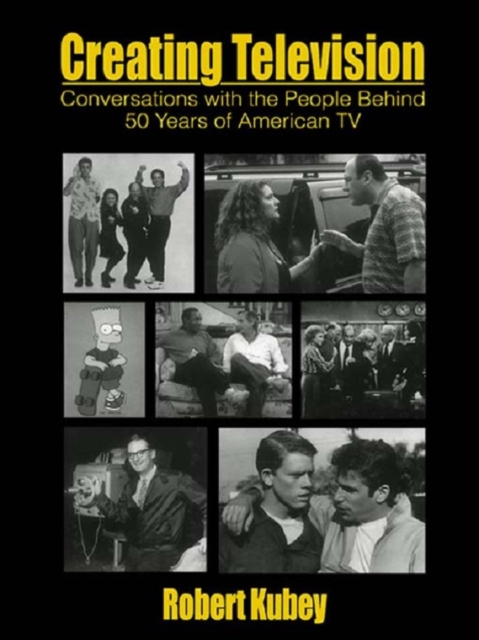
Creating Television brings television and its creators to life, presenting fascinating in-depth interviews with the creators of American TV. Having interviewed more than 100 television professionals over the course of his 15 years of research, Professor Robert Kubey presents here the 40 conversations that provide the most illuminating insights about the industry and the people working in it. These interviews bring television's creators to life, revealing their backgrounds, work, and thoughts about the audience and the television programs they create. Each interview tells a compelling tale of an individual's struggles and successes within a complex collaborative and highly commercial medium, offering readers rare insights on the human component in television's development. Featured in this volume are actors, agents, writers, directors, producers, and executives, representing television's earliest days through to the present day. Spanning shows from I Love Lucy and The Tonight Show through to Seinfeld, The Simpsons, and The Sopranos, these creators share the stories of how they gained entry to the industry and built their careers, offering readers a rare opportunity to meet, up close, the people involved in creating many of the most famous and successful programs in the medium's history, and linking the creators' personal histories to the television programs they create. With its unique insights on the people responsible for making television, this volume will be of interest to scholars and researchers in television history, sociology of culture, human creativity, television production, media studies, and mass media ethics. It will also be a popular reader for undergraduate and graduate students in courses addressing television, mass culture, media and society, American Studies, creativity, television history, and media ethics.
eBook

Model-Minority Imperialism
Focusing on the terms of Asian American assimilation and the rise of the model-minority myth, Victor Bascara examines the resurgence of empire as a tool for understanding the legacy of American imperialism. Model-Minority Imperialism links geopolitical dramas of twentieth-century empire building with domestic controversies of U.S. racial order by examining the cultural politics of Asian Americans in fiction, film, and theatrical productions._x000B_
eBook

The Art and Craft of TV Directing
The Art and Craft of TV Directing offers a broad and in-depth view of the craft of TV Directing in the form of detailed interviews with dozens of the industry’s most accomplished episodic television directors.
Author Jim Hemphill provides students with essential information on the complexities of working in episodic TV, highlighting the artistic, technical, and interpersonal skills required, and exploring a variety of entry points and approaches to provide a comprehensive overview of how to begin and sustain a career as a television director. The book discusses how to merge one’s personal style with the established visual language of any given show, while also adhering to tight budgets and schedules and navigating the complicated politics of working with showrunners, networks, and producers. The book also features interviews with a range of directors, from feature directors who have moved into episodic TV (Kimberly Peirce, Mark Pellington) to directors who have made the transition from other disciplines such as acting (Andrew McCarthy, Lea Thompson), hair and makeup (Stacey K. Black), and stunts (David M. Barrett).
This book provides unprecedented access to the experiences and advice of contemporary working episodic television directors, and is an ideal resource for students studying television directing, early career professionals looking for advice, and working directors looking to make the transition from feature directing to episodic TV directing.
eBook
John Frankenheimer
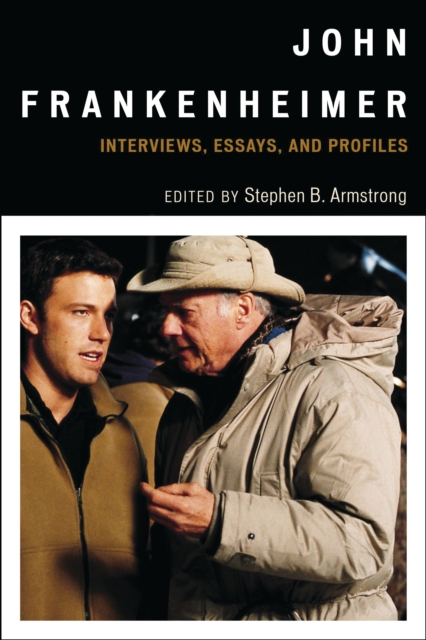
John Frankenheimer’s career as a professional director began and ended in television. In the mid-1950s, he won acclaim working on live productions for anthology series like Playhouse 90, and from the mid-1990s until his death in 2002 he helmed a string of Emmy-winning features for cable TV, including The Burning Season (1994) and Andersonville (1996). Despite these successes, Frankenheimer’s reputation rests primarily upon the nearly thirty feature films he directed, which range from bona fide classics like Birdman of Alcatraz (1962) and The Manchurian Candidate (1962) to such lesser achievements as Prophecy (1979) and Dead Bang (1989). Unfortunately for Frankenheimer, the discrepancy between his best films and his worst led many critics during his lifetime to dismiss him as someone whose talent dissipated in the late 1960s. In the decade since his death, however, several critics have emerged who reject the assertion that the quality of Frankenheimer’s output faded after an impressive start. In John Frankenheimer: Interviews, Essays, and Profiles, Stephen B. Armstrong has collected the most interesting and insightful articles and features published on this underrated director. While question-and-answer exchanges make up the bulk of the items featured here, also included are journalistic profiles of the director at work and essays Frankenheimer himself wrote for magazine audiences. In addition, readers will find a series of interviews of people who worked with Frankenheimer, including actors Roy Scheider, Tim Reid, and the director’s wife of 40 years, Evans Frankenheimer. In this volume, the director and others look back on a career that included such films as Seven Days in May, The Train, Grand Prix, The Iceman Cometh, Black Sunday, and Ronin. The first collection of its kind, John Frankenheimer: Interviews, Essays, and Profiles enables those who value the director’s work to develop a better understanding of the man through his own words and the words of others.
eBook
Flesh into light
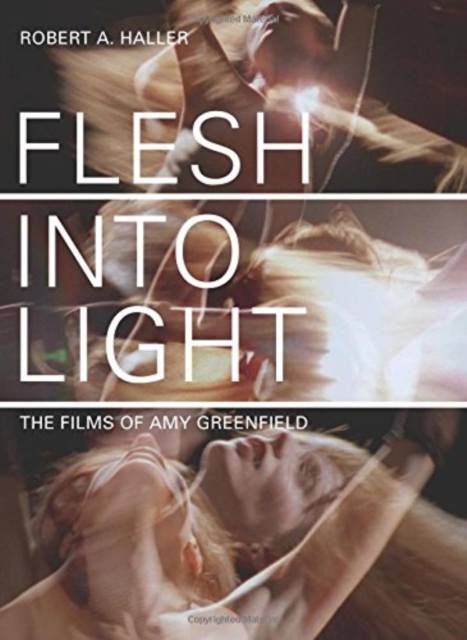
Over her more than four-decade career, New York-based filmmaker, performer and writer Amy Greenfield has achieved widespread critical acclaim for her genre-bending films which cross the boundaries of experimental film, video art and multimedia performance - from her feature film, Antigone/Rites Of Passion, to her major new live multimedia work, Spirit in the Flesh. Exploring the dynamism of movement and the resilience of the human spirit, Greenfield creates a new visual and kinetic language of cinema. An innovative exploration of an artist whom Cineaste called 'the most important practitioner of experimental film-dance,' Flesh Into Light covers Greenfield's entire career and draws attention to the more than thirty films, holographic sculptures and video installations of this important American artist.
eBook

Fred Zinnemann and the Cinema of Resistance
Fred Zinnemann directed some of the most acclaimed and controversial films of the twentieth century, yet he has been a shadowy presence in Hollywood history. InFred Zinnemann and the Cinema of Resistance, J. E. Smyth reveals the intellectual passion behind some of the most powerful films ever made about the rise and resistance to fascism and the legacy of the Second World War, fromThe Seventh CrossandThe Search to High Noon, From Here to Eternity, andJulia. Smyth's book is the first to draw upon Zinnemann's extensive papers at the Academy of Motion Picture Arts and Sciences and brings Fred Zinnemann's vision, voice, and film practice to life.
In his engagement with the defining historical struggles of the twentieth century, Zinnemann fought his own battles with the Hollywood studio system, the critics, and a public bent on forgetting. Zinnemann's films explore the role of women and communists in the antifascist resistance, the West's support of Franco after the Spanish Civil War, and the darker side of America's national heritage. Smyth reconstructs a complex and conflicted portrait of Zinnemann's cinema of resistance, examining his sketches, script annotations, editing and production notes, and personal letters. Illustrated with seventy black-and-white images from Smyth's collection,Fred Zinnemann and the Cinema of Resistancediscusses the director's professional and personal relationships with Spencer Tracy, Montgomery Clift, Audrey Hepburn, Vanessa Redgrave, and Gary Cooper; the critical reaction to his revisionist Western,High Noon; his battles over the censorship ofFrom Here to Eternity, The Nun's Story, andBehold a Pale Horse; his unrealized history of the communist Revolution in China,Man's Fate; and the controversial study of political assassination,The Day of the Jackal. In this intense, richly textured narrative, Smyth enters the mind of one of Hollywood's master directors, redefining our knowledge of his artistic vision and practice.
eBook