
Catalogue Search | MBRL


Are you sure you want to remove the book from the shelf?

{{itemTitle}}
3,561
result(s) for
"Television program genres."
Sort by:

New patterns in global television formats
The past twenty years have seen major changes in the ways that television formats and programming are developed and replicated internationally for different markets with locally focused repackagings of hit reality shows leading the way. But in a sense, that's not new: TV formats have been being exported for decades, with the approach and methods changing along with changes in broadcast technology, markets, government involvement, and audience interest. This book brings together scholars of TV formats from around the world to analyze and discuss those changes and offer an up-to-the-minute analysis of the current state of TV formats and their use and adaptation worldwide.
Book
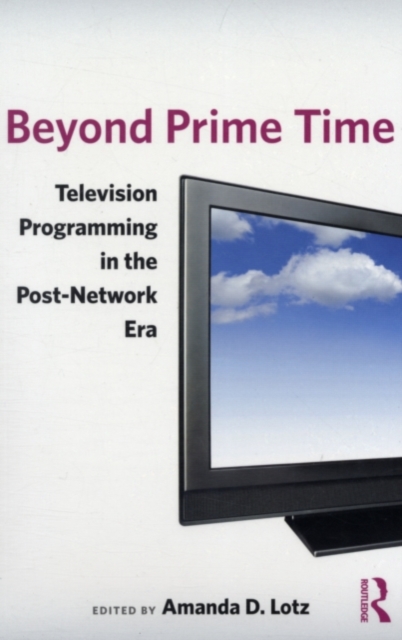
Beyond Prime Time
Daytime soap operas. Evening news. Late-night talk shows. Television has long been defined by its daily schedule and the viewing habits that develop around it. Technologies like DVRs, iPods, and online video have freed audiences from rigid time constraints—we no longer have to wait for a program to be “on” to watch it—but scheduling still plays a major role in the production of television. Prime-time series programming between 8:00 and 11:00 p.m. has dominated most critical discussion about television since its beginnings, but Beyond Prime Time brings together leading television scholars to explore how shifts in television’s industrial practices and new media convergence have affected the other 80 percent of the viewing day. The contributors explore a broad range of non-prime-time forms including talk shows, soap operas, news, syndication, and children’s programs, non-series forms such as sports and made-for-television movies, as well as entities such as local affiliate stations and public television. Importantly, all of these forms rely on norms of production, financing, and viewer habits that distinguish them from the practices common among prime-time series and often from each other. Each of the chapters examines how the production practices and textual strategies of a particular programming form have shifted in response to sweeping industry changes, together telling the story of a medium in transition at the beginning of the twenty-first century.
eBook


New patterns in global television formats
The past twenty years have seen major changes in the ways that television formats and programming are developed and replicated internationally for different markets with locally focused repackagings of hit reality shows leading the way. But in a sense, that's not new: TV formats have been being exported for decades, with the approach and methods changing along with changes in broadcast technology, markets, government involvement, and audience interest. This book brings together scholars of TV formats from around the world to analyze and discuss those changes and offer an up-to-the-minute analysis of the current state of TV formats and their use and adaptation worldwide.
eBook

Film and television genres of the late Soviet era
\"Most histories of Soviet cinema portray the 1970s as a period of stagnation and the gradual decline of the film industry. This book, however, examines Soviet film and television of the era as mature industries articulating diverse cultural values via new genre models. During the 1970s, Soviet cinema and television developed a parallel system of genres where television texts celebrated conservative consensus while films manifested symptoms of ideological and social crises. The book examines police film, melodrama, comedy, children's film, variety show film, art cinema, and epic film, and outlines how television gradually emerged as the major form of Russo-Soviet popular culture. Through close analysis of well-known film classics of the period as well as less familiar films and television series, this groundbreaking work helps to deconstruct the myth of this era as a time of social stability and also helps us to understand the persistence of this myth in the contemporary Russian collective memory. \"-- Provided by publisher.
Book

Global Television Formats
Winner of the 2013 SCMS Best Edited Collection Award
For decades, television scholars have viewed global television through the lens of cultural imperialism, focusing primarily on programs produced by US and UK markets and exported to foreign markets. Global Television Formats revolutionizes television studies by de-provincializing its approach to media globalization. It re-examines dominant approaches and their legacies of global/local and center/periphery, and offers new directions for understanding television's contemporary incarnations.
The chapters in this collection take up the format phenomena from around the globe, including the Middle East, Western and Eastern Europe, South and West Africa, South and East Asia, Australia and New Zealand, North America, South America, and the Caribbean. Contributors address both little known examples and massive global hits ranging from the Idol franchise around the world, to telenovelas, dance competitions, sports programming, reality TV, quiz shows, sitcoms and more. Looking to global television formats as vital for various cultural meanings, relationships, and structures, this collection shows how formats can further our understanding of television and the culture of globalization at large.
eBook

Difficult men : behind the scenes of a creative revolution: from The Sopranos and The wire to Mad men and Breaking bad
\"A riveting and revealing look at the shows that helped cable television drama emerge as the signature art form of the twenty-first century In the late 1990s and early 2000s, the landscape of television began an unprecedented transformation. While the networks continued to chase the lowest common denominator, a wave of new shows, first on premium cable channels like HBO and then basic cable networks like FX and AMC, dramatically stretched television's narrative inventiveness, emotional resonance, and artistic ambition. No longer necessarily concerned with creating always-likable characters, plots that wrapped up neatly every episode, or subjects that were deemed safe and appropriate, shows such as The Wire, The Sopranos, Mad Men, Deadwood, The Shield, and more tackled issues of life and death, love and sexuality, addiction, race, violence, and existential boredom. Just as the Big Novel had in the 1960s and the subversive films of New Hollywood had in 1970s, television shows became the place to go to see stories of the triumph and betrayals of the American Dream at the beginning of the twenty-first century. This revolution happened at the hands of a new breed of auteur: the all-powerful writer-show runner. These were men nearly as complicated, idiosyncratic, and \"difficult\" as the conflicted protagonists that defined the genre. Given the chance to make art in a maligned medium, they fell upon the opportunity with unchecked ambition. Combining deep reportage with cultural analysis and historical context, Brett Martin recounts the rise and inner workings of a genre that represents not only a new golden age for TV but also a cultural watershed. Difficult Men features extensive interviews with all the major players, including David Chase (The Sopranos), David Simon and Ed Burns (The Wire), Matthew Weiner and Jon Hamm (Mad Men), David Milch (NYPD Blue, Deadwood), and Alan Ball (Six Feet Under), in addition to dozens of other writers, directors, studio executives, actors, production assistants, makeup artists, script supervisors, and so on. Martin takes us behind the scenes of our favorite shows, delivering never-before-heard story after story and revealing how cable TV has distinguished itself dramatically from the networks, emerging from the shadow of film to become a truly significant and influential part of our culture. \"-- Provided by publisher.
Book
TV formats worldwide
This book redresses the balance of reality shows and the program format as a central mode of business and culture in the new television landscape. It explores topics such as reality TV, makeover programs, sitcoms, talent shows, fiction serials, broadcaster management policies, production decision chains and audience participation processes.
eBook

Animated Realism
With the development and accessibility of animation tools and techniques, filmmakers are blurring the boundaries between documentary filmmaking and animation. The intimacy, imperfection and charm of the animated form is providing live-action and animation directors with unique ways to tell stories, humanize events and convey information not easily adapted for live-action media. \"Animated Realism\" presents animation techniques as they apply to the documentary genre with an inspirational behind-the-scenes look at award-winning animated documentaries. Animators and documentary filmmakers alike will learn how to develop a visual style with animation, translate a graphic novel into a documentary and use 3D animation as a storytelling tool, all in the context of creating animated documentaries. With insight and inspiration, \"Animated Realism\" includes interviews from industry luminaries like John Canemaker, Oscar Winning Director of \"The Moon and the Son\", Yoni Goodman, Animation Director of Oscar Nominated Waltz with Bashir and Chris Landreth, Oscan Winning creator of Ryan. Packed with beautiful, instructive illustrations and previously unpublished material (including storyboards, photos and hand-drawn sketches) and interspersed with interviews - this is an exceptional source of inspiration and knowledge for animators, students and fans alike. With a companion website featuring animated shorts from leading animated documentaries, animators, students and documentary filmmakers will be able to analyze and apply Oscar-winning animation techniques to their own films. Learn from the best...Judith Kriger interviews some of the most innovative and inspirational animators, including John Canemaker, Oscar Winning Director of \"The Moon and the Son\", Yoni Goodman, Animation Director of Oscar Nominated Waltz with Bashir and Chris Landreth, Oscan Winning Director of Ryan.
Judith Kriger is a Los Angeles, CA-based independent filmmaker and animator. She has worked professionally in the entertainment industry for over twenty years on various projects for film, broadcast, video games and the web. Ms. Kriger's credits include: Cats and Dogs, Antz, A Simple Wish, Bebe's Kids, South Park, Ren and Stimpy, The Family Dog and various Doughboy commercials. Ms. Kriger produces, directs and animates her own independent films and is currently working on an animated project about the Hebrew alphabet. She is an Assistant Professor of Film and Television at the Dodge College of Film and Media Arts at Chapman University. Ms. Kriger teaches introductory and advanced courses in 3D animation and visual effects production.
eBook

The sting in the tale
The presenter of the new series about exposing criminal activity in NZ comments on the making of the programme. Recounts the difficulty of his first foray into television, including coming up with suitable story ideas, re-enactments of scenes, and personal grooming for TV. Source: National Library of New Zealand Te Puna Matauranga o Aotearoa, licensed by the Department of Internal Affairs for re-use under the Creative Commons Attribution 3.0 New Zealand Licence.
Newspaper Article