
Catalogue Search | MBRL


Are you sure you want to remove the book from the shelf?

{{itemTitle}}
76
result(s) for
"Temporary structures (Building)"
Sort by:

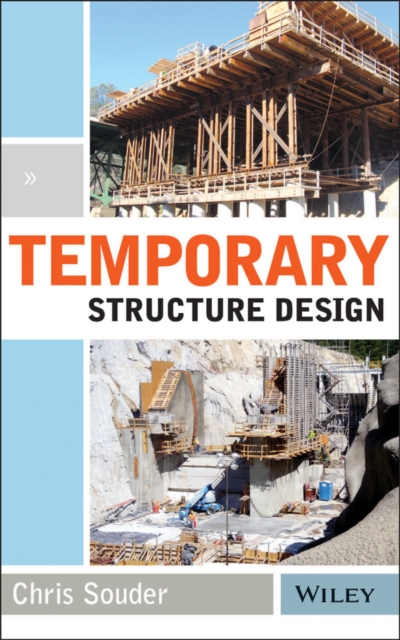
Temporary structure design
A comprehensive guide to temporary structures in construction projects Temporary Structure Design is the first book of its kind, presenting students and professionals with authoritative coverage of the major concepts in designing temporary construction structures. Beginning with a review of statistics, it presents the core topics needed to fully comprehend the design of temporary structures: strength of materials; types of loads on temporary structures; scaffolding design; soil properties and soil loading; soldier beam, lagging, and tiebacks; sheet piling and strutting; pressure and forces on formwork and falsework; concrete formwork design; falsework; bracing and guying; trestles and equipment bridges; and the support of existing structures. Temporary structures during construction include scaffolding, formwork, shoring, ramps, platforms, earth-retaining structures, and other construction structures that are not part of the permanent installation. These structures are less regulated and monitored than most other parts of the construction process, even though they are often supporting tons of steel or concrete—and the safety of all workers on the site depends on these structures to perform as designed. Unfortunately, most tragic failures occur during construction and are usually the result of improperly designed, constructed, and/or maintained temporary structures. Temporary Structure Design fills an important need in the literature by providing a trusted, comprehensive guide to designing temporary construction structures. * Serves as the first book to provide a design-oriented approach to the design of temporary structures * Includes coverage of the various safety considerations inherent in temporary structure design and construction * Provides information on estimating cost and schedules for these specialized structures * Covers formwork and falsework, as well as personnel protection, production support, environmental protection, and foundational structures If you're a student or a professional working in the field of construction or structural engineering, Temporary Structure Design is a must-have resource you'll turn to again and again.
eBook

Mobile and rapidly assembled structures IV
Structures that move in the course of normal use, or which have to be assembled or erected rapidly on a relatively unprepared site, offer a particular challenge to the designer. The interaction between the structure and the mechanism by which it moves is essential in these cases. The speed of assembly, what this means in terms of logistics, materials and cost, is a major factor in many such structures. Mobile and rapidly assembled structures play a major role in disaster mitigation and temporary accommodation. They are of primary importance in many military as well as civilian applications and are widely used for rescue and maintenance services. Their importance continues to grow in contemporary society where speed of response is of primary importance. There are common problems such as the efficient design of assembly joints, the resistance to damage of the membrane and metal cladding, crashworthiness and the limits of serviceability. Some areas of the subject are already well documented, but knowledge is fragmented and there is little design guidance available in the form of textbooks, data sheets or codes of practice. The interaction between morphology, kinematic behaviour and structural performance – typical for these structures – poses real challenges in terms of design and successful realisation. This multi-disciplinary proceedings volume contains papers presented at the fourth International Conference on Mobile, Adaptable and Rapidly Assembled Structures. Topics covered include: Temporary Structures and Dwellings; Engineering Transformation; Rapidly Assembled Kit-of-parts Systems; Innovative Approached; Tensegrity and Reciprocal Frames.
eBook
Implementing Inquiry-Based Learning in a Diverse Classroom
Long description:
This thesis, an explorative case study, provides insights into the implementation of inquiry-based learning in an authentic classroom. For one year, a teacher was accompanied while implementing inquiry-based learning in a highly diverse class. In doing so, the observations focused on strategies for both scaffolding and dealing with diversity. Additionally, data reflecting students' views of scientific inquiry were gathered. The results show a successive implementation of inquiry-based learning through four phases supported by various scaffolding strategies. The views of scientific inquiry are discussed on both the class and the individual level. Finally, all these findings are brought together to paint a vivid picture of the investigated class.
Die vorliegende Arbeit, eine explorative Fallstudie, bietet einen Einblick in ein authentisches Klassenzimmer, in dem Forschendes Lernen eingeführt wurde. Dazu wurde eine Lehrperson ein Jahr lang begleitet. Die Beforschung fokussierte auf Lernbegleitungsstrategien, den Umgang mit Diversität sowie den Sichtweisen der Schülerinnen und Schüler über Naturwissenschaften. Die Resultate zeigen eine schrittweise Einführung von Forschendem Lernen in vier Phasen, begleitet von vielfältigen Lernbegleitungsstrategien. Schließlich werden alle Ergebnisse zusammengeführt, um ein lebendiges Bild des untersuchten Unterrichts und der Personen zu zeichnen.
eBook

Architecture Timed
The traditional veneration of architecture for its monumental and enduring qualities seems to be changing.Architects and other designers are moving away from seeking permanence towards a more open, creative use of what time has to offer.
eBook
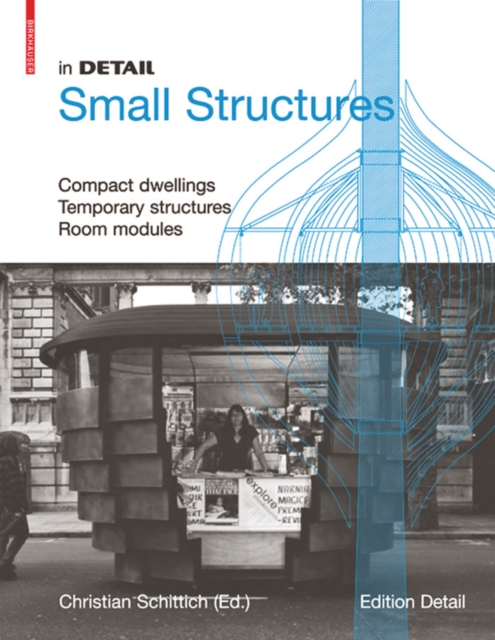
Small structures : compact dwellings, temporary structures, room modules
Shelters, kiosks, snack bars, market stalls, bus stops, telephone booths, toilets, advertising columns, ticket booths, mobile tents or housing units, emergency shelters, tourist information booths-this list of small, autonomously functioning buildings could be expanded almost infinitely. Small buildings shape our daily lives; they are found at the nearest street corner; they are present and indispensable, but as architecture they attract our attention only rarely. Yet these small structures occupy a definite place in the infrastructure of the city. Rather than focusing on the large attractions of architecture, architects find many potential ways to ensure the quality of everyday design hidden in these small, sometimes charming necessities. This volume in the DETAIL series spans the arc between architecture and product design, since not infrequently small buildings are located precisely in the area of tension between these two professions, and their successful realization is evident in the details of their construction.
eBook

Now you see it
Looks at the global phenomenon of 'pop-up' bars and discusses some of the Australian and NZ examples. Talks to several temporary bar publicans about the appeal of the concept. Source: National Library of New Zealand Te Puna Matauranga o Aotearoa, licensed by the Department of Internal Affairs for re-use under the Creative Commons Attribution 3.0 New Zealand Licence.
Newspaper Article

An Alternative Modular Wooden System for Fast Assembly/Disassembly of Buildings
Throughout human settlement history, the pursuit of durability has been a paramount objective in building construction. The emphasis on durability has resulted in the construction of buildings designed to outlast human lifespans. However, the lack of consideration for building demolition and disposal during the design and construction phases has created challenges for future generations. This oversight contributes to the environmental impact of structures after demolition, which is a significant concern given that the construction industry is a major contributor to energy consumption, CO2 emissions, and solid waste production. In fact, in recent decades, there has been an increasing demand for temporary constructions, driven by factors such as migration phenomena, natural disasters, and the COVID-19 pandemic, but also in sectors like agriculture, where seasonality and annual variations in activities require adaptable structures such as warehouses, barns, livestock shelters, and food storage facilities. Unlike traditional constructions, these temporary buildings must be assembled and disassembled multiple times during their lifespan. The challenge lies in ensuring the structural integrity, adaptability to varying conditions, and compliance with specific requirements to extend their usability and postpone the disposal phase. This study focuses on the design of a novel type of temporary structures intended for temporary needs such as emergencies and planned agricultural activities, resulting in a European patent. The structure is based on a glulam frame inside two OSB panels—that work as structural bracing, creating a hollow, resistant, light structure—connected with external steel connections. This work reports results of mechanical simulations and thermal transmittance calculations. Specifically, it demonstrates the building maintains structural strength through multiple usages and its thermal characteristics can be easily adapted to the context. These are the first steps for a resilient and sustainable building.
Journal Article
The Role of Temporary Architecture in Preserving Intangible Heritage During the Arbaeen Pilgrimage in Holy Karbala: A Case Study
This study looks into the role of temporary architecture in preserving intangible heritage during the Arbaeen Pilgrimage in Holy Karbala. It seeks to find out how temporary structures contribute to Holy Karbala’s cultural and historical identity in the context of the Arbaeen Pilgrimage while meeting today’s needs. A case study approach was used in this research to analyze temporary architecture projects implemented during the Arbaeen Pilgrimage in Holy Karbala. Field observations, expert surveys, and document analysis were conducted to assess how these structures affect the preservation of intangible heritage related to the pilgrimage. The research finds that temporary architecture during the Arbaeen Pilgrimage is crucial in preserving intangible heritage. While some structures support the religious and cultural practices of the pilgrimage, others challenge the historical urban fabric. The study concludes that temporary architecture should be designed carefully to balance functionality with heritage preservation. This study contributes to the understanding of how temporary architecture can be strategically used during big religious events like the Arbaeen Pilgrimage to support heritage preservation. It provides practical tips on how to incorporate temporary structures in a way that respects Holy Karbala’s intangible heritage.
Journal Article