
Catalogue Search | MBRL


Are you sure you want to remove the book from the shelf?

{{itemTitle}}
1,741
result(s) for
"Tennessee River Valley."
Sort by:


Speaking with the ancestors : Mississippian stone statuary of the Tennessee-Cumberland region
When European explorers began their initial forays into southeastern North America in the 16th and 17th centuries they encountered what they called temples and shrines of native peoples, often decorated with idols in human form made of wood, pottery, or stone. The idols were fascinating to write about, but having no value to explorers searching for gold or land, there are no records of these idols being transported to the Old World, and mention of them seems to cease about the 1700s. However, with the settling of the fledgling United States in the 1800s, farming colonists began to unearth stone images in human form from land formerly inhabited by the native peoples. With little access to the records of the 16th and 17th centuries, debate and speculation abounded by the public and scholars alike concerning their origin and meaning. During the last twenty years the authors have researched over 88 possible examples of southeastern Mississippian stone statuary, dating as far back as 1,000 years ago, and discovered along the river valleys of the interior Southeast. Independently and in conjunction, they have measured, analyzed, photographed, and traced the known history of the 42 that appear in this volume. Compiling the data from both early documents and public and private collections, the authors remind us that the statuary should not be viewed in isolation, but rather as regional expressions of a much broader body of art, ritual, and belief.
eBook

Foraging in the Tennessee River Valley, 12,500 to 8,000 years ago
Plants are inarguably a significant component of the diets of foraging peoples in non-arctic environments. As such, the decisions and activities associated with the gathering and exploitation of plants are important to foragers’ subsistence pursuits. Plant remains are particularly important for understanding gathering activities. Inasmuch as plant foods comprised a considerable portion of early foragers’ diets, and the gathering and processing of these plant resources occupied a significant proportion of the population, namely women, children, and the elderly, an understanding of gathering activities and how they relate to use of the landscape is critical. Organic remains are poorly preserved in the acidic soils of the Southeast and are often limited or absent from open-air sites, but archaeological deposits protected within rockshelters provide an exception. Organic remains are consistently well preserved in their rain-protected deposits, and rockshelters are locations that groups repeatedly visited. Because of this repeated use and remarkable preservation, significant quantities of well-preserved faunal and botanical remains can be recovered from rockshelter deposits. In Foraging, Hollenbach analyzes and compares botanical remains from archaeological excavations in four rockshelters in the Middle Tennessee River Valley. The artifact assemblages of rockshelter and open-air sites are similar, so it is reasonable to assume that faunal and botanical assemblages would be similar, if open-air sites had comparable preservation of organic remains. The rich organic data recovered from rockshelters therefore may be considered representative of general subsistence and settlement strategies, and can significantly inform our views of lifeways of Late Paleoindian and Early Archaic peoples. The data produced from this analysis provides a valuable baseline of plant food use by early foragers in the region, and establishes a model of Late Paleoindian and Early Archaic lifeways in the Southeast.
eBook
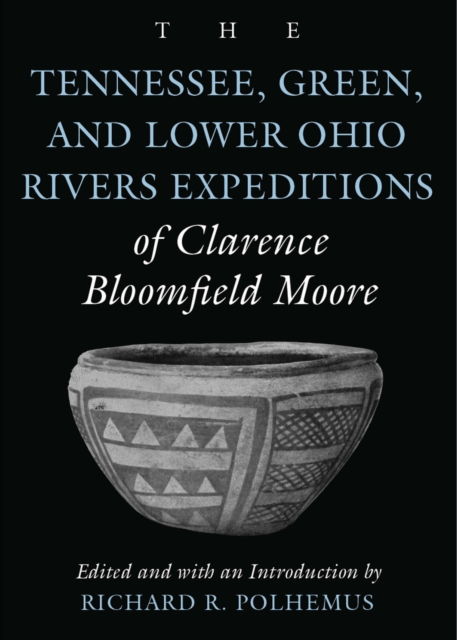
The Tennessee, Green, and lower Ohio rivers expeditions of Clarence Bloomfield Moore
This oversized reprint volume presents original materials from Moore's northernmost expeditions conducted in the early 1900s as he surveyed areas of potential archaeological interest in the southeastern United States. Some of the sites he found were later targeted for major excavations during the days of the WPA/CCC. Many National Register Historic Sites are today located along the rivers he explored in this work. In many cases, however, Moore's report documents sites since destroyed by river action or by lake impoundments behind hydroelectric dams or by looters. As with all Moore's other investigations, his thorough documentation and collaboration with other scholars advanced understanding of aboriginal peoples and fueled debate among the experts. For instance, more than 296 burials were recovered from Indian Knoll on the Green River in Kentucky. Some graves included ceremonially \"\"killed\"\" artifacts, dogs buried with both adults and children, and exotic materials leading to speculations concerning origins, usage, and trade networks. Stone box graves were widespread and somewhat exclusive to this area, giving rise to early assumptions regarding kinship between scattered modern Indian tribes. Richard Polhemus has compiled a comprehensive inventory of Moore's work in Tennessee, Alabama, Mississippi and Kentucky and written a concise introduction to place the work in context. In so doing, he has made available to contemporary scholars of history, archaeology, and anthropology a trove of resource material on one of the most archaeologically rich and artifact-diverse regions in the nation.
eBook

The Tennessee, Green, and lower Ohio rivers expeditions of Clarence Bloomfield Moore
This richly illustrated book is the eighth of nine Classics in Southeastern Archaeology volumes based on Moore's investigations along the waterways of eastern North America. This oversized reprint volume presents original materials from Moore's northernmost expeditions conducted in the early 1900s as he surveyed areas of potential archaeological interest in the southeastern United States. Some of the sites he found were later targeted for major excavations during the days of the WPA/CCC. Many National Register Historic Sites are today located along the rivers he explored in this work. In many cases, however, Moore's report documents sites since destroyed by river action or by lake impoundments behind hydroelectric dams or by looters. As with all of Moore's other investigations, his thorough documentation and collaboration with other scholars advanced understanding of aboriginal peoples and fueled debate among the experts. For instance, more than 296 burials were recovered from Indian Knoll on the Green River in Kentucky. Some graves included ceremonially killed artifacts, dogs buried with both adults and children, and exotic materials leading to speculations concerning origins, usage, and trade networks. Stone box graves were widespread and somewhat exclusive to this area, giving rise to early assumptions regarding kinship between scattered modern Indian tribes. Richard Polhemus has compiled a comprehensive inventory of Moore's work in Tennessee, Alabama, Mississippi, and Kentucky and written a concise introduction to place the work in context. In so doing, he has made available to contemporary scholars of history, archaeology, and anthropology a trove of resource material on one of the most archaeologically rich and artifact-diverse regions in the nation.
eBook

Prisoners of Myth
Prisoners of Mythis the first comprehensive history of the Tennessee Valley Authority from its creation to the present day. It is also a telling case study of organizational evolution and decline. Building on Philip Selznick's classic workTVA and the Grass Roots(1949), a seminal text in the theoretical study of bureaucracy, Erwin Hargrove analyzes the organizational culture of the TVA by looking at the actions of its leaders over six decades--from the heroic years of the New Deal and World War II through the postwar period of consolidation and growth to the time of troubles from 1970 onward, when the TVA ran afoul of environmental legislation, built a massive nuclear power program that it could not control, and sought new missions for which there were no constituencies.
The founding myth of multipurpose regional development was inappropriately pursued in the 1970s and '80s by leaders who became \"prisoners of myth\" in their attempt to keep the TVA heroic. A decentralized organization, which had worked well at the grass roots, was difficult to redirect as the nuclear genii spun out of control. TVA autonomy from Washington, once a virtue, obscured political accountability. This study develops an important new theory about institutional performance in the face of historical change.
eBook

Enduring Pastoral
Has the pastoral vision, so central to American history and culture, survived the twentieth century? Enduring Pastoral traces and analyzes the development of the middle landscape by examining the historical construction of a variety of private and public places in the Tennessee Valley. Moving from the aesthetically sculpted grounds of the Biltmore Estate and the environmental transformation undertaken by the Tennessee Valley Authority, to the adoption of the pastoral trope in Appalachian museums, the displays at the Chattanooga Choo Choo, and Dolly Parton's theme park Dollywood, Enduring Pastoral shows how the pastoral design has been simulated and commercialized for economic and political purposes. Showing how this process has disconnected the pastoral from its Jeffersonian and Thoreauvian roots, Enduring Pastoral proposes that when facing the environmental challenges of the twenty-first century, new forms of pastoralism may ultimately prove vital to integrating nature and culture in a sustainable future.
eBook

Prisoners of Myth
Prisoners of Myth is the first comprehensive history of the Tennessee Valley Authority from its creation to the present day. It is also a telling case study of organizational evolution and decline. Building on Philip Selznick's classic work TVA and the Grass Roots (1949), a seminal text in the theoretical study of bureaucracy, Erwin Hargrove analyzes the organizational culture of the TVA by looking at the actions of its leaders over six decades--from the heroic years of the New Deal and World War II through the postwar period of consolidation and growth to the time of troubles from 1970 onwar
Book

Mesohabitat current velocity effects on Didymosphenia geminata and macroinvertebrates in a SE USA hypolimnetic tailwater
The diatom Didymosphenia geminata is known to alter benthic habitat and macroinvertebrate diversity and community structure. Associations between macroinvertebrate communities and D. geminata biomass in riffle and run mesohabitats were investigated in the South Fork Holston River in Tennessee and Virginia, USA. We found that low current velocity, low turbidity, and high dissolved oxygen (DO) were strong predictors of D. geminata mat presence. Didymosphenia geminata ash-free dry mass was significantly higher in run mesohabitats with low current velocity (CV) than in riffle mesohabitats with higher CV. Macroinvertebrate alpha diversity (Shannon Diversity H’) was only marginally significantly different between riffle and runs, while beta diversity (community composition) was highly significantly different between these mesohabitats. NMDS analyses found that D. geminata was a relatively unimportant predictor of changes in community structure relative to specific conductance, CV, DO, and turbidity. However, effects of D. geminata on macroinvertebrates appear to be very taxon specific with effects on individual taxa potentially masked by tailwater effects on general macroinvertebrate diversity in global analyses. We observed that taxon-specific effects include, but are not limited to, (1) reduction of bryophyte microhabitat utilized by dominant ephemeropterans, trichopterans, amphipods, coleopterans, and some chironomid genera in run mesohabitats from competition with D. geminata for substrate attachment space; and (2) differences in utilization of D. geminata mat biomass as a food resource and microhabitat for chironomids. Our insights into taxon-specific effects of D. geminata on macroinvertebrates open up multiple avenues for experimentation in which to validate our observational findings.
Journal Article

It is the little things that count: microartifact analysis and the importance of multiproxy data at the widows creek site, alabama
Originally excavated in 1973, Widows Creek (1JA305) is a deeply stratified, multi-component site located on the Tennessee River in Jackson County, Alabama, with cultural deposits spanning the Early Archaic (ca. 10,000 B.P.) through the Mississippian (ca. 800 B.P.) periods. A recent study of sediment samples curated during the 1973 excavation was carried out to understand changes in the cultural and natural stratigraphy and the potential influence of one upon the other. A comparative analysis of microartifact, sedimentologic, geochemical, and macrobotanical characteristics yields new information concerning changes in the nature, timing, and intensity of human habitation at Widows Creek as well as the influence of changing environmental conditions on site occupation and the effects of site formation processes on stratigraphic characteristics. In addition to demonstrating the importance of multidisciplinary research to answer archaeological questions, this study highlights the value of analyzing curated samples collected from previously excavated sites.
Journal Article