
Catalogue Search | MBRL


Are you sure you want to remove the book from the shelf?

{{itemTitle}}
78
result(s) for
"Terrorism History Sources."
Sort by:
Anti-American terrorism and the Middle East : a documentary reader
After the September 11, 2001 terrorist attacks on the World Trade Center and the Pentagon, a stunned public asked: How could this happen? Why did the attackers do what they did? What did they hope to accomplish? This wasn't the first battle in a conflict that has included bombings of U.S. embassies and planes, the Iran hostage crisis, and kidnappings or shootings of American citizens. This unique volume sets out to answer these questions using the unfiltered words of the terrorists themselves. Over many decades, radical forces in the Middle East have changed and evolved, yet their basic outlook and anti-Western views have remained remarkably consistent. The editors have assembled nearly one hundred key documents, charting the evolution of radical Middle East movements, their anti-Americanism, and Western policy response. The buildup to the battle between a world superpower and Middle East revolutionaries is brought dramatically to life. Among the documents included are the charters of such organizations as Hizballah, Hamas, and World Islamic Front; speeches by Syrian president Hafiz al-Asad and Iraqi president Saddam Hussein; al-Qa'ida recruitment materials; and terrorist training manuals. The book also shows and analyzes the often conflicting and deeply conflicted responses to September 11 by journalists, clerics, and activists in the Arab world. Supplemented by an annotated chronology, a glossary of terms, and sections that put each selection in context, this comprehensive reference serves not only as essential historical background to the ongoing aftermath of the September 11 attacks, but more generally as an invaluable framework for understanding a long-term, continuing conflict that has caused many crises for the United States.
Book
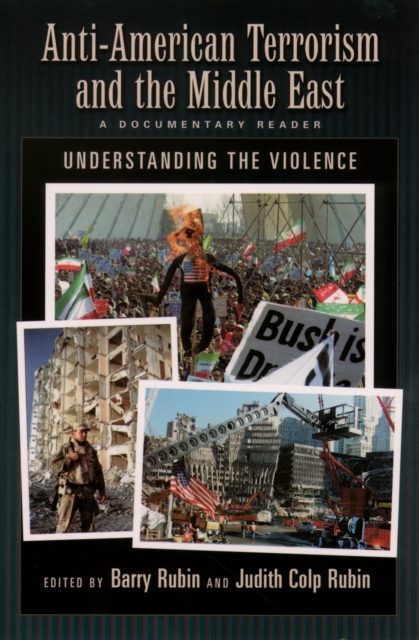
Anti-American Terrorism and the Middle East
After the September 11, 2001, terrorist attacks on the World Trade Center and the Pentagon, a stunned public asked: How could this happen?Why did the attackers do what they did?What did they hope to accomplish?This wasn't the first battle in a conflict that has included bombings of U.S.
eBook
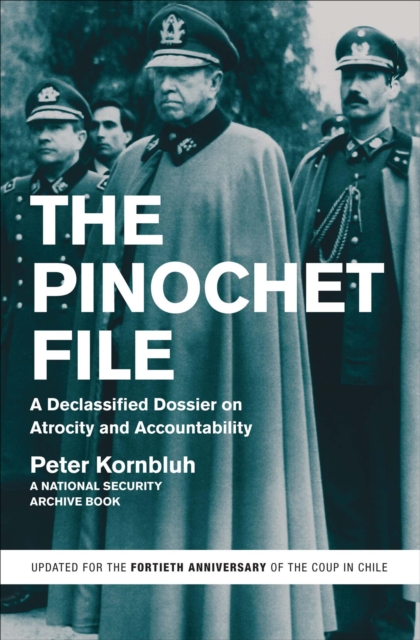
The Pinochet File
Revised and updated for the fortieth anniversary of Augusto
Pinochet’s September 11, 1973, military coup in Chile,
The Pinochet File reveals a formerly secret record of
complicity with atrocity on the part of the U.S. government.
Documents that were first made publicly available in the original
hardcover edition formed the heart of the international campaign
to hold Pinochet accountable for murder, torture, and
terrorism—a campaign chronicled for the first time in
this updated edition. Peter Kornbluh spearheaded the effort to
declassify some 24,000 secret CIA, White House, National Security
Council, and Defense Department records on Chile, and when
The Pinochet File was first published in 2003, Marc
Cooper wrote in the Los Angeles Times, “Thanks to Peter
Kornbluh, we have the first complete, almost
day–to–day and fully documented record of this sordid
chapter in Cold War American history.” With the publication
of this edition, that record becomes even more complete. This
book now includes the story of Pinochet’s 2004 indictment
and trial, as well as new information about the famous cases of
the American Charles Horman and Chilean folk singer Victor
Jara—both executed by Pinochet’s military after the
coup. The new afterword also tells the story of The Pinochet File
itself: Henry Kissinger’s attempt to undercut the
book’s reception generated a major scandal that led to
high–level resignations at the Council on Foreign
Relations, illustrating the continued ability of the book to
speak truth to power.
eBook


Myths of Empire
\" Myths of Empire offers the best-developed
theory to date of the domestic sources of international conflict
and security policy... Snyder has taken a major step toward ending
the theoretical impoverishment of the study of the domestic sources
of international conflict.\" ― American Political
Science Review
Overextension is the common pitfall of empires. Why does it
occur? What are the forces that cause the great powers of the
industrial era to pursue aggressive foreign policies? Jack Snyder
identifies recurrent myths of empire, describes the varieties of
overextension to which they lead, and criticizes the traditional
explanations offered by historians and political scientists. He
tests three competing theories-realism, misperception, and domestic
coalition politics-against five detailed case studies: early
twentieth-century Germany, Japan in the interwar period, Great
Britain in the Victorian era, the Soviet Union after World War II,
and the United States during the Cold War. The Resulting insights
run counter to much that has been written about these apparently
familiar instances of empire building.
Overextension is the common pitfall of empires. Why does it
occur? What are the forces that cause the great powers of the
industrial era to pursue aggressive foreign policies? Jack Snyder
identifies recurrent myths of empire, describes the varieties of
overextension to which they lead, and criticizes the traditional
explanations offered by historians and political scientists.He
tests three competing theories-realism, misperception, and domestic
coalition politics-against five detailed case studies: early
twentieth-century Germany, Japan in the interwar period, Great
Britain in the Victorian era, the Soviet Union after World War II,
and the United States during the Cold War. The resulting insights
run counter to much that has been written about these apparently
familiar instances of empire building.
eBook
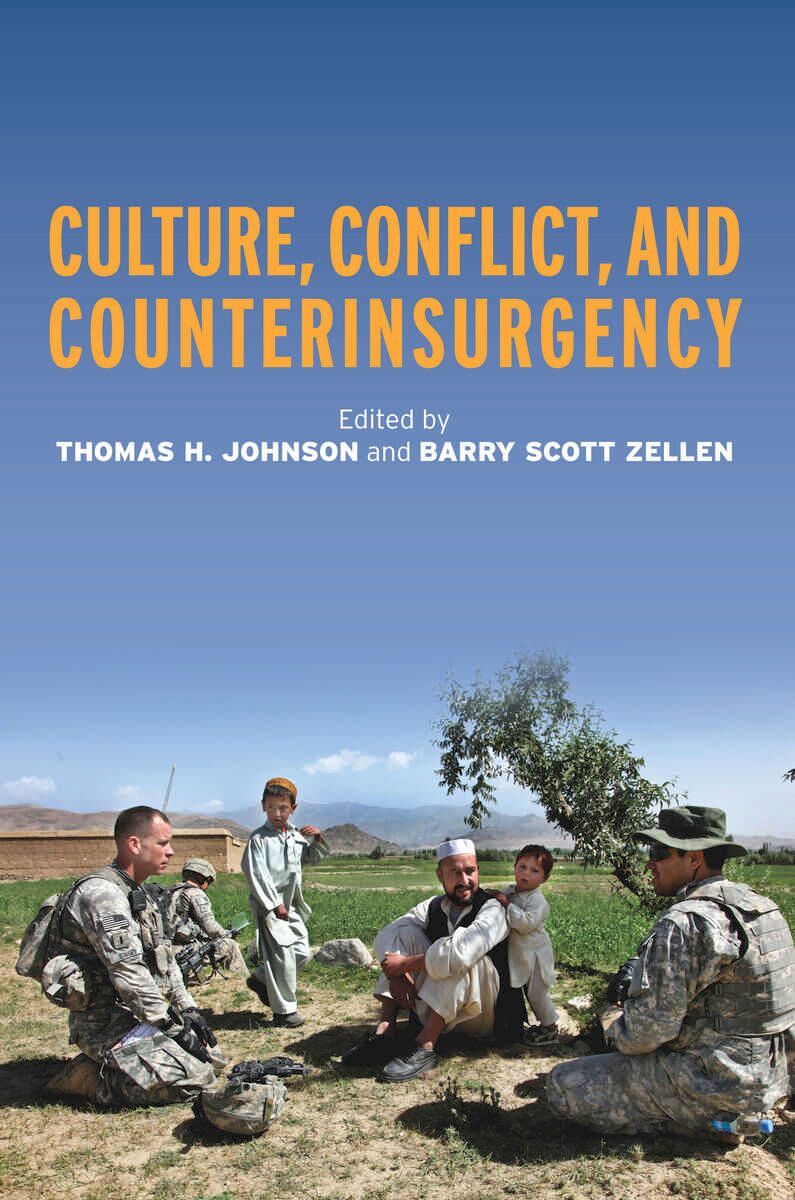
Culture, Conflict, and Counterinsurgency
The authors of Culture, Conflict and Counterinsurgency contend that an enduring victory can still be achieved in Afghanistan. However, to secure it we must better understand the cultural foundations of the continuing conflicts that rage across Afghanistan and neighboring Pakistan, and shift our strategy from an attritional engagement to a smarter war plan that embraces these cultural dimensions.
They examine the nexus of culture, conflict, and strategic intervention, and attempt to establish if culture is important in a national security and foreign policy context, and to explore how cultural phenomena and information can best be used by the military. In the process they address just how intimate cultural knowledge needs to be to counter an insurgency effectively.
Finally, they establish exactly how good we've been at building and utilizing cultural understanding in Afghanistan, what the operational impact of that understanding has been, and where we must improve to maximize our use of cultural knowledge in preparing for and engaging in future conflicts.
eBook

Soft news goes to war
The American public has consistently declared itself less concerned with foreign affairs in the post-Cold War era, even after 9/11, than at any time since World War II. How can it be, then, that public attentiveness to U.S. foreign policy crises has increased? This book represents the first systematic attempt to explain this apparent paradox. Matthew Baum argues that the answer lies in changes to television's presentation of political information. In so doing he develops a compelling \"byproduct\" theory of information consumption. The information revolution has fundamentally changed the way the mass media, especially television, covers foreign policy. Traditional news has been repackaged into numerous entertainment-oriented news programs and talk shows. By transforming political issues involving scandal or violence (especially attacks against America) into entertainment, the \"soft news\" media have actually captured more viewers who will now follow news about foreign crises, due to its entertainment value, even if they remain uninterested in foreign policy.
Baum rigorously tests his theory through content analyses of traditional and soft news media coverage of various post-WWII U.S. foreign crises and statistical analyses of public opinion surveys. The results hold key implications for the future of American politics and foreign policy. For instance, watching soft news reinforces isolationism among many inattentive Americans. Scholars, political analysts, and even politicians have tended to ignore the soft news media and politically disengaged citizens. But, as this well-written book cogently demonstrates, soft news viewers represent a largely untapped reservoir of unusually persuadable voters.
eBook

“Fanaticism” and the Politics of Resistance along the North-West Frontier of British India
During the past decade, discussions of religious extremism and “fanatical” violence have come to dominate both public and academic discourse. Yet, rarely do these debates engage with the historical and discursive origins of the term “fanatic.” As a result, many of these discussions tend to reproduce uncritically the same Orientalist tropes and stereotypes that have historically shaped the way “fanaticism” and “fanatical” violence have been framed and understood. This paper seeks to provide a corrective to this often problematic and flawed understanding of the history of “fanaticism.” It approaches these topics through an examination of how British colonial authorities conceived of and responded to the problem of “murderous,” “fanatical,” and “ghazi” “outrages” along the North-West Frontier of India. By unpacking the various religious, cultural, and psychiatric explanations underpinning British understandings of these phenomena, I explore how these discourses interacted to create the powerful legal and discursive category of the “fanatic.” I show how this was perceived as an existentially threatening class of criminal that existed entirely outside the bounds of politics, society, and sanity, and therefore needed to be destroyed completely. The subjectification of the “fanatic,” in this case, ultimately served as a way of activating the colonial state's “sovereign” need to punish and kill. Finally, I deconstruct these reductive colonial representations of fanaticism in order to demonstrate how, despite British views to the contrary, these were often complex and deeply political acts of anti-colonial resistance.
Journal Article

Introduction to the Special Issue on China’s Relations with Its Neighbors: Historical Perspectives on Contemporary Issues
China shares borders with more countries than any other state in the world today. It shares land borders with fourteen nations: Afghanistan, Bhutan, Burma, India, Kazakhstan, Kyrgyzstan, Laos, Mongolia, Nepal, North Korea, Pakistan, Russia, Tajikistan, and Vietnam. China also shares maritime borders with eight countries: Brunei, Indonesia, Japan, Malaysia, North Korea, the Philippines, South Korea, and Vietnam. Its neighbors include big and/or powerful states (such as India, Japan, and Russia), nuclear powers (i.e., India, North Korea, Pakistan, and Russia), and unstable states, such as Afghanistan. China's neighborhood comprises the largest economic region in the world and the highest concentration of great powers and nuclear powers in the world. China's surge to global power in the twenty-first century has caused endless debate about the implications of its rise for international politics and global stability in general and the dynamics of the US global role in particular. China is now one of the defining factors in the Asia Pacific international configuration as the rise of China has created \"shock waves\" in the policy choices of its neighboring countries. China's neighboring countries are also on the frontier of transformative international developments, which often involve the United States and other powers. In the second decade of the twenty-first century, concerns over China's rise, along with China's territorial and maritime disputes with its neighbors (such as the June 2017 China-India border standoff on Doklam, the China-Japan dispute over the Diaoyu/Senkaku Islands, and the South China Sea issue) and various emergencies in its neighborhood (such as the North Korean nuclear crisis, armed conflict in northern Myanmar in November 2016, and the terrorist attack in Rakhine State in western Myanmar in August 2017), many of which are rooted in the Cold War era, complicate China's relations with its neighbors. How will China deal with its neighbors given its growing power? Global interest in China's historic engagement on its periphery has markedly increased as international leaders, analysts, policymakers, and scholars seek to understand and predict China's current and future relations with these countries. Over the last twenty years, empirical studies of China's relations with its neighbors during the Cold War have evolved into a prominent discipline in the field of contemporary Chinese diplomatic history, even in the entire field of history. The increasing availability of a greater amount of archival documentation, the influence of new Western historical trends, the Chinese government's practical needs in handling relations with its neighbors, and the growing attention of international scholars are the driving forces of this change. In comparison with their international counterparts, mainland Chinese scholars have advantages in accessing and employing historical documents in this regard. They have also attempted to form certain broad theoretical frameworks for interpreting this history. In this introduction I first discuss the background behind the rise of empirical studies of China's relations with its neighbors during the Cold War. I introduce some of the representative works of Chinese scholars that have been published in the last two decades. I then highlight the main arguments and contributions of the five articles featured in this special issue and conclude by pointing to future directions of the field.
Journal Article