
Catalogue Search | MBRL


Are you sure you want to remove the book from the shelf?

{{itemTitle}}
5,169
result(s) for
"Terrorism in literature"
Sort by:


After the Red Army faction
Masterminded by women, the Red Army Faction (RAF) terrorized West Germany from the 1970s to the 1990s. Afterimages of its leaders persist in the works of pivotal artists and writers, including Gerhard Richter, Elfriede Jelinek, and Slavoj iek. Why were women so prominent in the RAF? What does the continuing cultural response to the German armed struggle tell us about the representation of violence, power, and gender today? Engaging critical theory, Charity Scribner addresses these questions and analyzes signal works that point beyond militancy and terrorism. This literature and art discloses the failures of the Far Left and registers the radical potential that RAF women actually forfeited. After the Red Army Faction maps out a cultural history of militancy and introduces \"postmilitancy\" as a new critical term. As Scribner demonstrates, the most compelling examples of postmilitant culture don't just repudiate militancy: these works investigate its horizons of possibility, particularly on the front of sexual politics. Objects of analysis include as-yet untranslated essays by Theodor Adorno and Jürgen Habermas, as well as novels by Friedrich Dürrenmatt and Judith Kuckart, Johann Kresnik's Tanztheaterstück Ulrike Meinhof, and the blockbuster exhibition Regarding Terror at the Berlin Kunst-Werke. Scribner focuses on German cinema, offering incisive interpretations of films by Margarethe von Trotta, Volker Schlöndorff, and Fatih Akin, as well as the international box-office success The Baader-Meinhof Complex. These readings disclose dynamic junctures among several fields of inquiry: national and sexual identity, the disciplining of the militant body, and the relationship between mass media and the arts.
eBook

Terror and the postcolonial
Terror and the Postcolonial is a major comparative study of terrorism and its representations in postcolonial theory, literature, and culture. A ground-breaking study addressing and theorizing the relationship between postcolonial studies, colonial history, and terrorism through a series of contemporary and historical case studies from various postcolonial contexts. Critically analyzes the figuration of terrorism in a variety of postcolonial literary texts from South Asia, Africa, and the Middle East. Raises the subject of terror as both an expression of globalization and a postcolonial product. Features key essays by well-known theorists, such as Robert J. C. Young, Derek Gregory, and Achille Mbembe, and Vron Ware.
Book
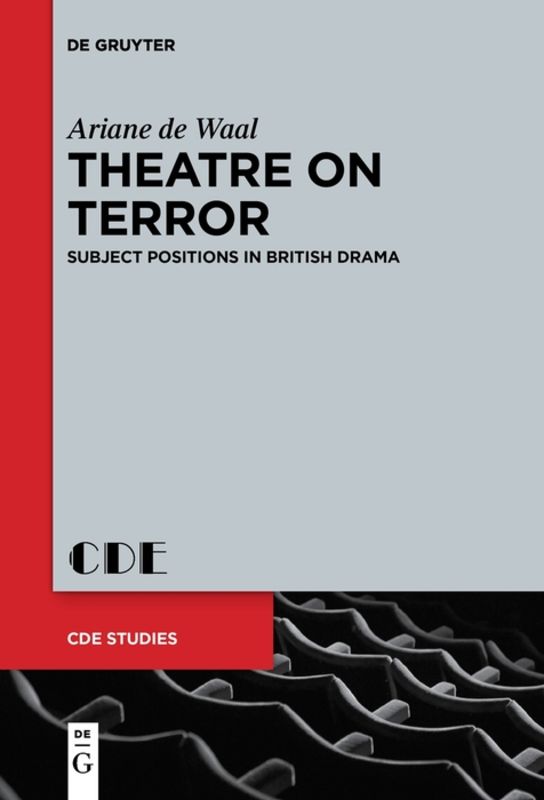
Theatre on terror : subject positions in British drama
CDE STUDIES (GENERAL EDITOR: ANETTE PANKRATZ) The book series is dedicated to contemporary anglophone playwrights and the analysis of the historical, political and aesthetic contexts of their work, thus seeking to advance the theoretical and methodological discourse on theatre and drama today.
eBook

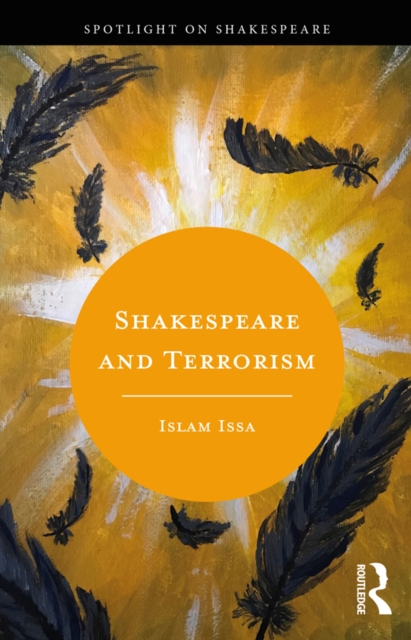
Shakespeare and Terrorism
Shakespeare and Terrorism delves into how extremists have responded to Shakespeare - whether they've attacked him or been inspired by him - and investigates what the playwright and his works can tell us about the nature, psychology, and consequences of terror.
'Islam Issa is one of the stars of his generation. Fluent and equable, original and sage, his work floods the topics he turns to with startling, exhilarating light.'Ewan Fernie, Fellow and Chair, The Shakespeare Institute'I have long been a serious fan of Islam Issa and his fresh, open and unflinching perspective on Shakespeare. The illuminating clarity he brings to Shakespeare's resonance and difficulty across cultures and histories is making an essential contribution to twenty-first-century Shakespeareans.'Erica Whyman OBE, Deputy Artistic Director, Royal Shakespeare Company'Islam Issa has a profound understanding of the relationship between culture and our intellectual, social, and political values. His groundbreaking work has important significance for the development of international understanding and for the furtherance of humane values.'Sir Stanley Wells, Honorary President, Shakespeare Birthplace Trust
Literary critic and historian Islam Issa takes readers on a journey from Shakespeare's Stratford-upon-Avon and London to a variety of locations: from Western Europe to the Balkans to the US, from North Africa to the Persian Gulf to Central Asia, and from the theatre to the digital world. Considering incidents from Shakespeare's time through today, including the Gunpowder Plot and 9/11, as well as pivotal figures from Hamlet and Macbeth to Hitler and Bin Laden, this book brings to light new ideas about key characters, events, and themes both in Shakespeare's plays and the world around them.
A thrilling and accessible read, this ground-breaking book will enlighten and engage students, researchers, and general readers interested in Shakespeare, social sciences, history, and the complex relationships between life and art.
Spotlight on ShakespeareSeries Editors: John Garrison and Kyle Pivetti
Spotlight on Shakespeare offers a series of concise, lucid books that explore the vital purchase of the modern world on Shakespeare's work. Authors in the series embrace the notion that emergent theories, contemporary events, and movements can help us shed new light on Shakespeare's work and, in turn, his work can help us better make sense of the contemporary world. The aim of each volume is two-fold: to show how Shakespeare speaks to questions in our world and to illuminate his work by looking at it through new forms of human expression. Spotlight on Shakespeare will adopt fresh scholarly trends as contemporary issues emerge, and it will continually prompt its readers to ask, \"What can Shakespeare help us see? What can he help us do?\" Spotlight on Shakespeare invites scholars to write non-exhaustive, pithy studies of very focused topics - with the goal of creating books that engage scholars, students, and general readers alike.Available in this series:Shakespeare on the Shades of Racism
Ruben Espinosa
Shakespeare in Jest
Indira Ghose
Shakespeare and Terrorism
Islam IssaFor more information about this series, please visit: www.routledge.com/Spotlight-on-Shakespeare/book-series/SOSHAX
eBook


Written in Blood
Written in Blood offers a fundamentally new interpretation of the emergence of modern terrorism, arguing that it formed in the Russian literary imagination well before any shot was fired or bomb exploded. In March 1881, Russia stunned the world when a small band of revolutionaries calling themselves \"terrorists\" assassinated the Tsar-Liberator, Alexander II. Horrified Russians blamed the influence of European political and social ideas, while shocked Europeans perceived something new and distinctly Russian in a strategy of political violence that became known the world over as \"terrorism\" or \"the Russian method.\" Lynn Ellen Patyk contends that the prototype for the terrorist was the Russian writer, whose seditious word was interpreted as an audacious deed—and a violent assault on autocratic authority. The interplay and interchangeability of word and deed, Patyk argues, laid the semiotic groundwork for the symbolic act of violence at the center of revolutionary terrorism. While demonstrating how literary culture fostered the ethos, pathos, and image of the revolutionary terrorist and terrorism, she spotlights Fyodor Dostoevsky and his \"terrorism trilogy\"—
Crime and Punishment (1866),
Demons (1870–73), and
The Brothers Karamazov (1878–80)—as novels that uniquely illuminate terrorism's methods and trajectory. Deftly combining riveting historical narrative with penetrating literary analysis of major and minor works, Patyk's groundbreaking book reveals the power of the word to spawn deeds and the power of literature to usher new realities into the world.
eBook


Blasted Literature
By connecting Fenian and anarchist violence found in popular fiction from the 1880s to the early 1900s with the avant-garde writing of British modernism, Deaglán Ó Donghaile demonstrates that Victorian popular fiction and modernism were directly influenced by the explosive shocks of late nineteenth-century terrorism.
eBook