
Catalogue Search | MBRL


Are you sure you want to remove the book from the shelf?

{{itemTitle}}
5,773
result(s) for
"Texas College"
Sort by:

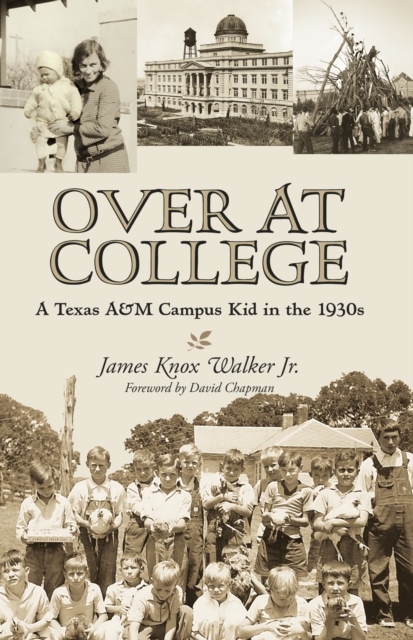
Over at College
In 1926 James Knox Walker, professor of civilengineering, and his new bride moved onto thecampus of what was then known as the Agriculturaland Mechanical College of Texas. The greatercommunity of which this small on-campusneighborhood was a part was known simply as\"College.\" There was no such place as CollegeStation, and the city of Bryan stood six miles away. James Knox Walker Jr., the couple's oldest child,recollects the days when professors, staff members,and their children formed a small, closely knitsociety \"over at College.\" The campus served asthe children's playground and the scene of theiradventures. It also served their educational needs atAM Consolidated School, founded in 1920. Thiscommunity flourished from its beginnings in thelate 1890s until 1938, when the college informedresidents that it would no longer provide on-campushousing. Over at College is a charming stroll through the pastthat also captures fascinating glimpses of the socialstructures, institutions, mores, and daily lives on theAM campus during the 1920s and 1930s.
eBook


Together We Can
Together We Can recounts effective strategies for institutional change and focuses on collective leadership within the land-grant university system, with reflections on Hiler’s long and successful career in academic leadership, both at Texas A&M University and within the larger Texas A&M System.
Although many books discuss leadership and organizational change in the private sector, there are relatively few dealing with public-sector entities—especially public land-grant universities and academic agencies—and none on collective leadership, the standard for highly collaborative and interdependent groups and individuals.
Hiler draws on more than four decades of academic leadership experiences and personal anecdotes to recount the history of the land-grant system and Texas’ place in it. He also distills collective leadership “principles-in-action” that he believes should sustain such institutions, including Texas A&M, in the future, articulating an unwavering argument that the land-grant mission, through teaching, research, and outreach through extension, remains the single most powerful educational force within our society to equip citizens with the means to adapt to create meaningful opportunities, improve quality of life, and keep the world on a sustainable course amid uncertain times.
Bosserman then places Hiler’s reflections in the context of institutional change strategies and situational leadership styles to establish a “do-it-yourself tool kit” that includes effective leadership, collaboration, and mentorship approaches and techniques for those who strive to make a positive impact in their organizations, regardless of their starting point.
eBook

The silence of our friends
This semi-autobiographical tale is set in 1967. A white family from a notoriously racist neighborhood in the suburbs and a black family from its poorest ward cross Houston's color line, overcoming humiliation, degradation, and violence to win the freedom of five black college students unjustly charged with the murder of a policeman.
Book

Shadows of a Sunbelt City
Austin, Texas, is often depicted as one of the past half century's great urban successstories—a place that has grown enormously through \"creative class\" strategies emphasizing tolerance and environmental consciousness. In Shadows of a Sunbelt City, Eliot Tretter reinterprets this familiar story by exploring the racial and environmental underpinnings of the postindustrial knowledge economy. He is particularly attentive to how the University of Texas—working with federal, municipal, and private-sector partners and acquiring the power of eminent domain—expanded its power and physical footprint. He draws attention to how the university's real estate endeavors shaped the local economy and how the expansion and upgrading of the main campus occurred almost entirely at the expense of the more modestly resourced communities of color that lived in its path.
This book challenges Austin's reputation as a bastion of progressive and liberal values, notably with respect to its approach to new urbanism and issues of ecological sustainability. Tretter's insistence on documenting and interrogating the \"shadows\" of this important city should provoke fresh conversations about how urban policy has contributed to Austin's economy, the way it has developed and changed over time, and for whom it works and why. Joining a growing critical literature about universities' effect on urban environments, this book will be of interest to students at all levels in urban history, political science, economic and political geography, public administration, urban and regional planning, and critical legal studies.
eBook

The silence of our friends
A semi-autobiographical tale set in 1967 Texas, against the backdrop of the fight for civil rights, wherein a white family from a notoriously racist neighborhood in the suburbs and a black family from its poorest ward cross Houston's color line, overcoming humiliation, degradation, and violence to win the freedom of five black college students unjustly charged with the murder of a policeman.
Book

Battle of the Brazos
During halftime of the October 30, 1926, football game between Baylor University and the Agricultural and Mechanical College of Texas, a massive riot erupted between the two student bodies that resulted in the death of Texas A&M senior cadet Charles Sessums. Though various newspaper articles have chronicled this infamous “cold case” over the last ninety years, none has placed the riot in its proper context, nor has any official determination ever identified the person responsible for Sessums’s death. T. G. Webb has pored over related historic documents, including contemporary newspaper accounts, records in the library archives of both universities, personal correspondence of the victim’s family, and the original report of the Pinkerton detective hired by Texas A&M to investigate the incident. In Battle of the Brazos , Webb examines and explains the riot, its origins, and its aftermath, untangling many enduring myths that grew up around the event over the years to establish the definitive record. He allows readers to witness the heart-breaking arrival of Cadet Sessums’s parents at the Waco train station as they came to receive the body of their deceased son, and he places readers amid the swirl of charges, recriminations, and allegations that clouded the atmosphere at both Texas A&M and Baylor. Most significantly, Webb provides previously unpublished indications of a cover-up designed to shield the killer’s identity from public knowledge. This “historical whodunit” is a must-read for sports fans and historians, devotees of “leather-helmet” football, local history buffs, and Texas football enthusiasts alike.
eBook

A plain vanilla murder
\"China and Ruby Wilcox are presenting their annual 'Not Just Plain Vanilla Workshop,' always a huge hit with customers at Thyme & Seasons Herb Shop. But someone involved with the workshop is driven by a deadly motive, and China soon finds herself teaming up with the very pregnant Pecan Springs police chief Sheila Dawson to solve a vanilla-flavored murder. Sheila, happy to get out from behind the chief's desk, is investigating the death of a botany professor, a prominent researcher specializing in vanilla orchids. China is trying to help a longtime friend: the dead professor's ex-wife and a prime suspect in his murder. However, there's no shortage of other suspects: a betrayed lover, a disgruntled graduate student, jealous colleagues, and a gang of orchid smugglers. But the lethal roots of this mystery reach back into the dark tropical jungles of Mexico, where the vanilla vine was first cultivated. At stake: a lucrative plant patent, an orchid that is extinct in the wild, and the life of an innocent little girl.\"-- Provided by publisher.
Book
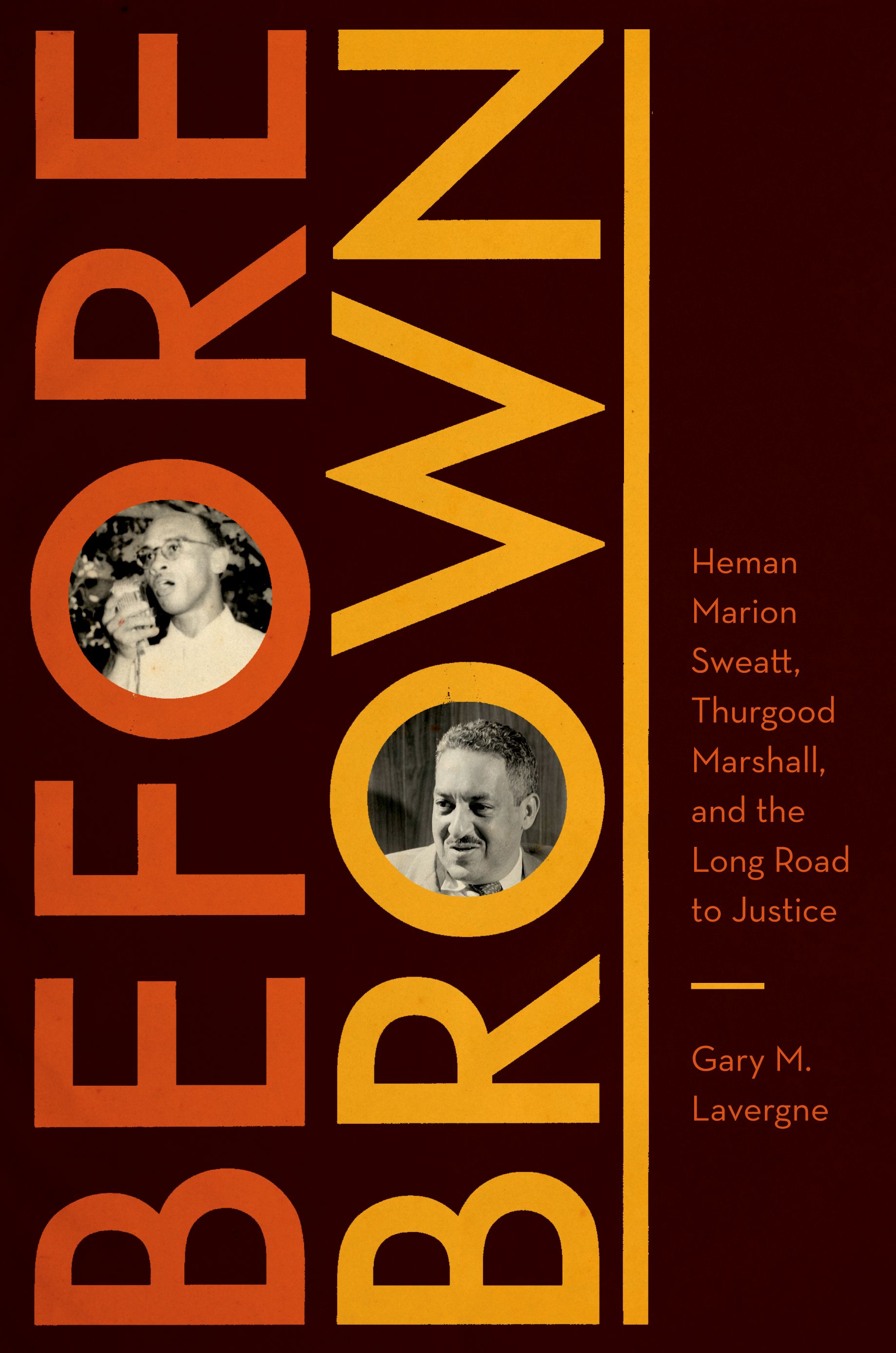
Before Brown
On February 26, 1946, an African American from Houston applied for admission to the University of Texas School of Law. Although he met all of the school's academic qualifications, Heman Marion Sweatt was denied admission because he was black. He challenged the university's decision in court, and the resulting case, Sweatt v. Painter, went to the U.S. Supreme Court, which ruled in Sweatt's favor. The Sweatt case paved the way for the landmark Brown v. Board of Education of Topeka rulings that finally opened the doors to higher education for all African Americans and desegregated public education in the United States. In this engrossing, well-researched book, Gary M. Lavergne tells the fascinating story of Heman Sweatt's struggle for justice and how it became a milestone for the civil rights movement. He reveals that Sweatt was a central player in a master plan conceived by the National Association for the Advancement of Colored People (NAACP) for ending racial segregation in the United States. Lavergne masterfully describes how the NAACP used the Sweatt case to practically invalidate the \"separate but equal\" doctrine that had undergirded segregated education for decades. He also shows how the Sweatt case advanced the career of Thurgood Marshall, whose advocacy of Sweatt taught him valuable lessons that he used to win the Brown v. Board of Education case in 1954 and ultimately led to his becoming the first black Associate Justice of the Supreme Court.
eBook