
Catalogue Search | MBRL


Are you sure you want to remove the book from the shelf?

{{itemTitle}}
480
result(s) for
"Texas Race relations."
Sort by:

Mexican American civil rights in Texas
\"Inspired by a 1968 U.S. Commission on Civil Rights six-day hearing in San Antonio that introduced the Mexican American people to the rest of the nation, this book is an examination of the social change of Mexican Americans of Texas over the past half century with recommendations for the future of immigration, voting rights, educational equity, employment and economic security, health and the criminal justice system\"-- Provided by publisher.
BOOK

Fighting Their Own Battles
Between 1940 and 1975, Mexican Americans and African Americans in Texas fought a number of battles in court, at the ballot box, in schools, and on the streets to eliminate segregation and state-imposed racism. Although both groups engaged in civil rights struggles as victims of similar forms of racism and discrimination, they were rarely unified. InFighting Their Own Battles, Brian Behnken explores the cultural dissimilarities, geographical distance, class tensions, and organizational differences that all worked to separate Mexican Americans and blacks.Behnken further demonstrates that prejudices on both sides undermined the potential for a united civil rights campaign. Coalition building and cooperative civil rights efforts foundered on the rocks of perceived difference, competition, distrust, and, oftentimes, outright racism. Behnken's in-depth study reveals the major issues of contention for the two groups, their different strategies to win rights, and significant thematic developments within the two civil rights struggles. By comparing the histories of these movements in one of the few states in the nation to witness two civil rights movements, Behnken bridges the fields of Mexican American and African American history, revealing the myriad causes that ultimately led these groups to \"fight their own battles.\"
eBook

Heaven, my home
The thrilling follow-up to the award-winning Bluebird, Bluebird Texas Ranger Darren Matthews is on the hunt for a boy who's gone missing--but it's the boy's family of white supremacists who are his real target.
Book

Seeking inalienable rights
Seeking Inalienable Rights demonstrates that the history of Texans’ quests to secure inalienable rights and expand government-protected civil rights has been one of stops and starts, successes and failures, progress and retrenchment.
eBook

The silence of our friends
This semi-autobiographical tale is set in 1967. A white family from a notoriously racist neighborhood in the suburbs and a black family from its poorest ward cross Houston's color line, overcoming humiliation, degradation, and violence to win the freedom of five black college students unjustly charged with the murder of a policeman.
Book


Freedom colonies
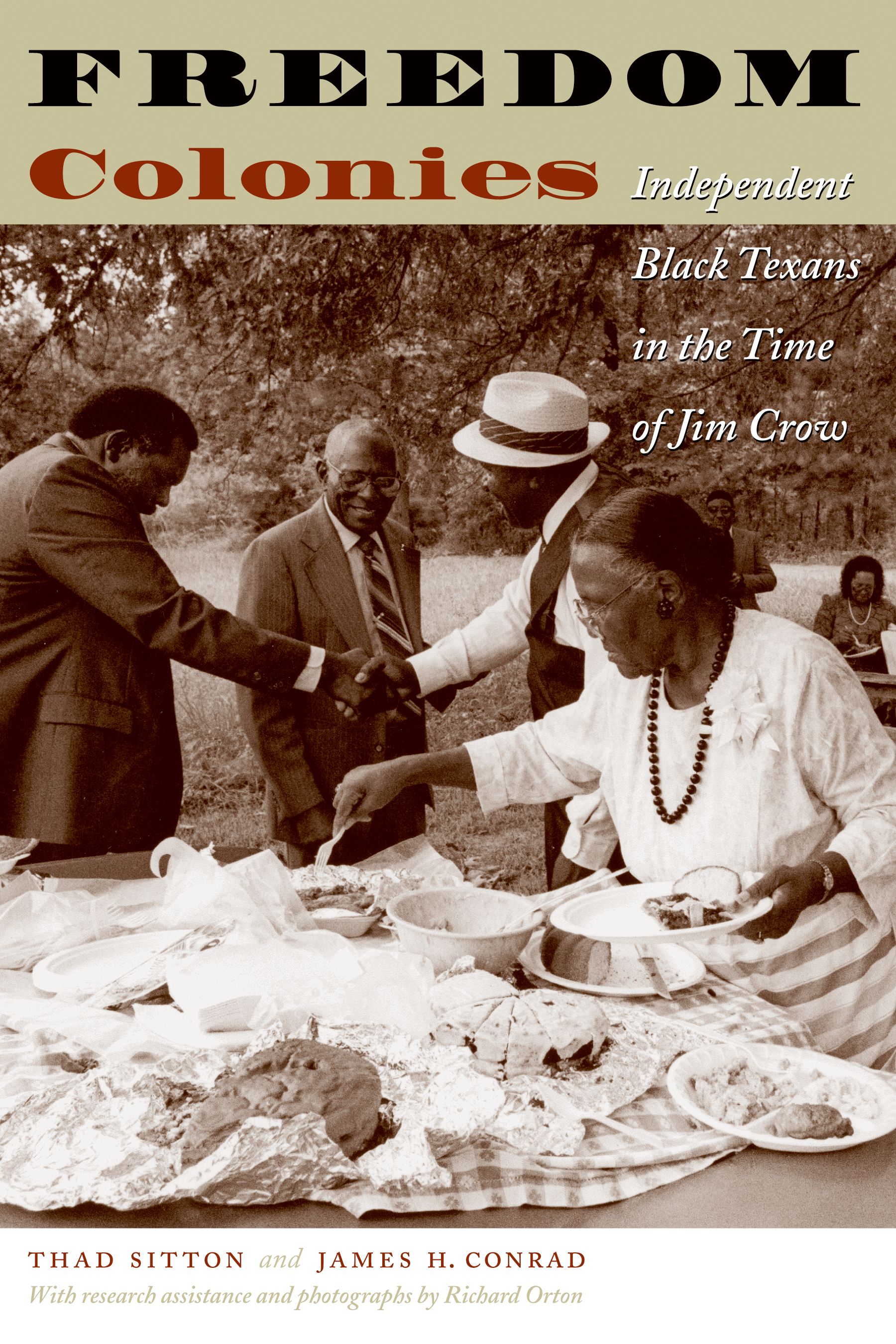
In the decades following the Civil War, nearly a quarter of African Americans achieved a remarkable victory—they got their own land. While other ex-slaves and many poor whites became trapped in the exploitative sharecropping system, these independence-seeking individuals settled on pockets of unclaimed land that had been deemed too poor for farming and turned them into successful family farms. In these self-sufficient rural communities, often known as \"freedom colonies,\" African Americans created a refuge from the discrimination and violence that routinely limited the opportunities of blacks in the Jim Crow South. Freedom Colonies is the first book to tell the story of these independent African American settlements. Thad Sitton and James Conrad focus on communities in Texas, where blacks achieved a higher percentage of land ownership than in any other state of the Deep South. The authors draw on a vast reservoir of ex-slave narratives, oral histories, written memoirs, and public records to describe how the freedom colonies formed and to recreate the lifeways of African Americans who made their living by farming or in skilled trades such as milling and blacksmithing. They also uncover the forces that led to the decline of the communities from the 1930s onward, including economic hard times and the greed of whites who found legal and illegal means of taking black-owned land. And they visit some of the remaining communities to discover how their independent way of life endures into the twenty-first century.
eBook

Dark water rising
While salvaging and rebuilding in the aftermath of the Galveston flood of 1900, sixteen-year-old Seth proves himself in a way that his previous efforts never could, but he still must face his father man-to-man.
Book
Before Brown
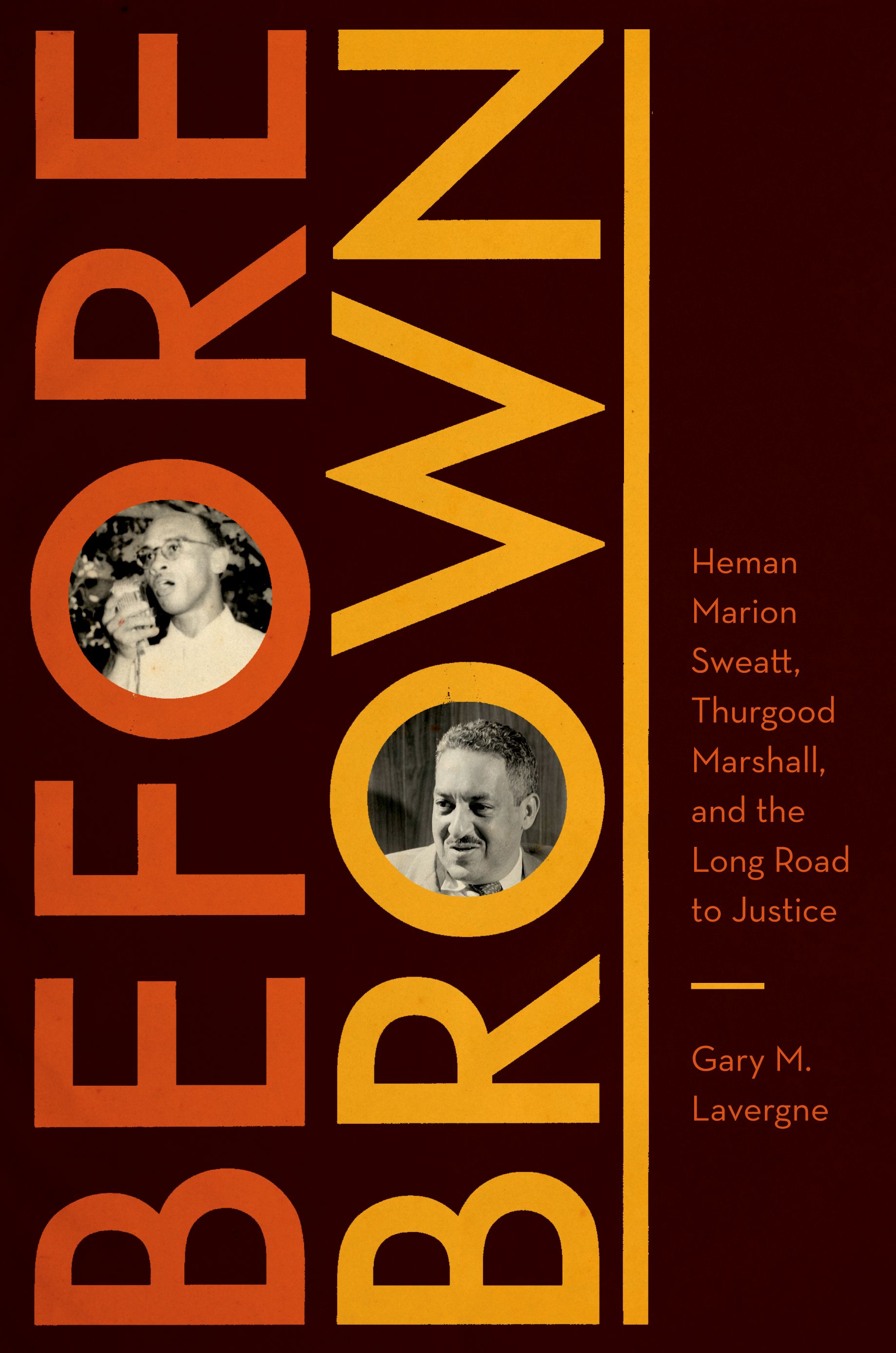
On February 26, 1946, an African American from Houston applied for admission to the University of Texas School of Law. Although he met all of the school's academic qualifications, Heman Marion Sweatt was denied admission because he was black. He challenged the university's decision in court, and the resulting case, Sweatt v. Painter, went to the U.S. Supreme Court, which ruled in Sweatt's favor. The Sweatt case paved the way for the landmark Brown v. Board of Education of Topeka rulings that finally opened the doors to higher education for all African Americans and desegregated public education in the United States. In this engrossing, well-researched book, Gary M. Lavergne tells the fascinating story of Heman Sweatt's struggle for justice and how it became a milestone for the civil rights movement. He reveals that Sweatt was a central player in a master plan conceived by the National Association for the Advancement of Colored People (NAACP) for ending racial segregation in the United States. Lavergne masterfully describes how the NAACP used the Sweatt case to practically invalidate the \"separate but equal\" doctrine that had undergirded segregated education for decades. He also shows how the Sweatt case advanced the career of Thurgood Marshall, whose advocacy of Sweatt taught him valuable lessons that he used to win the Brown v. Board of Education case in 1954 and ultimately led to his becoming the first black Associate Justice of the Supreme Court.
eBook