
Catalogue Search | MBRL


Are you sure you want to remove the book from the shelf?

{{itemTitle}}
10,846
result(s) for
"Textbooks History."
Sort by:

World histories from below : disruption and dissent, 1750 to the present
\"This textbook is the first to consider world history from below, providing an alternative to the privilege of Western powers and elite political structures found in conventional global history narratives\"-- Provided by publisher.
Book

History education and post-conflict reconciliation
Content: Post-conflict reconciliation and joint history textbook projects / Simone LässigPeace education and joint history textbook projects / Karina V. Korostelina -- From textbook comparison to common textbooks: changing patterns in international textbook revision / Georg Stöber -- Symbol or reality: the background, implementation and development of the Franco-German history textbook / Corine Defrance and Ulrich Pfeil -- Overcoming the national framework of teaching media: binational teacher's books and multinational teaching materials / Robert Maier -- Towards a joint German-Polish history textbook: historical roots, structures and challenges / Simone Lässig and Thomas Strobel -- Forging a common narrative in former Yugoslavia: the design, implementation and impact of the scholars' initiative / Charles Ingrao -- Reconnecting history: the joint history project in the Balkans / Lubov Fajfer -- History as a project of the future: the European history textbook debate / Falk Pingel -- Learning each other's historical narrative: a road map to peace in Israel/Palestine / Achim Rohde -- The Tbilisi initiative: the story of an unpublished textbook / Karina Korostelina -- Striving for common history textbooks in northeast Asia (China, South Korea and Japan): between ideal and reality / Daqing Yang and Ju-Back Sin -- Best practice models and scholarly concepts: theoretical and methodological framework for joint history projects / Karina Korostelina.
eBook

The Economic Reader
The book studies the origins and evolution of economic textbooks in the nineteenth and early twentieth century, up to the turning point represented by Paul Samuelson’s Economics (1948), which became the template for all the textbooks of the postwar period. The case studies included in the book cover a large part of Europe, the British Commonwealth, the United States and Japan. Each chapter examines various types of textbooks, from those aimed at self-education to those addressed to university students, secondary school students, to the short manuals aimed at the popularisation of political economy among workers and the middle classes. An introductory chapter examines this phenomenon in a comparative and transnational perspective.
Massimo M. Augello is full professor of the History of economic thought and Dean of the Faculty of Economics at the University of Pisa. Marco E.L. Guidi is full professor of the History of economic thought at the Department of Economics of the University of Pisa.
Foreward 1. The Making of an Economic Reader: The Dissemination of Economics Through Textbooks Massimo M. Augello and Marco E. L. Guidi 2. Economic Manuals and Textbooks in Great Britain and the British Empire, 1797-1938 Keith Tribe 3. Cours, Leçons, Manuels, Précis and Traités: Teaching Political Economy in Nineteenth-Century France 4. Economic Textbooks in the German Language Area Harald Hagemann and Matthias Rösch 5. Educating the Nation: Textbooks and Manuals of Political Economy in Italy, 1815-1922 Massimo M. Augello and Marco E. L. Guidi 6. Teaching, Spreading and Preaching: Textbooks of Political Economy in Spain, 1779-1936 Salvador Aimenar 7. Textbooks and the Teaching of Political Economy in Portugal 1759-1910 José Luis Cardoso and Antonio Almodovar 8. 'A Powerful Instrument of Progress' Economic Textbooks in Belgium, 1830-1925 Guido Erreygers and Maartin Van Dijck 9. From Ruminators to Pioneers: Dutch Economics Textbooks and their Authors in the Ninteteenth and Early Twentieth Century Ewert Schoorl and Henk Plasmeijer 10. Political Economy Textbooks and Manuals and the Roots of the Scandinavian Model Johan Lönnroth 11. The Emergence of the Economic Science of Japan and the Evolution of Textbooks 1860s-1930s Tamotsu Nishizawa
eBook

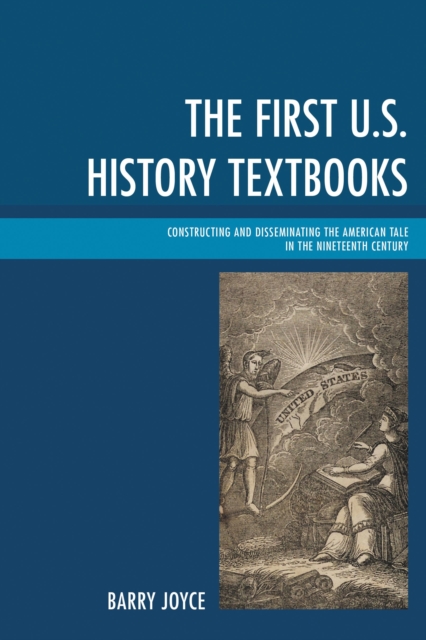
The first U.S. history textbooks
This book analyzes the common narrative residing in American History textbooks published in the first half of the 19th century. That story, what the author identifies as the American \"creation\" or \"origins\" narrative, is simultaneously examined as both historic and \"mythic\" in composition. It offers a fresh, multidisciplinary perspective on an enduring aspect of these works. The book begins with a provocative thesis that proposes the importance of the relationship between myth and history in the creation of America's textbook narrative. It ends with a passionate call for a truly inclusive story of who Americans are and what Americans aspire to become. The book is organized into three related sections. The first section provides the context for the emergence of American History textbooks. It analyzes the structure and utility of these school histories within the context of antebellum American society and educational practices. The second section is the heart of the book. It recounts and scrutinizes the textbook narrative as it tells the story of America's emergence from \"prehistory\" through the American Revolution--the origins story of America. This section identifies the recurring themes and images that together constitute what early educators conceived as a unified cultural narrative. Section three examines the sectional bifurcation and eventual re-unification of the American History textbook narrative from the 1850s into the early 20th century. The book concludes by revisiting the relationship between textbooks, the American story, and mythic narratives in light of current debates and controversies over textbooks, American history curriculum and a common American narrative.
eBook

Political ideologies : their origins and impact
\"Comprehensive yet accessible, this classic text, now in its thirteenth edition follows the evolution of political thought over 300 years. Organized chronologically, this text examines each ideology within a political, historical, economic, and social context. In addition to a thorough updating of examples and data, here's what you'll find in the new edition: Analyses of President Trump's rollback of Obamacare, trade war with China, and changes to immigration, taxation and environmental policy. Conservative justifications for supply-side economics and liberal rationale for drug legalization and \"trigger-word\" bans. Brexit's effects on the Scottish independence movement. Resurgence of feminist protest, including the MeToo movement, alongside anarchist protest, following Trump's election, including groups like Black Bloc and Antifa. China's rising environmental and social problems, including unrest among its heavily controlled Uighur population. Cuba's transfer of power from the Castros to President Dâiaz-Canel, and their fraught rapprochement with the U.S. Russia's disinformation campaigns, and alternating brinksmanship and dâetente between Trump and North Korea's Chairman Kim Jong-un. The ascent of the Alt-right in the US, and white supremacist influence on parties in the U.S. and Europe. The continuing salience of Islamism, the teetering Iran deal, and ongoing degeneration of the Arab Spring to the Islamist Winter\"-- Provided by publisher.
Book

Exploring Textbooks and Cultural Change in Nordic Education 1536-2020
\"This volume addresses a gap in previous research and explores Nordic textbooks chronologically and empirically from the Protestant Reformation to our present time. The chapters are written by scholars from universities in Finland, Denmark, Sweden and Norway, countries that distinguish themselves with a rich tradition of textbook research. The authors represent different academic traditions and use a wide range of scholarly methods and perspectives. The overall objective is to highlight how textbooks reflect national cultural politics and legislation. The various chapters cast light on how textbooks are integrated in national politics and demonstrate how they have contributed to nation-building and to strengthening the nations' core values and other major political projects. Contributors are: Karl Christian Alvestad, Norunn Askeland, Kjell Lars Berge, Peter Bernhardsson, Kerstin Bornholdt, Mads B. Claudi, Henrik Edgren, Morten Fink-Jensen, Stig Toke Gissel, Thomas Illum Hansen, Pirjo Hiidenmaa, Marthe Hommerstad, Axel Hörstedt, Kari-Anne Jørgensen-Vittersø, Tujia Laine, Esbjörn Larsson, Ragnhild Elisabeth Lund, Christina Matthiesen, Eva Maagerø, Tuva Skjelbred Nodeland, Kari H. Nordberg, Merethe Roos, Henriette Hogga Siljan, Johan Laurits Tønnesson and Janne Varjo\"--.
eBook


Schoolbook nation
\"A superior book. . . . Many readers will be surprised to see that today's arguments about history education follow the culture wars that go back to almost the beginning of the republic. Moreau's writing is engaging, with brilliant flashes of insight, as well as balance and wit.\"-Gary B. Nash, Director of the National Center for History in the SchoolsTaking Frances FitzGerald's textbook studyAmerica Revisedas a point of departure, Joseph Moreau inSchoolbook Nationchallenges FitzGerald's premise that the 1960s were the beginning of the end of the glory days of American history education.Moreau recounts how in the late twentieth century, cultural commentators such as historian Arthur Schlesinger Jr. and politician Newt Gingrich preached that a new identity crisis had shaken American history in the sixties, and that the grand unified view of our past had given way to various interest groups, who dismantled the old national narrative while demanding a more \"inclusive\" curriculum for their children.Moreau discovered, however, that American history, while grand, has never been unified. Delving into more than 100 history books from the last 150 years, the author reveals that the efforts of pressure groups to influence the history curriculum are nearly as old as the mustiest textbook. \"For those who would influence textbooks and teaching-Protestant elites in the 1870s, Irish-Americans in the 1920s, and conservative politicians today-the sky has always been falling,\" according to Moreau.Schoolbook Nationoffers a history lesson of its own: when the story of the past is written or rewritten, truth is often a victim. With its comprehensive treatment of the subjects of honesty and politics in the teaching of history, this is an essential book on the side of truth in a complex debate.
eBook