
Catalogue Search | MBRL


Are you sure you want to remove the book from the shelf?

{{itemTitle}}
6
result(s) for
"Textgenese"
Sort by:

Exploring the Isaiah Scrolls and Their Textual Variants
In Exploring the Isaiah Scrolls and Their Textual Variants, Donald W. Parry systematically presents the variants in Isaiah (Hebrew Bible and Dead Sea Scrolls) that impact our understanding of the textual history of the Bible as well as modern translations of Isaiah.
eBook
Gospels before the Book
What does it mean to read the gospels “before the book”? For centuries, the way people have talked about the gospels has been shaped by ideas that have more to do with the printing press and modern notions of the author than they do with ancient writing and reading practices. Gospels Before the Book challenges several subtle yet problematic assumptions about authors, books, and publication at work in early Christian studies. The author explores a host of underappreciated elements of ancient textual culture, such as unfinished texts, accidental publication, postpublication revision, and multiple authorized versions of the same work. Turning to the gospels, he argues the earliest readers and users of the text we now call the Gospel according to Mark treated it not as a book published by an author but as an unfinished, open, and fluid collection of notes (hypomnēmata). The Gospel according to Matthew, then, would not be regarded as a separate book published by a different author but, rather, as a continuation of the same unfinished gospel tradition. Similarly, it is not the case that, of the five different endings in the textual tradition, one is “right” and the others are “wrong.” Rather, each ending represents its own effort to fill in what some perceived to be lacking in the Gospel according to Mark. The text of the Gospel according to Mark is better understood when approached as unfinished notes than as a book published by an author. Larsen also offers a new methodological framework for future scholarship on early Christian gospels.
eBook

The Three Waves of Globalization
Globalization, i.e. the spatio-temporal processes of change leading to a transformation in the organization of human affairs, is said to have started as long ago as the end of the 15th century. This first wave of globalization was subsequently followed by two others. The third wave of globalization, which began after 2000, has made the world noticeably smaller. In fact, technological innovations have sharply increased the availability of new modes and channels of communication. As a result, t.
eBook
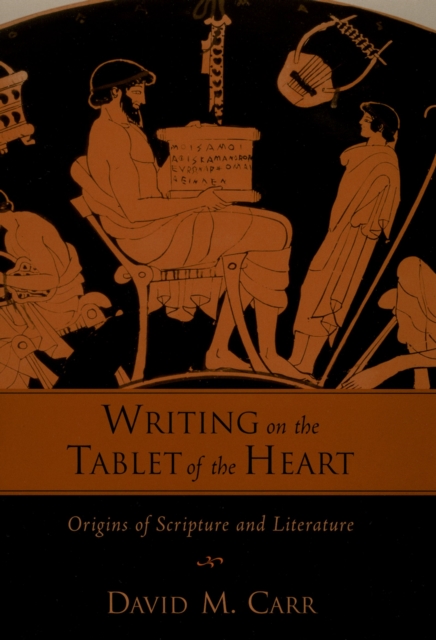
Writing on the tablet of the heart : origins of scripture and literature
This book explores a new model for the production, revision, and reception of Biblical texts as Scripture. Building on recent studies of the oral/written interface in medieval, Greco-Roman and ancinet Near Eastern contexts, David Carr argues that in ancient Israel Biblical texts and other texts emerged as a support for an educational process in which written and oral dimensions were integrally intertwined. The point was not incising and reading texts on parchment or papyrus. The point was to enculturate ancient Israelites - particularly Israelite elites - by training them to memorize and recite a wide range of traditional literature that was seen as the cultural bedorck of the people: narrative, prophecy, prayer, and wisdom.
eBook