
Catalogue Search | MBRL


Are you sure you want to remove the book from the shelf?

{{itemTitle}}
153
result(s) for
"Textile fabrics Asia, Central."
Sort by:

Silk and cotton : textiles from the Central Asia that was
The traditional textiles of Central Asia are an unknown treasure, now revealed in this book. Straddling the legendary Silk Road, this vast region stretches from the Caspian Sea in the west to the Gobi Desert in the east and is home to hundreds of tribes. Whether nomadic or sedentary, its peoples created textiles that related to every aspect of their way of life, from ceremonial objects marking rites of passage to everyday garments to practical items for the home. There were suzanis for the marriage bed; niche covers; prayer mats; patchwork bedding quilts; camel trappings for Turkmen bridal processions; bags for tea, scissors and mirrors; lovingly embroidered children's hats and bibs and robes of every colour and pattern. Author Susan Meller has spent years assembling the extraordinary collection of 590 textiles illustrated in this book. She documents their history, use and meaning.
Book
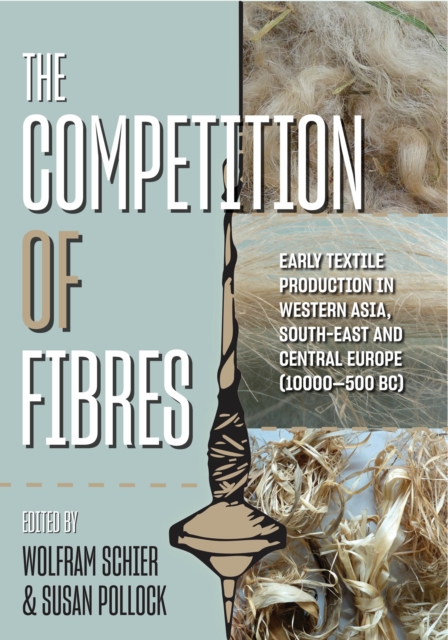
The Competition of Fibres
The central issues discussed in this new collected work in the highly successful ancient textiles series are the relationships between fiber resources and availability on the one hand and the ways those resources were exploited to produce textiles on the other.
eBook

Island blues: indigenous knowledge of indigo-yielding plant species used by Hainan Miao and Li dyers on Hainan Island, China
Background
Historically, indigo-yielding plant species were important cash crops from Central Asia to the southern United States and Central America. Indigo-dyed textiles were widely traded along the legendary Silk Road that linked China to Europe. Today, due to the labor-intensive nature of indigo extraction at the household level, lifestyle changes and the widespread availability of commercially produced indigo paste, traditional indigo extraction methods have declined in villages. Yet Li textile weavers on Hainan Island are internationally recognized as producers of indigo-dyed textile using warp ikat techniques. In contrast, Hainan Miao weavers produce indigo-dyed textiles using batik (wax resist) techniques. The aim of this study was to document the indigenous knowledge on indigo-yielding plant species used by both Hainan Miao and Li people on Hainan Island, China.
Method
Ethnic uses were documented during three field surveys, through a questionnaire survey of 193 respondents, comprising 144 Hainan Miao and 49 Li traditional dyers. Mention index (QI), Availability index (AI), and Preference ranking (PR) of each indigo-yielding plant species were calculated to screen out plant resources with potential development value.
Results
Five indigo-yielding plant species (from four plant families and four genera) were historically used by Hainan Miao and Li dyers. However, just four species are still in use.
Strobilanthes cusia
was the main indigo source for Hainan Miao dyers. Li dyers also commonly use
Indigofera species
(
I. tinctoria
and
I. suffruticosa
) for indigo extraction.
Wrightia laevis
is less commonly used as a contemporary indigo source. Indigo extraction by steeping in water to which lime is added to increase the pH is sharing by the five indigo-yielding plant species.
Strobilanthes cusia
had the highest QI, AI and PR values in Hainan Miao villages.
Indigofera tinctoria
had the highest QI and AI values, but
Indigofera suffruticosa
was preferred by Li dyers.
Conclusion
In the process of modernization and urbanization, some Hainan Miao and Li dyers retain the traditional indigo extraction methods. We found that
Strobilanthes cusia
and
Indigofera tinctoria
have the most potential for sustainable indigo production in the future. Furthermore, this study documents the details of extraction method from
Wrightia laevis
for the first time and the use of
Ricinus communis
seeds in that process. As one of the last places globally where
Wrightia laevis
is still used for indigo production, the may also be a nice market among textile collectors and museums that keeps the tradition of
Wrightia laevis
production and use for indigo extraction alive.
Journal Article

Transcending patterns : silk road cultural and artistic interactions through central Asian textile images
In 'Transcending Patterns: Silk Road Cultural and Artistic Interactions through Central Asian Textiles', Mariachiara Gasparini investigates the origin and effects of a textile-mediated visual culture that developed at the heart of the Silk Road between the seventh and fourteenth centuries. Through the analysis of the Turfan Textile Collection in the Museum of Asian Art in Berlin and more than a thousand textiles held in collections worldwide, Gasparini discloses and reconstructs the rich cultural entanglements along the Silk Road, between the coming of Islam and the rise of the Mongol Empire, from the Tarim to Mediterranean Basin. Exploring in detail the iconographic transfer between different agents and different media from Central Asian caves to South Italian churches, the author depicts and describes the movement and exchange of portable objects such as sculpture, wall painting, and silk fragments across the Asian continent and across the ages.
Book

Bronze Age textile evidence in ceramic impressions: weaving and pottery technology among mobile pastoralists of central Eurasia
Textiles are powerful indicators of technology and contact, as the authors show for the peoples of the Bronze Age central Asian steppes. In this case the textiles are mainly missing, but have left their imprints on the surface of the inside of pots, captured when otherwise redundant cloths were used to paddle or jacket the clay before hardening and firing. A good supply of old cloths seems to have been part of a potters' equipment and some were used several times. The authors analyse and date the fibres and weaves to give an indication of changing cultural context through the Bronze Age.
Journal Article

Textiles of the Middle East and Central Asia : the fabric of life
Textiles of the Middle East and Central Asia explores the significance and beauty of textiles from across the Middle East, Turkey, and Central Asia. This vast region has been the focus of population movements, exploration, and trade for thousands of years and is home to a wealth of textile traditions. From the intricate embroidery on a Palestinian wedding dress to the complex iconography on an Afghan war rug, textiles reflect the beliefs, practices, and experiences of people from these lands. The book is arranged thematically with pieces grouped according to their purpose or meaning, enabling, for example, the comparison of domestic furnishings, wedding attire, and children's garments from across the region. The book also includes contemporary works that grapple with modern political issues. The textiles featured include male and female garments, hats and headdresses, rugs and felts, children's clothing, dolls, tent hangings, amulets and animal harnesses.
Book
The ornamental trousers from Sampula (Xinjiang, China): their origins and biography
A decorated pair of trousers excavated from a well-preserved tomb in the Tarim Basin proved to have a highly informative life history, teased out by the authors – with archaeological, historical and art historical dexterity. Probably created under Greek influence in a Bactrian palace, the textile started life in the third/second century BC as an ornamental wall hanging, showing a centaur blowing a war-trumpet and a nearly life-size warrior of the steppe with his spear. The palace was raided by nomads, one of whom worked a piece of the tapestry into a pair of trousers. They brought no great luck to the wearer who ended his days in a massacre by the Xiongnu, probably in the first century BC. The biography of this garment gives a vivid glimpse of the dynamic life of Central Asia at the end of the first millennium.
Journal Article

The Historical Relationship between the Shawls of Gürün and Iran
About a thousand years ago, Turks settled in Anatolia. Along the way, while migrating from Central Asia, they established a common concept of culture and arts in every country they claimed to be under Turkish sovereignty. For this reason it is possible to find the same motifs in the arts of Anatolia and Central Asia. When Turkmen (Oguz-lar) who had once settled in Turkestan (Horasan and Kirman areas) moved westward, they formed the foundation of the relationship between Iran and Anatolia. This is why much artwork found along this migration route has common Turkish and Iranian features. An example in point are the shawls woven in Sivas-Gürün in Turkey in the nineteenth century that share common features with shawls made in the Kesan and Kirman regions of Iran from the same period.
Journal Article