
Catalogue Search | MBRL


Are you sure you want to remove the book from the shelf?

{{itemTitle}}
49
result(s) for
"Textilier."
Sort by:

Smart textiles for designers : inventing the future of fabrics
We are on the cusp of a revolution, where the intersection of technology, the human body and everyday objects will become completely seamless. Smart textiles are a key part of this revolution. Smart Textiles for Designers introduces the different qualities and properties that can be embedded in, integrated with, and applied to fabrics and looks at the different contexts in which these smart textiles can be used, from healthcare to haute couture, firefighting to sportswear. A survey of specific fabrics grouped by properties provides a core reference section and a palette for the designer to work from. The book also examines five different design approaches and features interviews with leading designers and design teams, showing their processes and working methods.
Book


Creating a nation with cloth
Tongan women living outside of their island homeland create and use hand-made, sometimes hybridized, textiles to maintain and rework their cultural traditions in diaspora. Central to these traditions is an ancient concept of homeland or nation-fonua-which Tongans retain as an anchor for modern nation-building. Utilizing the concept of the \"multi-territorial nation,\" the author questions the notion that living in diaspora is mutually exclusive with authentic cultural production and identity. The globalized nation the women build through gifting their barkcloth and fine mats, challenges the normative idea that nations are always geographically bounded or spatially contiguous. The work suggests that, contrary to prevalent understandings of globalization, global resource flows do not always primarily involve commodities. Focusing on first-generation Tongans in New Zealand and the relationships they forge across generations and throughout the diaspora, the book examines how these communities centralize the diaspora by innovating and adapting traditional cultural forms in unprecedented ways.
eBook

Digital Research Methods in Fashion and Textile Studies
Are you a researcher struggling to mine and make sense of a mountain of fashion data?Are you interested in learning about how digital methods and tools could enhance your research?Have you thought about ways to spark and engage in academic conversations on social media?.
eBook

Beyond the gpn-new regionalism divide in china: restructuring the clothing industry, remaking the wenzhou model
This article attempts to advance the research on industrial districts and regional development through a study of the restructuring of the clothing industry in Wenzhou Municipality, a regional driver of the Chinese economy. Wenzhou is known for the Wenzhou model of development traditionally centred on family-owned small businesses embedded in local institutions. The clothing industry is one of the leading industries in Wenzhou, and a cluster with national significance has emerged, where most of the production components can be purchased locally. However, the industry has been scaled up nationally and internationally, with the expansion of sales networks and production facilities across China, and to a lesser extent, abroad. This restructuring has changed the endogenous nature of industrial clusters/districts. The restructuring challenges the orthodox notion of the Wenzhou model and the New Regionalism literature, particularly the orthodox notion of Marshallian industrial districts that overly emphasizes small firms and local assets, and the global production network perspective that highlights coupling with global lead firms in regional development.
Journal Article
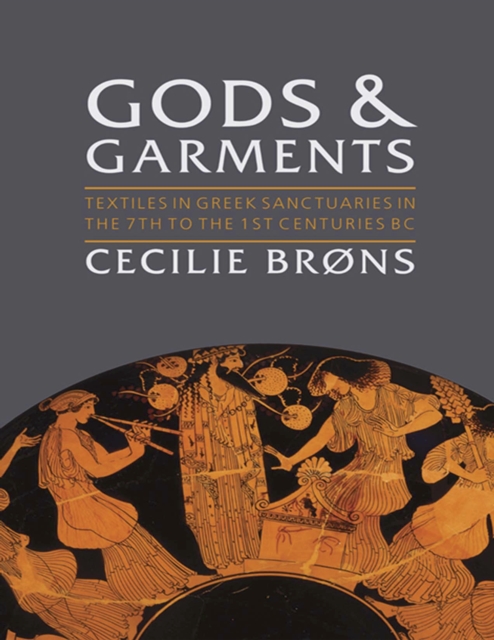
Gods and Garments
Textiles comprise a vast and wide category of material culture and constitute a crucial part of the ancient economy. Yet, studies of classical antiquity still often leave out this important category of material culture, partly due to the textiles themselves being only rarely preserved in the archaeological record. This neglect is also prevalent in scholarship on ancient Greek religion and ritual, although it is one of the most vibrant and rapidly developing branches of classical scholarship. The aim of the present enquiry is, therefore, to introduce textiles into the study of ancient Greek religion and thereby illuminate the roles textiles played in the performance of Greek ritual and their wider consequences. Among the questions posed are how and where we can detect the use of textiles in the sanctuaries, and how they were used in rituals including their impact on the performance of these rituals and the people involved. Chapters centre on three themes: first, the dedication of textiles and clothing accessories in Greek sanctuaries is investigated through a thorough examination of the temple inventories. Second, the use of textiles to dress ancient cult images is explored. The examination of Hellenistic and Roman copies of ancient cult images from Asia Minor as well as depictions of cult images in vase-painting in collocation with written sources illustrates the existence of this particular ritual custom in ancient Greece. Third, the existence of dress codes in the Greek sanctuaries is addressed through an investigation of the existence of particular attire for ritual personnel as well as visitors to the sanctuaries with the help of iconography and written sources. By merging the study of Greek religion and the study of textiles, the current study illustrates how textiles are, indeed, central materialisations of Greek cult, by reason of their capacity to accentuate and epitomize aspects of identity, spirituality, position in the religious system, by their forms as links between the maker, user, wearer, but also as key material agents in the performance of rituals and communication with the divine.
eBook
Textile collections
Collections of textiles--historic costume, quilts, needlework samplers, and the like--have benefited greatly from the digital turn in museum and archival work.Both institutional online repositories and collections-based social media sites have fostered unprecedented access to textile collections that have traditionally been marginalized in.
eBook
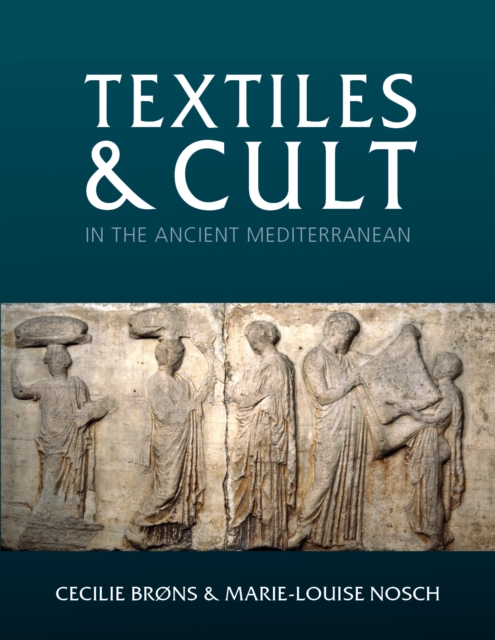
Textiles and Cult in the Ancient Mediterranean
Twenty-four experts from the fields of Ancient History, Semitic philology, Assyriology, Classical Archaeology, and Classical Philology come together in this volume to explore the role of textiles in ancient religion in Greece, Italy, The Levant and the Near East. Recent scholarship has illustrated how textiles played a large and very important role in the ancient Mediterranean sanctuaries. In Greece, the so-called temple inventories testify to the use of textiles as votive offerings, in particular to female divinities. Furthermore, in several cults, textiles were used to dress the images of different deities. Textiles played an important role in the dress of priests and priestesses, who often wore specific garments designated by particular colours. Clothing regulations in order to enter or participate in certain rituals from several Greek sanctuaries also testify to the importance of dress of ordinary visitors. Textiles were used for the furnishings of the temples, for example in the form of curtains, draperies, wall-hangings, sun-shields, and carpets. This illustrates how the sanctuaries were potential major consumers of textiles; nevertheless, this particular topic has so far not received much attention in modern scholarship. Furthermore, our knowledge of where the textiles consumed in the sanctuaries came from, where they were produced, and by who is extremely limited. Textiles and Cult in the Ancient Mediterranean examines the topics of textile production in sanctuaries, the use of textiles as votive offerings and ritual dress using epigraphy, literary sources, iconography and the archaeological material itself.
eBook

Wrapping and Unwrapping Material Culture
This innovative volume challenges contemporary views on material culture by exploring the relationship between wrapping materials and practices and the objects, bodies, and places that define them. Using examples as diverse as baby swaddling, Egyptian mummies, Celtic tombs, lace underwear, textile clothing, and contemporary African silk, the dozen archaeologist and anthropologist contributors show how acts of wrapping and unwrapping are embedded in beliefs and thoughts of a particular time and place. Employing methods of artifact analysis, microscopy, and participant observation, the contributors provide a new lens on material culture and its relationship to cultural meaning.
eBook