
Catalogue Search | MBRL


Are you sure you want to remove the book from the shelf?

{{itemTitle}}
200,684
result(s) for
"The Holocaust"
Sort by:
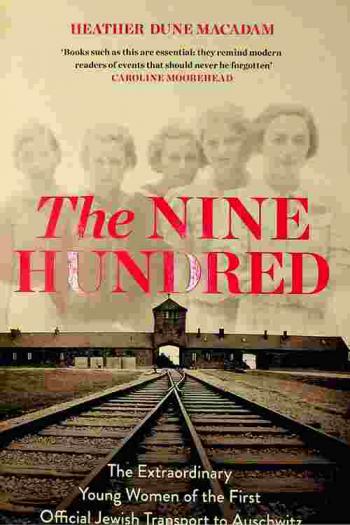
The nine hundred : the extraordinary young women of the first official transport to Auschwitz
On March 23, 1942, nearly a thousand young, unmarried Jewish women boarded a train in Poprad, Slovakia. Filled with a sense of adventure and national pride, they left their parents' homes wearing their best clothes and confidently waving goodbye. Believing they were going to work in a factory for a few months, they were eager to report for government service. Instead, the young women many of them teenagers were sent to Auschwitz. Of those 999 deportees only a few would survive.

Politics, Violence, Memory
Politics, Violence, Memory
highlights important new social scientific research on the
Holocaust and initiates the integration of the Holocaust into
mainstream social scientific research in a way that will be useful
both for social scientists and historians. Until recently
social scientists largely ignored the Holocaust despite the
centrality of these tragic events to many of their own concepts and
theories.
In Politics, Violence, Memory the editors bring
together contributions to understanding the Holocaust from a
variety of disciplines, including political science, sociology,
demography, and public health. The chapters examine the sources and
measurement of antisemitism; explanations for collaboration,
rescue, and survival; competing accounts of neighbor-on-neighbor
violence; and the legacies of the Holocaust in contemporary Europe.
Politics, Violence, Memory brings new data to bear on
these important concerns and shows how older data can be deployed
in new ways to understand the \"index case\" of violence in the
modern world.
eBook
Four scraps of bread : (quatre petits bouts de pain)
\"Born in Hungary in 1927, Magda Hollander-Lafon was among the 437,000 Jews deported from Hungary between May and July 1944. Magda, her mother, and her younger sister survived a three-day deportation to Auschwitz-Birkenau; there, she was considered fit for work and so spared, while her mother and sister were sent straight to their deaths. Hollander-Lafon recalls an experience she had in Birkenau: \"A dying woman gestured to me: as she opened her hand to reveal four scraps of moldy bread, she said to me in a barely audible voice, 'Take it. You are young. You must live to be a witness to what is happening here. You must tell people so that this never happens again in the world.' I took those four scraps of bread and ate them in front of her. In her look I read both kindness and release. I was very young and did not understand what this act meant, or the responsibility that it represented.\" Years later, the memory of that woman's act came to the fore, and Magda Hollander-Lafon could be silent no longer. In her words, she wrote her book not to obey the duty of remembering but in loyalty to the memory of those women and men who disappeared before her eyes. Her story is not a simple memoir or chronology of events. Instead, through a series of short chapters, she invites us to reflect on what she has endured. Often centered on one person or place, the scenes of brutality and horror she describes are intermixed with reflections of a more meditative cast. Four Scraps of Bread is both historical and deeply evocative, melancholic, and at times poetic in nature. Following the text is a \"Historical Note\" with a chronology of the author's life that complements her kaleidoscopic style. After liberation and a period in transit camps, she arrived in Belgium, where she remained. Eventually, she chose to be baptized a Christian and pursued a career as a child psychologist. The author records a journey through extreme suffering and loss that led to radiant personal growth and a life of meaning. As she states: \"Today I do not feel like a victim of the Holocaust but a witness reconciled with myself.\" Her ability to confront her experiences and free herself from her trauma allowed her to embrace a life of hope and peace. Her account is, finally, an exhortation to us all to discover life-giving joy\"-- Provided by publisher.
Book

Holocaust Literature of the Second Generation
This book gives detailed, theoretically-informed readings of a range of fictional and autobiographical writing by and about the 'second generation' of Holocaust survivors.
eBook

Irena's children : the extraordinary story of the woman who saved 2,500 children from the Warsaw ghetto
\"In 1942, one young social worker, Irena Sendler, was granted access to the Warsaw ghetto as a public health specialist. While there, she reached out to the trapped Jewish families, going from door to door and asking the parents to trust her with their young children. She started smuggling them out of the walled district, convincing her friends and neighbors to hide them. Driven to extreme measures and with the help of a network of local tradesmen, ghetto residents, and her star-crossed lover in the Jewish resistance, Irena ultimately smuggled thousands of children past the Nazis. She made dangerous trips through the city's sewers, hid children in coffins, snuck them under overcoats at checkpoints, and slipped them through secret passages in abandoned buildings. But Irena did something even more astonishing at immense personal risk: she kept secret lists buried in bottles under an old apple tree in a friend's back garden. On them were the names and true identities of those Jewish children, recorded with the hope that their relatives could find them after the war. She could not have known that more than ninety percent of their families would perish\"-- Provided by publisher.
Book

Hitler, the Germans, and the Final Solution
This book is the culmination of more than three decades of meticulous historiographic research on Nazi Germany by one of the period's most distinguished historians. The volume brings together the most important and influential aspects of Ian Kershaw's research on the Holocaust for the first time. The writings are arranged in three sections-Hitler and the Final Solution, popular opinion and the Jews in Nazi Germany, and the Final Solution in historiography-and Kershaw provides an introduction and a closing section on the uniqueness of Nazism.
Kershaw was a founding historian of the social history of the Third Reich, and he has throughout his career conducted pioneering research on the societal causes and consequences of Nazi policy. His work has brought much to light concerning the ways in which the attitudes of the German populace shaped and did not shape Nazi policy. This volume presents a comprehensive, multifaceted picture both of the destructive dynamic of the Nazi leadership and of the attitudes and behavior of ordinary Germans as the persecution of the Jews spiraled into total genocide.
eBook
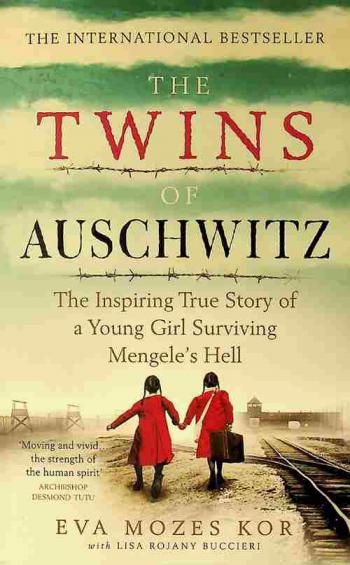
The twins of Auschwitz : the inspiring true story of a young girl surviving Mengele's hell
In the summer of 1944, Eva Mozes Kor and her family arrived at Auschwitz.Within thirty minutes, they were separated. Her parents and two older sisters were taken to the gas chambers, while Eva and her twin, Miriam, were herded into the care of the man who became known as the Angel of Death: Dr. Josef Mengele. They were 10 years old. While twins at Auschwitz were granted the 'privileges' of keeping their own clothes and hair, they were also subjected to Mengele's sadistic medical experiments. They were forced to fight daily for their own survival and many died as a result of the experiments, or from the disease and hunger rife in the concentration camp. In a narrative told simply, with emotion and astonishing restraint, The Twins of Auschwitz shares the inspirational story of a child's endurance and survival in the face of truly extraordinary evil. Also included is an epilogue on Eva's incredible recovery and her remarkable decision to publicly forgive the Nazis. Through her museum and her lectures, she dedicated her life to giving testimony on the Holocaust, providing a message of hope for people who have suffered, and worked toward goals of forgiveness, peace, and the elimination of hatred and prejudice in the world.

Holocaust Literature
What is Holocaust literature? When does it begin and how is it changing? Is there an essential core that consists of diaries, eyewitness accounts of the concentration camps, and tales of individual survival? Is it the same everywhere: West and East, in Australia as in the Americas, in poetry as in prose? Is this literature sacred and separate, or can it be studied alongside other responses to catastrophe? What works of Holocaust literature will be read a hundred years from now-and why? Here, for the first time, is a historical survey of Holocaust literature in all genres, countries, and major languages. Beginning in wartime, it proceeds from the literature of mobilization and mourning in the Free World to the vast literature produced in Nazi-occupied ghettos, bunkers and places of hiding, transit and concentration camps. No less remarkable is the new memorial literature that begins to take shape within weeks and months of the liberation. Moving from Europe to Israel, the United States, and beyond, the authors situate the writings by real and proxy witnesses within three distinct postwar periods: \"communal memory,\" still internal and internecine; \"provisional memory\" in the 1960s and 1970s, when a self-conscious Holocaust genre is born; and \"authorized memory,\" in which we live today. Twenty book covers-first editions in their original languages-and a guide to the \"first hundred books\" show the multilingual scope, historical depth, and artistic range of this extraordinary body of writing.
eBook

Anne Frank
In 1942, a young Jewish girl named Anne Frank received a diary from her parents for her thirteenth birthday. Today, millions of people have read the compelling, heartfelt diary entries Frank recorded while living in hiding to escape Nazi persecution. Her work is an invaluable account of the Holocaust, an iconic classic of war literature, and a testament to her own hopeful and unbreakable spirit. This biography introduces readers to Frank's life and the legacy she left behind, complete with photographs and fact boxes. Readers will be inspired by Frank's incredible story and her essential contribution to recorded history.
BOOK

Popular Trauma Culture
InPopular Trauma Culture, Anne Rothe argues that American Holocaust discourse has a particular plot structure-characterized by a melodramatic conflict between good and evil and embodied in the core characters of victim/survivor and perpetrator-and that it provides the paradigm for representing personal experiences of pain and suffering in the mass media. The book begins with an analysis of Holocaust clichés, including its political appropriation, the notion of vicarious victimhood, the so-called victim talk rhetoric, and the infusion of the composite survivor figure with Social Darwinism. Readers then explore the embodiment of popular trauma culture in two core mass media genres: daytime TV talk shows and misery memoirs.Rothe conveys how victimhood and suffering are cast as trauma kitsch on talk shows likeOprahand as trauma camp on modern-day freak shows likeSpringer.The discussion also encompasses the first scholarly analysis of misery memoirs, the popular literary genre that has been widely critiqued in journalism as pornographic depictions of extreme violence. Currently considered the largest growth sector in book publishing worldwide, many of these works are also fabricated. And since forgeries reflect the cultural entities that are most revered, the book concludes with an examination of fake misery memoirs.
eBook