
Catalogue Search | MBRL


Are you sure you want to remove the book from the shelf?

{{itemTitle}}
1,201,586
result(s) for
"The Self"
Sort by:

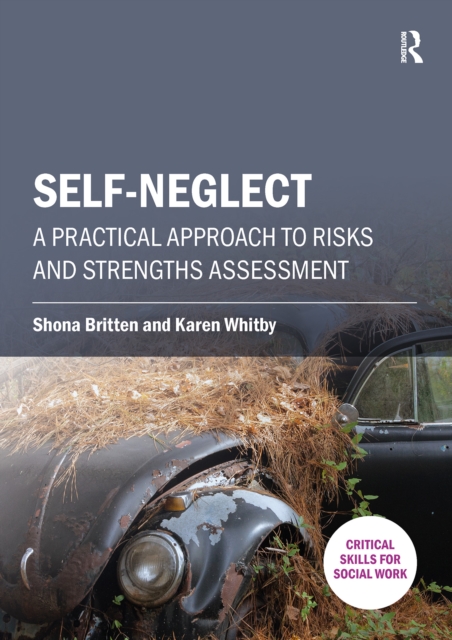
Self-neglect
Self-neglect covers a wide range of behaviours, from neglecting to care for one's personal hygiene and health to one's surroundings; this can include behaviours such as hoarding of objects and/or animals. As presentation of self-neglect cases vary greatly, assessment and support planning should be made on an individualised case by case basis. Self-neglect describes a Risks and Strengths assessment model which has been developed by practitioners as an aid to frontline workers across all sectors, as well as agencies holding responsibilities in Safeguarding Adults. It aims to support and structure the effective, timely and consistent assessment of risk in relation to key social and healthcare factors of self-neglect both on an individual case level and at a strategic level in contributing to community/locality needs analysis and reporting mechanisms; including annual Safeguarding Adults Board Reports.
eBook


Self-Insight
People base thousands of choices across a lifetime on the views they hold of their skill and moral character, yet a growing body of research in psychology shows that such self-views are often misguided or misinformed. Anyone who has dealt with others in the classroom, in the workplace, in the medical office, or on the therapist's couch has probably experienced people whose opinions of themselves depart from the objectively possible.
This book outlines some of the common errors that people make when they evaluate themselves. It also describes the many psychological barriers - some that people build by their own hand - that prevent individuals from achieving self-insight about their ability and character.
The first section of the book focuses on mistaken views of competence, and explores why people often remain blissfully unaware of their incompetence and personality flaws. The second section focuses on faulty views of character, and explores why people tend to perceive they are more unique and special than they really are, why people tend to possess inflated opinions of their moral fiber that are not matched by their deeds, and why people fail to anticipate the impact that emotions have on their choices and actions.
The book will be of great interest to students and researchers in social, personality, and cognitive psychology, but, through the accessibility of its writing style, it will also appeal to those outside of academic psychology with an interest in the psychological processes that lead to our self-insight.
eBook

Throw out fifty things : clear the clutter, find your life
\"Gail Blanke offers inspiring ways to clear away the debris of your life, both physical and mental, to help you find peace, energy and a better vision of who you are.\"--Provided by the publisher.
Book

The Nature of the Self, Self-regulation and Moral Action: Implications from the Confucian Relational Self and Buddhist Non-self
The concept of the self and its relation to moral action is complex and subject to varying interpretations, not only between different academic disciplines but also across time and space. This paper presents empirical evidence from a cross-cultural study on the Buddhist and Confucian notions of self in SMEs in Vietnam and Taiwan. The study employs Hwang’s Mandala Model of the Self, and its extension into Shiah’s non-self-model, to interpret how these two Eastern philosophical representations of the self, the Confucian relational self and Buddhist non-self, can lead to moral action. By demonstrating the strengths of the model, emphasizing how social and cultural influences constrain the individual self and promote the social person leading to moral action, the paper extends understanding of the self with empirical evidence of the mechanisms involved in organizational contexts.
Journal Article

Zero waste home : the ultimate guide to simplifying your life
Zero Waste Home is the ultimate guide to simplified, sustainable living from Bea Johnson, author of the popular blog of the same name. Bea Johnson transformed her family's health, finances, and relationships for the better by reducing their waste to an astonishing half litre per year. It's all down to the 5 Rs: Refuse, Reduce, Reuse, Recycle, Rot (and only in that order!). Zero Waste Home shows how these key principles can be applied to every area of your house from the kitchen to the kids' room, and it's packed with easy tips for all of us: from buying in bulk and clever meal planning to simply refusing unwanted freebies and using your plants as air fresheners. Bea Johnson shows, by inspiring example, what green living looks like and offers a practical, step-by-step guide to diminishing your environmental footprint and improving your life.
Book

The Psychology of Residential Mobility: Implications for the Self, Social Relationships, and Well-Being
Residential mobility is an increasingly important personal and societal issue in both the United States and the world in general. However, it has received relatively limited attention in psychological theorizing and research. This article demonstrates the importance of residential mobility in understanding the self, social relationships, and well-being. Recent research has shown that residential mobility (number of moves for an individual or percentage having moved recently for a neighborhood) is associated with the primacy of the personal over the collective self. It is also associated with \"duty-free\" friendships and group memberships rather than obligatory friendships and group memberships. Overall, residential mobility is associated with lower levels of well-being at the individual level of analysis. Finally, residential mobility is associated with personal forms of subjective well-being (based on self-esteem, the verification of the personal self) as opposed to interpersonal forms of subjective well-being (based on social support, the verification of the collective selves). In short, residential mobility is a powerful, parsimonious explanatory construct in the self, social relationships, and subjective well-being and may be a key to understanding the future of mind and behavior in the increasingly mobile world.
Journal Article

Outer order, inner calm : declutter & organize to make more room for happiness
\"With clarity and humor, bestselling author of The Four Tendencies and The Happiness Project Gretchen Rubin illuminates one of her key realizations about happiness: For most of us, outer order contributes to inner calm. And for most of us, a rigid, one-size-fits-all solution doesn't work. In this easy-to-read but hard-to-put-down book, Gretchen Rubin suggests more than 150 short, concrete clutter-clearing ideas so each reader can choose the ones that resonate most. The fact is, when we tailor our approach to suit our own particular challenges and habits, we're far more likely to be able to create the order that will make our lives happier, healthier, more productive, and more creative. In the context of a happy life, a messy desk or crowded coat closet is a trivial problem--yet Gretchen Rubin has found that getting control of our stuff makes us feel more in control of our lives. By getting rid of things we don't use, don't need, or don't love, as well as things that don't work, don't fit, or don't suit, we free our mind (and our shelves) for what we truly value. In this trim book filled with insights, strategies, and sometimes surprising tips, Gretchen tackles the key challenges of creating outer order, by explaining how to \"Make Choices,\" \"Create Order,\" \"Know Yourself--and Others,\" \"Cultivate Helpful Habits,\" and, of course, \"Add Beauty.\" At home, at work, and in life, when we get our possessions under control we feel both calmer and more energetic. With a sense of fun, and also a clear idea of what's realistic for most people, Gretchen Rubin suggests dozens of manageable steps for creating a more serene, orderly environment--one that helps us to create the lives we yearn for\"-- Provided by publisher.
Book

Structure, network analysis, psychometric properties and clinical utility of the self-absorption scale in China
Background
Self-absorption refers an excessive, persistent, and rigid preoccupation with information regarding the self. This study aims to introduce the Self-Absorption Scale (SAS) into China with an assessment of its latent variable structure, network structure, psychometric properties, and clinical utility in a nonclinical Chinese sample.
Methods
209 participants completed the translated SAS as well as the Short General Health Questionnaire (GHQ-12), rumination subscale of the Rumination-Reflection Questionnaire (RRQ), the Mindful Attention Awareness Scale (MAAS), the Private Self-Consciousness Scale (PrSCS), the Obsessive-Compulsive Inventory-Revised (OCI-R) and the Dissociative Experiences Scale (DES-II). In addition, 30 respondents completed the Chinese version of the SAS and retested it 2 weeks later.
Results
The Chinese version of the SAS
(
CH-SAS) had a desirable two-correlated-factor structure with the reverse scored item removed, which was invariant across different genders. The core items in the network structure of the CH-SAS were related to excessive self-immersion, uncontrollability and anxiety aspects of self-absorption. The Cronbach’s alpha coefficient for the CH-SAS was 0.903 while the McDonald’s omega coefficient was 0.916 and the test-retest reliability was 0.908. The CH-SAS and its two subscales had moderate positive correlations with the rumination subscale of the RRQ (ranging from 0.474 to 0.616;
p
< .001) and the GHQ-12 (ranging from 0.479 to 0.538;
p
< .001), and moderate negative correlations with the MAAS (ranging from − 0.413 to − 0.360;
p
< .001). The PrSCS has almost no correlation with the CH-SAS and PrSAS (
p
> .05), and its correlation with the PubSAS was significant at the 0.05 level, with a remarkably low correlation coefficient (
r
= .157). The hierarchical regression analysis suggested that the CH-SAS can significantly predict the severity of OCD beyond factors such as depression, anxiety, rumination, dissociation, and mindful attention awareness.
Conclusions
The CH-SAS demonstrates excellent reliability, including internal consistency and test-retest reliability. Additionally, it exhibits favorable structural validity, as well as strong evidence of convergent and divergent validity. Furthermore, the self-absorption measured using the CH-SAS contributed significantly to the prediction of OCD beyond other relevant psychological factors, suggesting its clinical utility.
Journal Article