
Catalogue Search | MBRL


Are you sure you want to remove the book from the shelf?

{{itemTitle}}
1,328
result(s) for
"Theodicy"
Sort by:
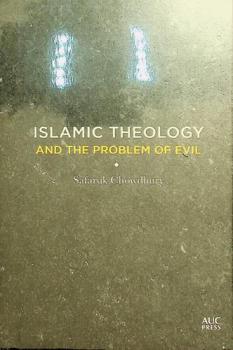
Islamic theology and the problem of evil
\"Like their Jewish and Christian co-religionists, Muslims have grappled with how God, who is perfectly good, compassionate, merciful, powerful, and wise permits intense and profuse evil and suffering in the world. At its core, Islamic Theology and the Problem of Evil explores four different problems of evil: human disability, animal suffering, evolutionary natural selection, and Hell. Each study argues in favor of a particular kind of explanation or justification (theodicy) for the respective evil. Safaruk Chowdhury unpacks the notion of evil and its conceptualization within the mainstream Sunni theological tradition, and the various ways in which theologians and philosophers within that tradition have advanced different types of theodicies. He not only builds on previous works on the topic, but also looks at kinds of theodicies previously unexplored within Islamic theology, such as an evolutionary theodicy. Distinguished by its application of an analytic-theology approach to the subject and drawing on insights from works of both medieval Muslim theologians and philosophers and contemporary philosophers of religion, this novel and highly systematic study will appeal to students and scholars, not only of theology but of philosophy as well. \"-- Provided by publisher.
BOOK

Habakkuk
Turner additionally highlights the ANE background of certain motifs in Habakkuk, but he argues that these mythic elements have been demythologized and/or polemicized (see, e.g., pp. 211-12, 229n29, 236). [...]one strength of the commentary is its significant amount of valuable lexical work. Similar to Job, a complete answer is never given to Habakkuk, but he-and all people-are to be quiet before YHWH (2:20). Because Turner understands Habakkuk more as a theodicy rather than as emphasizing covenantal judgment on Judah for her sins, his interpretation has more universal application. Kenneth Turner has produced a significant and useful contribution to study of Habakkuk. Because of its originality and scholarly methodology, Turner's work is a must-have conversation partner for anyone exegeting the book of Habakkuk.
Journal Article


SUFRIMIENTO ANIMAL, IPSEIDAD Y ESCATOLOGÍA: UN ARCANO PARA LA TEODICEA
Neither the defense of the higher-order good nor resorting to eschatology, standard justifications for human suffering, are of any use here. After rejecting both the idea of a specific heaven for animals and that animalsare human souls expiating their sins, we conclude that higher animals are persons, and we conjecture that, if they possessed a spiritual essence, an haecceitas, they could mature intellectually and morally along the evolutionary process through increasingly complex successive biological organisms, until they eventually become rational and worthy of reaching a heavenly state. Keywords: theodicy, animal suffering, transmigration, consciousness, eschatology, heaven. 1. Así, estamos hartos de ver cómo mandatarios de países democráticos, supuestamente defensores de la legalidad internacional y de los principios morales, se indignan públicamente ante sátrapas que cometen con desfachatez horribles crímenes (Bin Salman, Putin...), pero no hacen nada por evitar que sigan cometiendo impunemente sus atrocidades.
Journal Article

Does moral anti-theodicy beg the question?
Some philosophers of religion have argued that moral anti-theodicy begs the question. This paper evaluates the arguments from two such philosophers, writing a decade apart—Robert Mark Simpson, and Lauri Snellman. Simpson argues that any global argument against theodicy must allow for the possibility of there existing a plausible theodicy, and that anti-theodical arguments (the argument from insensitivity, the argument from detachment, and the argument from harmful consequences) all implicitly discount this possibility, thus ending up begging the question. Snellman argues that moral anti-theodicies presuppose that some evils cannot be justified, which would presuppose that theodicy is false from the start, which in turn would beg the question against theodicy. The author of the paper argues that Simpson’s arguments rest on an erroneous assumption regarding the nature of anti-theodicy, and that one of Simpson’s arguments sets a problematic standard for argumentation that the author argues we should not accept. It is also argued that Snellman’s argument relies on an unsupported claim from Toby Betenson. Therefore, the author concludes that Simpson and Snellman have not managed to show that moral anti-theodicies beg the question.
Journal Article

INFINITE HITLERS
Most of Philip K. Dick's novels are published with trippy or pulpy illustrations on the cover, whereas my copy of 1962's The Man in the High Castle-the first book to imagine an alternate America occupied by Nazis-is a very respectable Penguin Classics edition. The cartoon Rick and Morty features a running gag in which our hero wakes up in a succession of parallel realities, all of them occupied by Nazis. \"If Jupiter had placed here a Sextus happy at Corinth or King in Thrace, it would be no longer this world.\" Between the mountains and the sea, a bubbling volcanic lake, and a city on its shores: huts, sealskin stretched over whale-ribs, temples and palaces in jagged blocks of stone.
Journal Article

W.A. Mozart's Music and Karl Barth's Das Nichtige
This article discusses Karl Barth’s use of W.A. Mozart’s music in the doctrine of creation (in Barth’s Church Dogmatics) in relation to Mozart’s music. I propose an approach for understanding how and why Mozart’s music was able to contribute to the theological delimitation of das Nichtige, a key concept in Barth’s theodicy, in a way that Barth’s discursive argumentation could not. Scholars have discussed whether the music for Barth functions as a parable about the Kingdom of God or as a secular artistic statement that feeds into Barth’s theological argument. Whereas Barth may have used Mozart playfully in some places, he uses Mozart strictly as a secular artist in the discussion of das Nichtige. Therefore, it becomes important to establish the extent to which Barth’s use of Mozart is musically well-founded. I use recent musicological discussions of Mozart’s piano concertos as a background for my own description and close reading of the first movement of Mozart’s piano concerto K. 451 (1784), concluding that Barth’s brief and unsubstantiated description of Mozart’s music in the Church Dogmatics can be substantiated to a large extent, precisely as what Barth claimed it to be: an artistic and secular statement, not a theological one.
Journal Article
