
Catalogue Search | MBRL


Are you sure you want to remove the book from the shelf?

{{itemTitle}}
1,955
result(s) for
"Theodor Herzl"
Sort by:
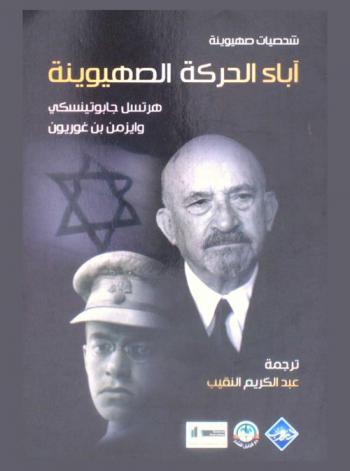
آباء الحركة الصهيوينة : هرتسل جابوتنسكي، وايزمن بن غوريون
هذا الكتاب يترجم لأربعة من اليهود الأوائل سخروا أنفسهم لخدمة بني جلدتهم وتحلقوا حول هدف أقام وطن قومي لليهود ويلقي الضوء على مجموعة السبل التي طرقوها لتحقيق هدفهم المنشود مستفيدين من الواقع والمتغيرات الدولية دون كلل أو ملل إلى أن تحققت أمنيتهم ولو أن بعضهم لم يشهدها بإقامة دولة إسرائيل على أرض فلسطين العربية بعد تهجير أهلها بإرهاب صهيوني استعماري منظم ويؤكد حقيقة طالما أغفلها بعض زعماء العرب الذين يعملون ليومهم ويتركون الغد فريسة للمجهوا فيما يخطط أعداؤهم لمستقبل يتاوز السنين.
Book

“Our Good Friend and Illustrious Coreligionist Theodor Herzl”: The Three Interviews of La epoka with the Zionist Leader and Hamidian Censorship
La epoka was a Ladino newspaper published in Salonica. Its editor Sam Lévy published three interviews with Theodor Herzl between 1901 and 1904. His announcement and subsequent publication of the third interview drew angry responses from the Sublime Porte, which ordered the governor of Salonica to close it down. The governor resisted the orders and La epoka remained open, even publishing a eulogistic obituary of Herzl. In this article, I examine these interviews and obituary, showing that Lévy combined his sharp criticisms of Zionism with an adulation of the Zionist leader. I also explore Ottoman archival documents about the Ladino press and argue that Hamidian censorship could be flexible according to political circumstances, overlooking Lévy’s first two interviews that were made during the Ottoman government’s negotiations with Herzl, yet reacting sharply to the third interview conducted afterward and containing direct references to the Sixth Zionist Congress.
Journal Article
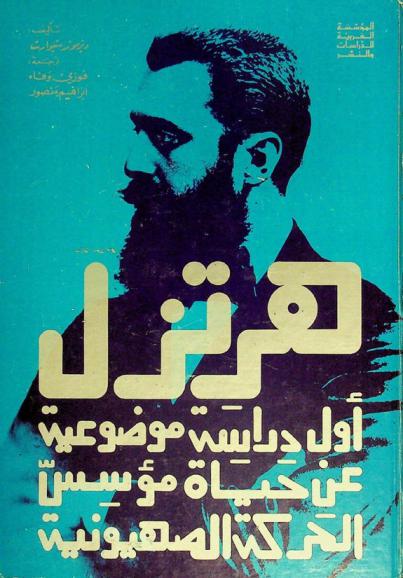
تيودور هرتزل : مؤسس الحركة الصهيونية
إن حكمة هذا الشعار لا تخفى على أحد ولكن ليس من السهل دائما أن يعرف الإنسان عدوه ؛ إذ لا بد من توافر دراسات نزيهة لمعرفة العدو. ويعتبر كتاب هرتزل أول دراسة موضوعية جادة يقدمها كاتب غربي غير صهيوني. ففيه يلقي ديزموند ستيوارت، الكاتب البريطاني المعروف باهتماماته بشؤون المنطقة، الأضواء على العديد من الجوانب الخفية في حياة مؤسس الحركة الصهيونية ومفكرها الأول، ونشأة وأصول الحركة الصهيونية وارتباطاتها الاستعمارية التي أدت إلى اغتصاب فلسطين وتهديد مستقبل الأمة العربية. إنه كتاب شيق وهام عن شخصية لعبت دورا كبيرا في تاريخ الكيان الصهيوني.
BOOK

Prosaic Conditions
In her penetrating new study, Na'ama Rokem observes that prose writing-more than poetry, drama, or other genres-came to signify a historic rift that resulted in loss and disenchantment. InProsaic Conditions,Rokem treats prose as a signifying practice-that is, a practice that creates meaning. During the nineteenth and twentieth centuries, prose emerges in competition with other existing practices, specifically, the practice of performance. Using Zionist literature as a test case, Rokem examines the ways in which Zionist authors put prose to use, both as a concept and as a literary mode. Writing prose enables these authors to grapple with historical, political, and spatial transformations and to understand the interrelatedness of all of these changes.
eBook

THE PROPHET IGNORED: VLADIMIR ZE'EV JABOTINSKY AND THE COMING OF THE HOLOCAUST
Cypkin profiles Vladimir Zeev Jabotinsky, a prominent writer, orator, and political leader, who had a premonition that a major catastrophe would strike European Jewry. He warned that Jews were unsafe in Europe, but his words were largely ignored. Jabotinsky's acute intuitive power was rooted in his vast knowledge, keen analytical mind, deep insight, moral courage, and readiness to face problems head-on. He examines Jabotinsky's life and activities, focusing on his assimilated background and his prophetic conclusion about the future of European Jews. It explores the bold thoughts he entertained and the actions he took, including his Evacuation Plan to save European Jews. Jabotinsky's efforts to secure Jewish rights and establish a Jewish state in Palestine are highlighted, as well as his warnings about the rise of Hitler and the need for a Jewish army. Despite facing criticism and opposition, Jabotinsky remained dedicated to his cause until his untimely death in 1940.
Journal Article

Power and Technology in Theodor Herzl's Zionist Plan
The article traces the role of technical expertise and modern technology in Herzl's Zionist plan. Writers about Herzl have claimed misleadingly that in keeping with his vision, expertise and technology were to be subject to social and political controls. However, a closer examination of Herzl's accounts of the Zionist movement and later on, of the Jewish state reveals that the experts and their highly centralized technical systems were themselves the driving force behind Herzl's envisioned Zionist enterprise. The article seeks to elucidate Herzl's distinctive notion of technological control as the sociopolitical underpinning of his Zionist plan.
Journal Article


HERZL’S THEOLOGY
Theodor Herzl published his utopian romance, Altneuland, in 1902. A spirited debate soon broke out, spurred by Ahad Ha'am's assertion that the state envisioned by Herzl had no specifically Jewish elements and was no different from a \"normal\" European state. Many scholars have adopted Ahad Ha'am's reading and seen the utopian polity of Altneuland as devoid of any meaningful Jewish identity. In recent years, however, several studies have emphasized the Jewish dimension of the state Herzl described and highlighted his attempt to establish a new Jewish identity on a secular national basis.
Journal Article

Netanyahu, Orbán, and the Resurgence of Antisemitism: Lessons of the Last Century
Benjamin Netanyahu and his allies have recently embraced ethnonationalists and even outspoken antisemites such as Hungarian prime minister Viktor Orbán as friends of the Jewish state and opponents of antisemitism, and they have even engaged in antisemitism themselves. This has deep roots in Zionist history but is expressed today in radically new ways. This article concisely explicates the nature of modern antisemitism, its relationship to earlier forms of anti-Jewish animosity, and documents how Orbán and Netanyahu are promoting antisemitism today while cynically redefining the term to exculpate themselves and condemn their political opponents on the Left as the real antisemites.
Journal Article
Improving the Volk: Leon Kellner and the Jewish Toynbee Hall Movement (1900–39)
The Jewish Toynbee Hall movement—part moral crusade, part adult education—has almost entirely escaped the attention of historians, as has its prime mover, Leon Kellner. Modeled on London's Toynbee Hall, the first Jewish Toynbee Hall opened in Vienna in December 1900; within a few years, others opened across Habsburg Austria and in Germany and Romania. A Zionist project, the Toynbee Halls were taken over by Bnai Brith in Germany and Austria but remained in nationalist hands further east, part of a Jewish public sphere—reading rooms, newspapers, libraries, lecture halls—that produced, consumed, and disseminated Jewish knowledge and culture. Kellner, one of Theodor Herzl's first and closest confidants, was a Galician who became a renowned Shakespeare scholar, public intellectual, and politician. The article aims to begin to write the Jewish Toynbee Halls and Kellner back into history.
Journal Article