
Catalogue Search | MBRL


Are you sure you want to remove the book from the shelf?

{{itemTitle}}
19,418
result(s) for
"Theology, Doctrinal."
Sort by:

New Readings of Anselm of Canterbury's Intellectual Methods
These essays present new readings of Anselm's speculative and spiritual writings on topics including his relationship to Augustine, proofs for God's existence, faith and reason, human freedom and the problem of evil, his spiritual meditations and prayers, as well as Anselm's reception by 19th and 20th century thinkers, modernism, and feminism. These philosophical, theological and literary analyses bring fresh perspectives on Anselm both in his historical context and in dialogue with contemporary questions. Contributors are: Tomas Ekenberg, Riccardo Fredriga, Emery de Gaál, Kyle Philip Hubbard, Maggie Ann Labinski, Roberto Limonta, Ian Logan, Gavin Ortlund, M.B. Pranger, Gregory B. Sadler, Kevin Staley, Karen Sullivan, Eileen C. Sweeney, Michael Vendsel, Luca Vettorello, James Wetzel, and Kevin White. See inside the book.
eBook

Trajectories of religion in Africa : essays in honour of John S. Pobee
The book, in the main, discusses issues relating to mission, ecumenism, and theological education and is presented in four sections. The first segment discusses works on ecumenical and theological education and assesses the relevance of the World Council of Churches. Other issues discussed in this segment relate to the interrelationships that exist between academic theology, ecumenism, and Christianity. The World Missionary Conference held in Edinburgh in 1910, which set the agenda for world-wide mission in a promising manner in the 1920s, is also assessed in this section of the work. 0The second segment, which covers Religion and Public Space, discusses works that examine the relationships between religion and power, religion and development, religion and traditional religious beliefs, and religion and practices in Africa. The third segment of the book treats Religion and Cultural Practices in African and how all these work out in couching out an African theology and African Christianity. Some of the issues discussed in this section related to African traditional philosophy, spiritism, and the interrelationships that exist between African Christianity and African Traditional Religion.0The last segment of the book discusses the issue of African biblical hermeneutics and specifically looks at contemporary hermeneutical approaches to biblical interpretations in Africa.
Book
Catholicity and Heresy in the Early Church
While it has often been recognised that the development of Christian orthodoxy was stimulated by the speculations of those who are now called heretics, it is still widely assumed that their contribution was merely catalytic, that they called forth the exposition of what the main church already believed but had not yet been required to formulate.
This book maintains that scholars have underrated the constructive role of these “heretical” speculations in the evolution of dogma, showing that salient elements in the doctrines of the fall, the Trinity and the union of God and man in Christ derive from teachings that were initially rejected by the main church. Mark Edwards also reveals how authors who epitomised orthodoxy in their own day sometimes favoured teachings which were later considered heterodox, and that their doctrines underwent radical revision before they became a fixed element of orthodoxy.
The first half of the volume discusses the role of Gnostic theologians in the formation of catholic thought; the second half will offer an unfashionable view of the controversies which gave rise to the councils of Nicaea, Ephesus and Chalcedon. Many of the theories advanced here have not been broached elsewhere, and no synthesis on this scale had been attempted by other scholars. While this book proposes a revision in the scholarly perception of early Christendom, it also demonstrates the essential unity of the tradition.
eBook
The Age of Doubt
The Victorian era was the first great \"Age of Doubt\" and a critical moment in the history of Western ideas. Leading nineteenth-century intellectuals battled the Church and struggled to absorb radical scientific discoveries that upended everything the Bible had taught them about the world. InThe Age of Doubt, distinguished scholar Christopher Lane tells the fascinating story of a society under strain as virtually all aspects of life changed abruptly.
In deft portraits of scientific, literary, and intellectual icons who challenged the prevailing religious orthodoxy, from Robert Chambers and Anne Brontë to Charles Darwin and Thomas H. Huxley, Lane demonstrates how they and other Victorians succeeded in turning doubt from a religious sin into an ethical necessity.
The dramatic adjustment of Victorian society has echoes today as technology, science, and religion grapple with moral issues that seemed unimaginable even a decade ago. Yet the Victorians' crisis of faith generated a far more searching engagement with religious belief than the \"new atheism\" that has evolved today. More profoundly than any generation before them, the Victorians came to view doubt as inseparable from belief, thought, and debate, as well as a much-needed antidote to fanaticism and unbridled certainty. By contrast, a look at today's extremes-from the biblical literalists behind the Creation Museum to the dogmatic rigidity of Richard Dawkins's atheism-highlights our modern-day inability to embrace doubt.
eBook
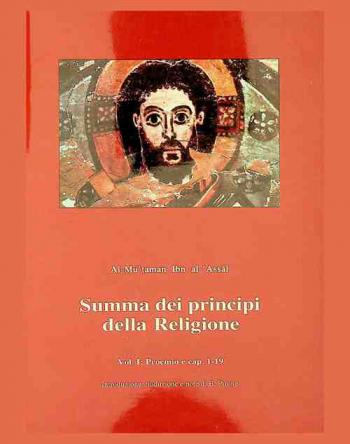

Political Theology and Islam
Paul L. Heck's Political Theology and Islam
offers a sophisticated and comprehensive analysis of sovereignty in
Islamic society, beginning with the origins of Islam and extending
to the present.
This wide-ranging study sets out to answer an unassumingly
tricky question: What is politics in Islam? Paul L. Heck's answer
takes the form of a close analysis of sovereignty across Islamic
history, approaching this concept from the perspective of political
theology. As he illustrates, the history of politics in Islam is
best understood as an ongoing struggle for a moral order between
those who occupy positions of rulership and religious voices that
communicate the ethics of Islam and educate the public in their
religious and moral devotions. In this sense, sovereignty in Islam
is split between ruling powers and pious communities, whose
interactions range from close cooperation to outright competition.
Heck shows that it is precisely through these interactions that
Islamic conceptions of sovereignty are constructed and
negotiated.
Political Theology and Islam 's first section spells out
the concepts and methods for the study of politics in Islam as a
struggle for a moral order, one not only involving varied claims to
sovereignty but also a general determination to realize the
righteousness of Islam that stands at the heart of the message that
the Prophet Muhammad conveyed to his society in seventh-century
Arabia. The following sections demonstrate, through examples from
both the past and today's worldwide Muslim community, the diverse
ways in which the umma, the community of Muslims, has struggled for
a moral order that recalls its prophetic message. Deftly moving in
various political theaters and through a wide range of intellectual
traditions, Heck's book will emerge as a touchstone of scholarship
in the field of Muslim politics and intellectual thought.
eBook
Theological Interpretation of Culture in Post-Communist Context
Twenty years after the fall of Communism in Central and East Europe is an ocassion to reevaluate the cultural and theological contribution from that region to the secularization - post-secularization debate. Czech theologian Ivana Noble develops a Trinitarian theology through a close dialogue with literature, music and film, which formed not only alternatives to totalitarian ideologies, but also followed the loss and reappeareance of belief in God. Noble explains that, by listening to the artists, the churches and theologians can deal with questions about the nature of the world, memory and ultimate fulfilment in a more nuanced way. Then, as partakers in the search undertaken by their secular and post-secular contemporaries, theologians can penetrate a new depth of meaning, sending out shoots from the stump of Christian symbolism. Drawing on the rich cultures of Central and East Europe and both Western and Eastern theological traditions, this book presents a theological reading of contemporary culture which is important not just for post-Communist countries but for all who are engaged in the debate on the boundaries between theology, politics and arts.
Contents: Preface; Introduction: culture as a theological theme; Part I The World: Images of the world in Karel Capek and Isaac Bashevis Singer; Theologies of the world. Part II Memory: Heritage of totaltarian cultures in folk music; Redemptive memory on theology. Part III The Ultimate Fulfilment: Figuring the ultimate fulfilment in Central European cinema; Love as the ultimate fulfilment in theology; Conclusion; Bibliography; Index.
Ivana Noble (DolejÅ¡ová) is a Czech theologian, a graduate of the Hussite Theological Faculty in Prague, where she finished her Masters degree just after the fall of Communism. She completed her doctoral studies at Heythrop College in London with a thesis Account of Hope: A Problem of Method in Postmodern Apologia (published in 2001). In 1994-2000 she was Director of the Institute of Ecumenical Studies in Prague, which she co-founded. During that time she wrote also her habilitation work, published in Czech as Po BozÃch stopách: Teologie jako interpretace nábozenské zkuÅ¡enosti (in 2004), which has now been published in English under the title Tracking God: Ecumenical Fundamental Theology (2010). She is a former president of Societas Oecumenica, the European association for ecumenical theology and author of numerous articles on the hermeneutics of Christian tradition, the dialogue between philosophy, theology and arts, as well as on theological responses to totalitarian thinking and the secularization - post-secularization debate. Currently she works as an associate professor of Ecumenical Theology at the Protestant Theological Faculty of Charles University and is also a Senior Research Fellow at the International Baptist Seminary in Prague, Czech Republic.
eBook