
Catalogue Search | MBRL


Are you sure you want to remove the book from the shelf?

{{itemTitle}}
26,319
result(s) for
"Theology in literature"
Sort by:

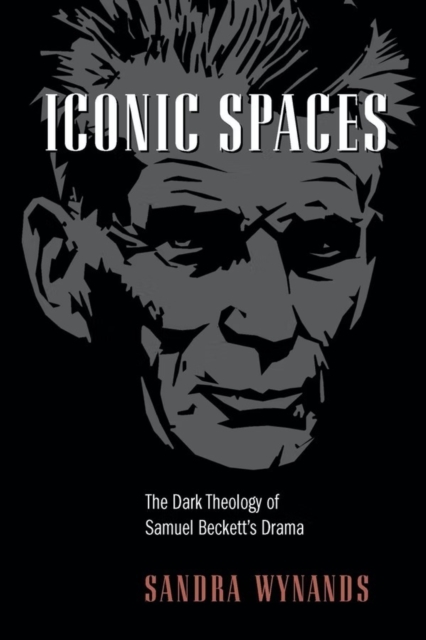
Iconic Spaces
Iconic Spaces looks at Samuel Beckett's mature
theatrical work as a displaced theology of the icon. Sandra
Wynands rejects conventional existentialist or nihilist
interpretations of Beckett's work, arguing instead that beneath
the text, in the depths of language and being, Beckett creates
an absolutely irreducible, transcendent space. She traces a
nondual model of perception and experience through a selection
of Beckett's art-critical and dramatic works, focusing in
particular on four minimalist plays:
Catastrophe, Not I, Quad, and
Film .
Iconic Spaces makes an important contribution to
scholars and students of literature, philosophy, theatre
studies, and religion by giving them an exciting new way of
reading and experiencing Beckett's work.
eBook


The Female Baroque in Early Modern English Literary Culture
This is a contribution to the revival of early modern women's writings and cultural production in English that began in the 1980s. Its originality is twofold: it links women's writing in English with the wider context of Baroque culture, and it introduces the issue of gender into discussion of the Baroque.
eBook

Emily Dickinson and the religious imagination
\"Dickinson knew the Bible well. She was profoundly aware of Christian theology and she was writing at a time when comparative religion was extremely popular. This book is the first to consider Dickinson's religious imagery outside the dynamic of her personal faith and doubt. It argues that religious myths and symbols, from the sun-god to the open tomb, are essential to understanding the similetic movement of Dickinson's poetry - the reach for a comparable, though not identical, experience in the struggles and wrongs of Abraham, Jacob and Moses, and the life, death and resurrection of Christ. Linda Freedman situates the poet within the context of American typology, interprets her alongside contemporary and modern theology and makes important connections to Shakespeare and the British Romantics. Dickinson emerges as a deeply troubled thinker who needs to be understood within both religious and Romantic traditions\"-- Provided by publisher.
BOOK
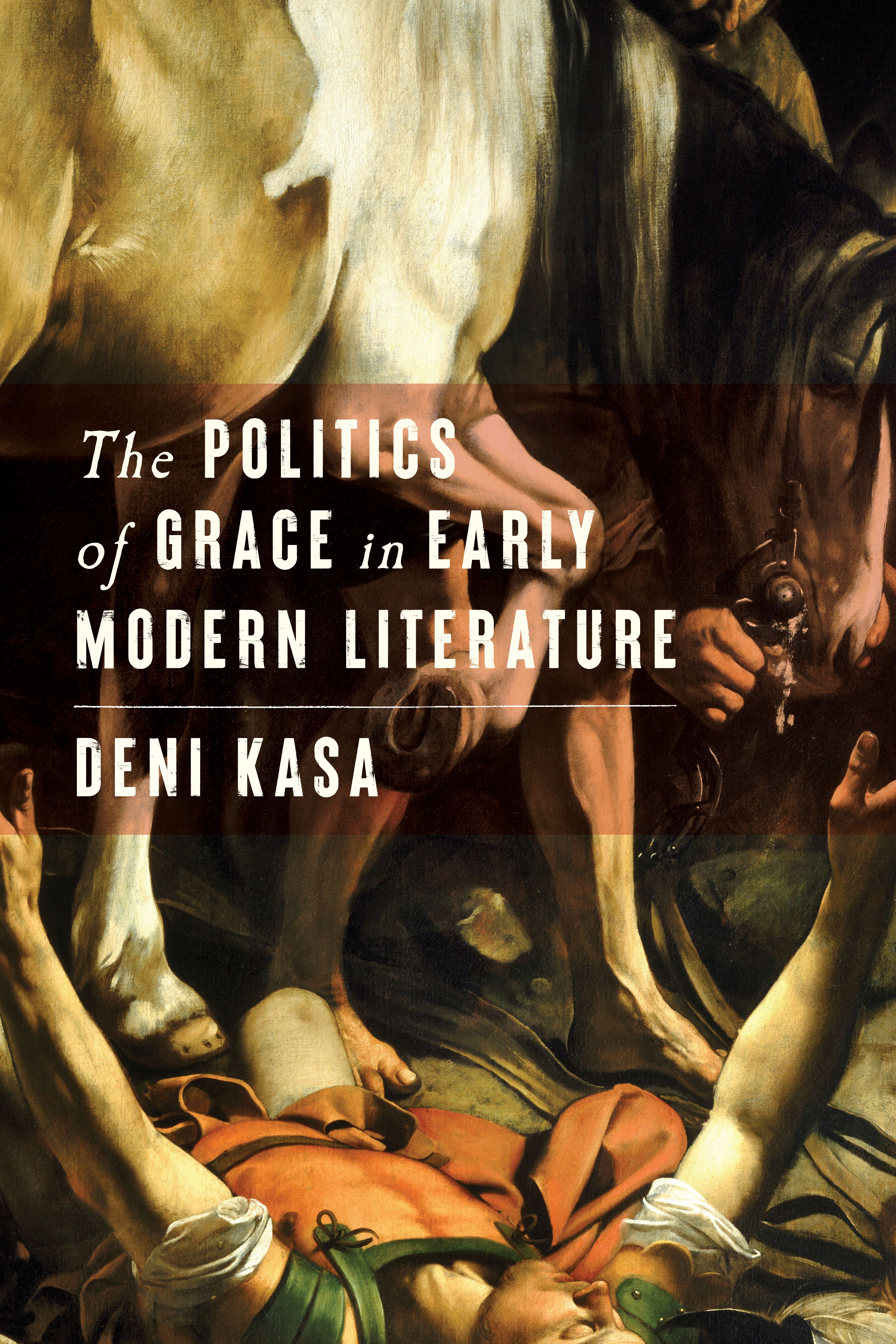
The Politics of Grace in Early Modern Literature
This book tells the story of how early modern poets used the theological concept of grace to reimagine their political communities. The Protestant belief that salvation was due to sola gratia, or grace alone, was originally meant to inspire religious reform. But, as Deni Kasa shows, poets of the period used grace to interrogate the most important political problems of their time, from empire and gender to civil war and poetic authority. Kasa examines how four writers—John Milton, Edmund Spenser, Aemilia Lanyer, and Abraham Cowley—used the promise of grace to develop idealized imagined communities, and not always egalitarian ones. Kasa analyzes the uses of grace to make new space for individual and collective agency in the period, but also to validate domination and inequality, with poets and the educated elite inserted as mediators between the gift of grace and the rest of the people.
Offering a literary history of politics in a pre-secular age, Kasa shows that early modern poets mapped salvation onto the most important conflicts of their time in ways missed by literary critics and historians of political thought. Grace, Kasa demonstrates, was an important means of expression and a way to imagine impossible political ideals.
eBook


Science Fiction Theology
Science fiction imagines a universe teeming with life and thrilling possibility, but also hidden and hideous dangers. Christian theology, often a polemical target for science fiction, reflects on the plenitude out of which and for which the universe exists. In Science Fiction Theology , Alan Gregory investigates the troubled relationship between science fiction and Christianity and, in particular, how both have laid claim to the modern idea of sublimity.
To the extent that science fiction has appropriated—and reveled—in the sublime, it has persisted in a sometimes explicit, sometimes subterranean, relationship with Christian theology. From its seventeenth-century beginnings, the sublime, with its representations of immensity, has informed the imagining of God. When science fiction critiques or reinvents religion, its writers have engaged in a literary guerrilla war with Christianity over what is truly sublime and divine.
Gregory examines the sublime and its implicit theologies as they appear in early American pulp science fiction, the horror writing of H. P. Lovecraft, science fiction narratives of evolution and apocalypse, and the work of Philip K. Dick. Ironically, science fiction’s tussle with Christianity hides the extent to which the sublime, especially in popular culture, serves to distort the classical Christian understanding of God, secularizing that God and rendering God’s transcendence finite. But by turning from the sublime to a consideration of the beautiful, Gregory shows that both Christian and science-fictional imaginations may discover a new and surprising conversation.
eBook

Cormac McCarthy and the signs of sacrament : literature, theology, and the moral of stories
\"Although scholars have widely acknowledged the prevalence of religious reference in the work of Cormac McCarthy, this is the first book on the most pervasive religious trope in all his works: the image of sacrament, and in particular, of eucharist. Informed by postmodern theories of narrative and Christian theologies of sacrament, Matthew Potts reads the major novels of Cormac McCarthy in a new and insightful way, arguing that their dark moral significance coheres with the Christian theological tradition in difficult, demanding ways. Potts develops this account through an argument that integrates McCarthy's fiction with both postmodern theory and contemporary fundamental and sacramental theology. In McCarthy's novels, the human self is always dispossessed of itself, given over to harm, fate, and narrative. But this fundamental dispossession, this vulnerability to violence and signs, is also one uniquely expressed in and articulated by the Christian sacramental tradition. By reading McCarthy and this theology alongside postmodern accounts of action, identity, subjectivity, and narration, Potts demonstrates how McCarthy exploits Christian theology in order to locate the value of human acts and relations in a way that mimics the dispossessing movement of sacramental signs. This is not to claim McCarthy for theology, necessarily, but it is to assert that McCarthy generates his account of what human goodness might look like in the wake of metaphysical collapse through the explicit use of Christian theology\"-- Provided by publisher.
BOOK

Singing by Herself
Singing by Herself
reinterprets the rise of literary loneliness by
foregrounding the female and feminized figures who have been
overlooked in previous histories of solitude. Many of the
earliest records of the terms \"lonely\" and \"loneliness\" in British
literature describe solitaries whose songs positioned them within
the tradition of female complaint.
Amelia Worsley shows how these feminized solitaries, for whom
loneliness was both a space of danger and a space of productive
retreat, helped to make loneliness attractive to future lonely
poets, despite the sense of suspicion it evoked. Although
loneliness today is often associated with states of atomized
interiority, soliloquy, and self-enclosure, this study of
eighteenth-century poetry disrupts the presumed association between
isolation, singular speech, and bounded models of poetic
subjectivity.
In five chapters focused on lonely poet figures in the works of
John Milton, Anne Finch, Alexander Pope, Thomas Gray, and Charlotte
Smith-which also take account of the wider eighteenth-century
fascination with literary loneliness- Singing by Herself
shows how poets increasingly associated the new literary mode of
being alone with states of disembodiment, dispersal, and echoic
self-doubling. Seemingly solitary lonely voices often dissolve into
polyvocal, allusive community, Worsley argues, when in dialogue
with each other and also with classical figures of feminized lament
such as Sappho, Echo, and Philomela.
The book's provocative reflections on lyric mean that it will
have a broad appeal to scholars interested in the history of poetry
and poetics, as well as to those who study the literary history of
gender, affect, and emotion.
eBook