
Catalogue Search | MBRL


Are you sure you want to remove the book from the shelf?

{{itemTitle}}
4,500
result(s) for
"Theoretical literature "
Sort by:

The periodic table
\"The periodic table is the way scientists have organized the 118 known elements. But up-and-coming scientists can learn much from the periodic table as well. In this book, they'll learn how to read the periodic table, including what an element's atomic number means and what the rows and columns signify. They'll gather facts about common and interesting elements and even discover how they can predict how elements might chemically react from their position in the table. Fact boxes and images add additional information to the accessible text.\"-- Provided by publisher.
Book
Latin Literatures of Medieval and Early Modern Times in Europe and Beyond
The textual heritage of Medieval Latin is one of the greatest reservoirs of human culture. Repertories list more than 16,000 authors from about 20 modern countries. Until now, there has been no introduction to this world in its full geographical extension. Forty contributors fill this gap by adopting a new perspective, making available to specialists (but also to the interested public) new materials and insights. The project presents an overview of Medieval (and post-medieval) Latin Literatures as a global phenomenon including both Europe and extra-European regions. It serves as an introduction to medieval Latin's complex and multi-layered culture, whose attraction has been underestimated until now. Traditional overviews mostly flatten specificities, yet in many countries medieval Latin literature is still studied with reference to the local history. Thus the first section presents 20 regional surveys, including chapters on authors and works of Latin Literature in Eastern, Central and Northern Europe, Africa, the Middle East, Asia, and the Americas. Subsequent chapters highlight shared patterns of circulation, adaptation, and exchange, and underline the appeal of medieval intermediality, as evidenced in manuscripts, maps, scientific treatises and iconotexts, and its performativity in narrations, theatre, sermons and music. The last section deals with literary \"interfaces,\" that is motifs or characters that exemplify the double-sided or the long-term transformations of medieval Latin mythologemes in vernacular culture, both early modern and modern, such as the legends about King Arthur, Faust, and Hamlet.
eBook

Investigating atoms & molecules
This title provides an overview of atoms and molecules. Text includes a simple overview of atoms and molecules and examines nuclei, protons, neutrons, electrons, shells, bonds, isomers, and polymers. Includes the periodic table. Information is explained using real-world examples and supported with graphics and photos. This book concludes with two simple, kid-friendly experiments. Aligned to Common Core standards and correlated to state standards.
BOOK
Photography in Children's Literature
This book examines the wide array of artistic techniques, topics, and genres used within photographic books for children. The collection offers an international scope, providing a glimpse into the production and reception of photography in children's literature in a range of contexts and cultures.
eBook
The Reality of Women in the Universe of the Ancient Novel
This volume gathers chapters related to the condition of women in the ancient novel. To broaden the perspective, it integrates not only papers dealing with the Greek and Roman novel as a literary genre in its own right, but also as a historical document involving aspects as diverse as history, archaeology, sociology and the history of law.
eBook

Transnational books for children 1750-1900
This is the first study to take a comprehensive look at transnational children's literature in the period before 1900. The chapters examine what we mean by 'children's literature' in this period, as well as what we mean by 'transnational' in the context of children's culture. They investigate who transmitted children's books across borders (authors, illustrators, translators, publishers, teachers, relatives, readers), through what networks the books were spread (commercial, religious, colonial, public, familial), and how the new local identities of imported texts were negotiated. They ask which kinds of books were the most mobile, and they consider what happens to texts when they migrate, as well as what effects transnational dissemination had on individual readers, and on societies and cultures more broadly. Geographically, the case studies gathered here range right across Europe, from Dublin to St Petersburg, then onto North America, India and China. They extend widely across the many genres and formats of children's reading, from cheap print such as almanacs and ABCs to fairy tales and fables, children's novels, textbooks, and beautifully illustrated gift-books.
eBook

Emotion in Texts for Children and Young Adults
Emotion in Texts for Children and Young Adults: Moving stories takes up key issues in affect studies while putting forward new approaches and ways of thinking about the intricate entanglements of emotion, affect, and story in relation to the functions, processes, and influences of texts designed for youth.
eBook

Consumable Reading and Children's Literature
By examining material and sensory interactions in children's literature in the past, present and theorizing on the future, this monograph studies how multisensory experiences may enhance early childhood literacy practices.
eBook
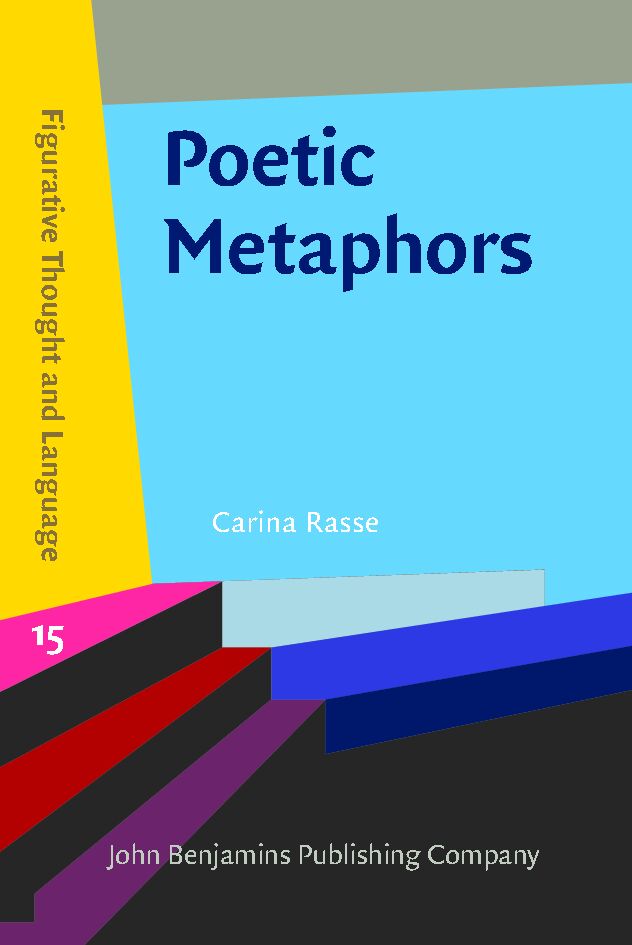
Poetic metaphors : creativity and interpretation
This book uses interviews, questionnaires and think-aloud protocols to investigate the meanings and functions of metaphors from a poet's perspective and to explore how readers interpret and engage with this poetry.
eBook