
Catalogue Search | MBRL


Are you sure you want to remove the book from the shelf?

{{itemTitle}}
837
result(s) for
"Theory, Methods, and Historiography"
Sort by:

Historians and nationalism : East-Central Europe in the nineteenth century
Peripheral cultures have been largely absent from the European canon of historiography. The principal aim of this book is to contribute to redressing the balance. It does so by offering an insight into the complexities of historical writing in nineteenth‐century East‐Central Europe and by ascertaining this tradition's place within the European historiographical heritage. At the core of the book lies a comparative analysis of the life‐work of five prominent scholars: Joachim Lelewel (Polish); Simonas Daukantas (Lithuanian); František Palacký (Czech); Mihály Horváth (Hungarian) and Mihail Kogălniceanu (Romanian). Rather than approaching these scholars' historical achievements from a narrow perspective, the book accommodates them in the context of their promotion of a unified vision of national culture. It discusses their accomplishments in the fields of language and literature, their pursuits in publishing journals and primary sources, and their contribution to the institutionalization and professionalization of the historical discipline.Through the reconstruction of these scholars' shared intellectual background and an in‐depth analysis of their historical narrative the author puts forward the claim that the five historians' professional and political agenda, influenced predominantly by liberalism and Romanticism, shared far more with their contemporaries elsewhere than has previously been assumed and thus renders them genuine representatives of a common European tradition.
eBook

Queen Boudica and historical culture in Britain : an image of truth
This innovative and distinctive book takes a long chronological view and a wide-ranging, interdisciplinary approach. It is the definitive work on the posthumous reputation of the ever-popular warrior queen of the Iceni, Queen Boadicea/Boudica. It explores her presence in British historical discourse, from the early modern rediscovery of the works of Tacitus to the first historical films of the early twentieth century. In doing so, the book seeks to demonstrate the continuity and persistence of historical ideas across time and throughout a variety of media. This focus on continuity leads into an examination of the nature of history as a cultural phenomenon and the implications this has for our own conceptions of history and its role in culture more generally. While providing contemporary contextual readings of Boudica’s representations, this book also explores the unique nature of historical ideas as durable cultural phenomena, articulated by very different individuals over time, all of whom were nevertheless engaged in the creative process of making history. Thus this book presents a challenge to the axioms of cultural history, new historicism, and other mainstays of twentieth- and twenty-first-century historical scholarship. It shows how, long before professional historians sought to monopolize historical practice, audiences encountered visions of past ages created by antiquaries, playwrights, poets, novelists, and artists, all of whom engaged with, articulated, and even defined the meaning of ‘historical truth’. This book argues that these individual depictions, variable audience reactions, and the abiding notion of history as truth constitute the substance of historical culture.
eBook

Writing the Holocaust
Zoë Waxman examines the full history of Holocaust testimony, from the very first chroniclers confined to Nazi-enforced ghettos, to today's survivors writing as part of collective memory. She reveals the multiplicity of Holocaust experience and how different contexts have given rise to very different modes of remembering.
eBook

The making of the \Rape of Nanking\ : history and memory in Japan, China, and the United States
In The Making of the \"Rape of Nanking\" Takashi Yoshida examines how views of the Nanjing Massacre have evolved in history writing and public memory in Japan, China, and the United States. For these nations, the question of how to treat the legacy of Nanjing - whether to deplore it, sanitize it, rationalize it, or even ignore it - has aroused passions revolving around ethics, nationality, and historical identity. Drawing on a rich analysis of Chinese, Japanese, and American history textbooks and newspapers, Yoshida traces the evolving - and often conflicting - understandings of the Nanjing Massacre, revealing how changing social and political environments have influenced the debate. Yoshida suggests that, from the 1970s on, the dispute over Nanjing has become more lively, more globalized, and immeasurably more intense, due in part to Japanese revisionist history and a renewed emphasis on patriotic education in China. While today it is easy to assume that the Nanjing Massacre has always been viewed as an emblem of Japan's wartime aggression in China, the image of the \"Rape of Nanking\" is a much more recent icon in public consciousness. Takashi Yoshida analyzes the process by which the Nanjing Massacre has become an international symbol, and provides a fair and respectful treatment of the politically charged and controversial debate over its history.
eBook
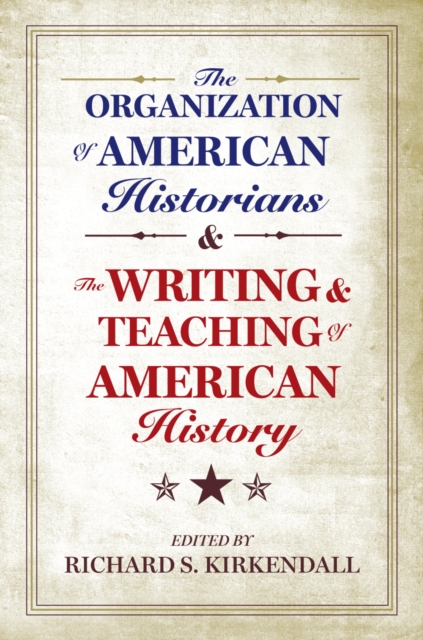
The Organization of American Historians and the writing and teaching of American history
The field of American history has undergone remarkable expansion in the past century, all of it reflecting a broadening of the historical enterprise and democratization of its coverage. Today, the shape of the field takes into account the interests, identities, and narratives of more Americans than at any time in its past. Much of this change can be seen through the history of the Organization of American Historians, which, as its mission states, “promotes excellence in the scholarship, teaching, and presentation of American history, and encourages wide discussion of historical questions and equitable treatment of all practitioners of history.” This century-long history of the Organization of American Historians—and its predecessor, the Mississippi Valley Historical Association—explores the thinking and writing by professional historians on the history of the United States. It looks at the organization itself, its founding and dynamic growth, the changing composition of its membership and leadership, the emphasis over the years on teaching and public history, and pedagogical approaches and critical interpretations as played out in association publications, annual conferences, and advocacy efforts. The majority of the book emphasizes the writing of the American story by offering a panorama of the fields of history and their development, moving from long-established ones such as political history and diplomatic history to more recent ones, including environmental history and the history of sexuality.
eBook

A second domesday? : the hundred rolls of 1279-80
The 1279–80 hundred rolls are one of the most important but neglected sources for 13th-century English history. This book places the inquiry in its historical context among other inquiries by Edward I in England, Gascony, the Channel Islands, and Wales, and by other rulers on the Continent. It examines its purpose and whether it was conceived deliberately as a second Domesday Book. The geographical range and chronology of the inquiry are examined, how it was conducted and the way in which the returns were compiled. The book concludes with an assessment of the uses which contemporaries and modern historians have made of the returns. There are appendices providing lists of the manuscripts and printed editions of all known surviving rolls, the commission of inquiry and oath taken by commissioners and the articles of inquiry for Cambridgeshire and London.
eBook

The Routledge Companion to Digital Humanities and Art History
The Routledge Companion to Digital Humanities and Art History offers a broad survey of cutting-edge intersections between digital technologies and the study of art history, museum practices, and cultural heritage.
The volume focuses not only on new computational tools that have been developed for the study of artworks and their histories but also debates the disciplinary opportunities and challenges that have emerged in response to the use of digital resources and methodologies. Chapters cover a wide range of technical and conceptual themes that define the current state of the field and outline strategies for future development. This book offers a timely perspective on transdisciplinary developments that are reshaping art historical research, conservation, and teaching.
This book will be of interest to scholars in art history, historical theory, method and historiography, and research methods in education.
eBook
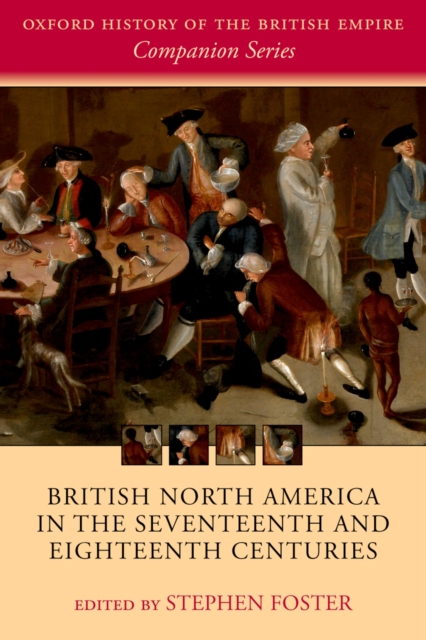
British North America in the Seventeenth and Eighteenth Centuries
Until relatively recently, the linkage between British Imperial History and the History of Early America was taken for granted. This is no longer the case. Instead, Early American historiography has suffered from a loss of coherent definition as competing manifestos demand this or that reordering of the subject to combine time periods and geographical areas in ways that would have previously seemed anomalous. Along the way, it has become a commonplace to announce that the history of America is best accounted for in America itself in a three-way melee between “settlers,” the indigenous populations, and the forcibly transported African slaves and their creole descendants. Our collection recognizes the value of the historiographic work done under this new dispensation in the last two decades or so and tries to incorporate its insights. However, we advocate a pluralistic approach to the subject generally and attempt to demonstrate that the metropolitan power was of more than secondary importance to America in the seventeenth and eighteenth centuries. Each of the contributors has been asked to address two questions: did it matter to the people who lived in the areas of Eastern North America that eventually became the United States that they were subjects of an empire and, if so, did it matter that the empire in question was British? The answer in each case is “Yes,” although not without some considerable complexity in the respective formulations. At the least, however, the combined effect is to re-validate Imperial history as one of the useful ways of describing and explaining early America.
eBook
History, Memory, and State-Sponsored Violence
Modern historiography embraces the notion that time is irreversible, implying that the past should be imagined as something 'absent' or 'distant.' Victims of historical injustice, however, in contrast, often claim that the past got 'stuck' in the present and that it retains a haunting presence. History, Memory, and State-Sponsored Violence is centered around the provocative thesis that the way one deals with historical injustice and the ethics of history is strongly dependent on the way one conceives of historical time; that the concept of time traditionally used by historians is structurally more compatible with the perpetrators' than the victims' point of view. Demonstrating that the claim of victims about the continuing presence of the past should be taken seriously, instead of being treated as merely metaphorical, Berber Bevernage argues that a genuine understanding of the 'irrevocable' past demands a radical break with modern historical discourse and the concept of time.
By embedding a profound philosophical reflection on the themes of historical time and historical discourse in a concrete series of case studies, this project transcends the traditional divide between 'empirical' historiography on the one hand and the so called 'theoretical' approaches to history on the other. It also breaks with the conventional 'analytical' philosophy of history that has been dominant during the last decades, raising a series of long-neglected 'big questions' about the historical condition - questions about historical time, the unity of history, and the ontological status of present and past -programmatically pleading for a new historical ethics.
eBook

Future history : global fantasies in seventeenth-century American and British writings
Future History analyzes English and American writings that imagine England on a global stage well before England became an empire or the United States became a global power. Through close readings, historical contextualization, application of archival theory, and careful speculation, the book traces the ways that English and American writers imagined the East Indies and the West Indies as interconnected. The book argues that the earliest expressions of an American or English worldview were born colonial, conceived at the margins of a rising empire, not in its metropolis, and that a wider variety of agents than we have previously understood—Algonquian converts, “reformed” Catholics, enslaved women in the spice trade, Protestant dissidents, West Indian maroons—helped shape that worldview. In order to recover these voices and experiences, so often overwritten or ignored, the book combines more traditional methodologies of literary analysis and historicization with an interrogation of the structures of the archives in which early writings have been preserved. The chapters taken together describe a particular global (East Indies–West Indies) literary history, while the codas, taken as a separate sequence, demonstrate how a “slant” view on literary history that is asynchronous and at times anachronistic affords a new and more inclusive view of the worlding of the English imagination in the seventeenth century.
eBook