
Catalogue Search | MBRL


Are you sure you want to remove the book from the shelf?

{{itemTitle}}
1,108
result(s) for
"Thomas Paine"
Sort by:

Thomas Paine : Britain, America, and France in the Age of Enlightenment and revolution
\"Thomas Paine (1737-1809) was England's greatest revolutionary: no other reformer was as actively involved in events of the scale of the American and French Revolutions, and none wrote such best-selling texts with the impact of Common Sense and Rights of Man. No one else combined the roles of activist and theorist, or did so in the 'age of revolutions', fundamental as it was to the emergence of the 'modern world'. But his fame meant that he was taken up and reinterpreted for current use by successive later commentators and politicians, so that the 'historic Paine' was too often obscured by the 'usable Paine'.\"--Page 4 of cover.
Book

The Field of Imagination
The first book on Thomas Paine as poet.
One of America's Founding Fathers, Thomas Paine is best remembered as the pamphleteer who inspired the American Revolution. Yet few also know him as an eighteenth-century poet of considerable repute. InThe Field of Imagination, Scott Cleary offers the first book on Paine's poetry, exploring how poetry written both by and about Paine is central to understanding his development as a political theorist.
Despite his claim in The Age of Reason that he was abandoning poetry because it led too much into the \"field of imagination,\" Paine never completely left poetry behind. He took advantage of his position as editor of thePennsylvania Magazine to situate his poetry in relation to the magazine's tacit support of American independence. He drew on two British poets, James Thomson and Charles Churchill, to provide revealing epigraphs for his major early works in support of that independence, and in turn he himself became an influence on early American poets such as Joel Barlow and Philip Freneau.
Paine's poetry has until now been largely relegated to the status of scholarly curiosity. But whether through his own poetry, his thoughts on the place and function of poetry in the Age of Reason, or his deep influence on the poetry of the early American republic, Paine's involvement in poetical craft provides a lens onto the unique and tempestuous literary culture of the eighteenth century.
eBook

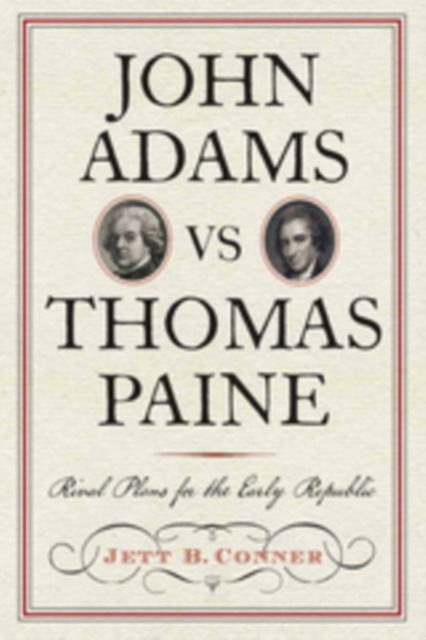
John Adams vs Thomas Paine
How Paine's Common Sense and Adams's Thoughts on Government Shaped Our Modern Political Institutions Initially admiring Thomas Paine's efforts for independence, John Adams nevertheless was rattled by the political philosophy of Common Sense and responded to it by publishing his Thoughts on Government to counteract Paine's proposals, which Adams.
eBook


Thomas Paine and the literature of revolution
This text not only addresses the problem that scholars have tacitly agreed not to treat Thomas Paine as a literary figure, but also demonstrates that his literary sensibility is particularly evident in the very texts that confirmed his importance as a theorist.
BOOK


Thomas Paine and the idea of human rights
\"Thomas Paine is a legendary Anglo-American political icon: a passionate, plain-speaking, relentlessly controversial, revolutionary campaigner, whose writings captured the zeitgeist of the two most significant political events of the eighteenth century, the American and French Revolutions. Though widely acknowledged by historians as one of the most important and influential pamphleteers, rhetoricians, polemicists and political actors of his age, the philosophical content of his writing has nevertheless been almost entirely ignored. This book takes Paine's political philosophy seriously. It explores his views concerning a number of perennial issues in modern political thought including the grounds for, and limits to, political obligation; the nature of representative democracy; the justification for private property ownership; international relations; and the relationship between secular liberalism and religion. It shows that Paine offers a historically and philosophically distinct account of liberalism and a theory of human rights that is a progenitor of our own\"-- Provided by publisher.
Book
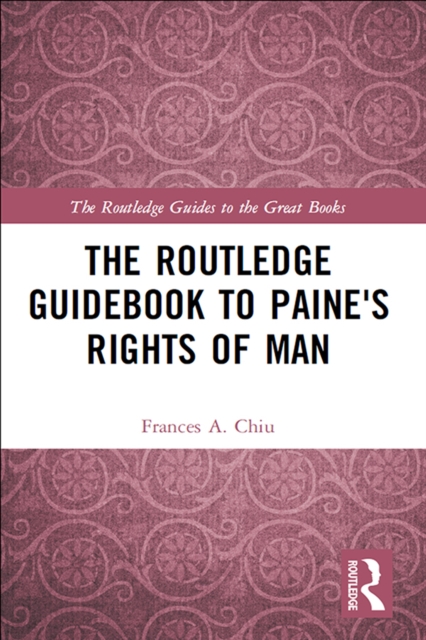
The Routledge Guidebook to Paine's Rights of Man
Upon publication in 1791-92, the two parts of Thomas Paine's Rights of Man proved to be both immensely popular and highly controversial. An immediate bestseller, it not only defended the French revolution but also challenged current laws, customs, and government.
The Routledge Guidebook to Paine's Rights of Man provides the first comprehensive and fully contextualized introduction to this foundational text in the history of modern political thought, addressing its central themes, reception, and influence. The Guidebook examines:
the history of rights, populism, representative governments, and challenges to monarchy from the 12th through 18th century;
Paine's arguments against monarchies, mixed governments, war, and state-church establishments;
Paine's views on constitutions;
Paine's proposals regarding suffrage, inequality, poverty, and public welfare;
Paine's revolution in rhetoric and style;
the critical reception upon publication and influence through the centuries, as well as Paine's relevance today.
The Routledge Guidebook to Paine's Rights of Man is essential reading for students of eighteenth-century American and British history, politics and philosophy, and anyone approaching Paine's work for the first time.
eBook