
Catalogue Search | MBRL


Are you sure you want to remove the book from the shelf?

{{itemTitle}}
18,586
result(s) for
"Thomas Scott"
Sort by:


A Black Gambler’s World of Liquor, Vice, and Presidential Politics
William Thomas Scott (1839–1917) was an entrepreneur and political activist from East Saint Louis and Cairo, Illinois, who in 1904 briefly became the first African American nominated by a national party for president of the United States before his scandalous past forced him to step aside. A free man before the Civil War, Scott was a charismatic hustler who built his fortune through both vice trades and legal businesses including hotels, saloons, and real estate. Publisher and editor of the Cairo Gazette and an outspoken advocate for equal rights, he believed in political patronage and frequently rebelled against political bosses who failed to deliver, whether they were white, black, Republican, or Democrat. Scott helped build the National Negro Liberty Party to forward economic, political, and legal rights for his race. But the hustling that had brought him business success proved his undoing as a national political figure. He was the NNLP's initial presidential nominee, only to be replaced by a better-educated and more socially acceptable candidate, George Edwin Taylor.
eBook

Who benefits most from college?
In this article, we consider how the economic return to a college education varies across members of the U.S. population. Based on principles of comparative advantage, scholars commonly presume that positive selection is at work, that is, individuals who are most likely to select into college also benefit most from college. Net of observed economic and noneconomic factors influencing college attendance, we conjecture that individuals who are least likely to obtain a college education benefit the most from college. We call this theory the negative selection hypothesis. To adjudicate between the two hypotheses, we study the effects of completing college on earnings by propensity score strata using an innovative hierarchical linear model with data from the National Longitudinal Survey of Youth 1979 and the Wisconsin Longitudinal Study. For both cohorts, for both men and women, and for every observed stage of the life course, we find evidence suggesting negative selection. Results from auxiliary analyses lend further support to the negative selection hypothesis.
Journal Article


I will be of Demosthenes minde
In his short but controversial publishing career, the radical Protestant polemicist Thomas Scott (ca. 1580–1626) claimed the right to address King James VI and I directly on foreign policy. Building on recent scholarship in rhetoric, religion, and affect, this article examines how Scott shapes a collective Protestant identity by targeting the passions. In creating this passion-based identity, he aims to counter a Roman Catholic enemy that the state seems incapable of opposing effectively. I consider how Scott fuses the role of the orator and the divinely sanctioned prophet in his pamphlets. My main focus is on Scott’s inventive appeals to pathos, to the passions of his readers, in order to persuade them to agree with his political program and to put it into collective action.
Journal Article
SUNDAY MORNING with Jane Pauley July 27, 2025, CBS
These United States: Coney Island. \"The Wizard of Oz\" as you`ve never seen it before. The hidden side of Johnny Carson. Kristin Scott Thomas on the pain behind \"My Mother`s Wedding.\" Michael Feinstein on passing his love of great songs to the next generation. The iconic sculptures of Louise Nevelson. Investigating the controversial practice of drug testing pregnant patients in hospitals. A nine-year-old boy`s very special birthday wish.
Transcript
Moments Apart
Walters explores the concept of incongruous moments in film, focusing on a specific sequence from the movie \"Four Weddings and a Funeral.\" He argues that while the film as a whole may not stand up to close scrutiny, this particular moment offers depth and complexity worth examining. The analysis delves into the performances of the actors and the nuances of their interactions, highlighting the expressive choices that contribute to the scene's impact. He acknowledges that this moment may not fit into larger patterns or themes of the film, but argues that its merits should not be discounted. He concludes by emphasizing the value of staying with a moment and appreciating its individual qualities, rather than imposing a rigid structure or overarching interpretation.
Journal Article
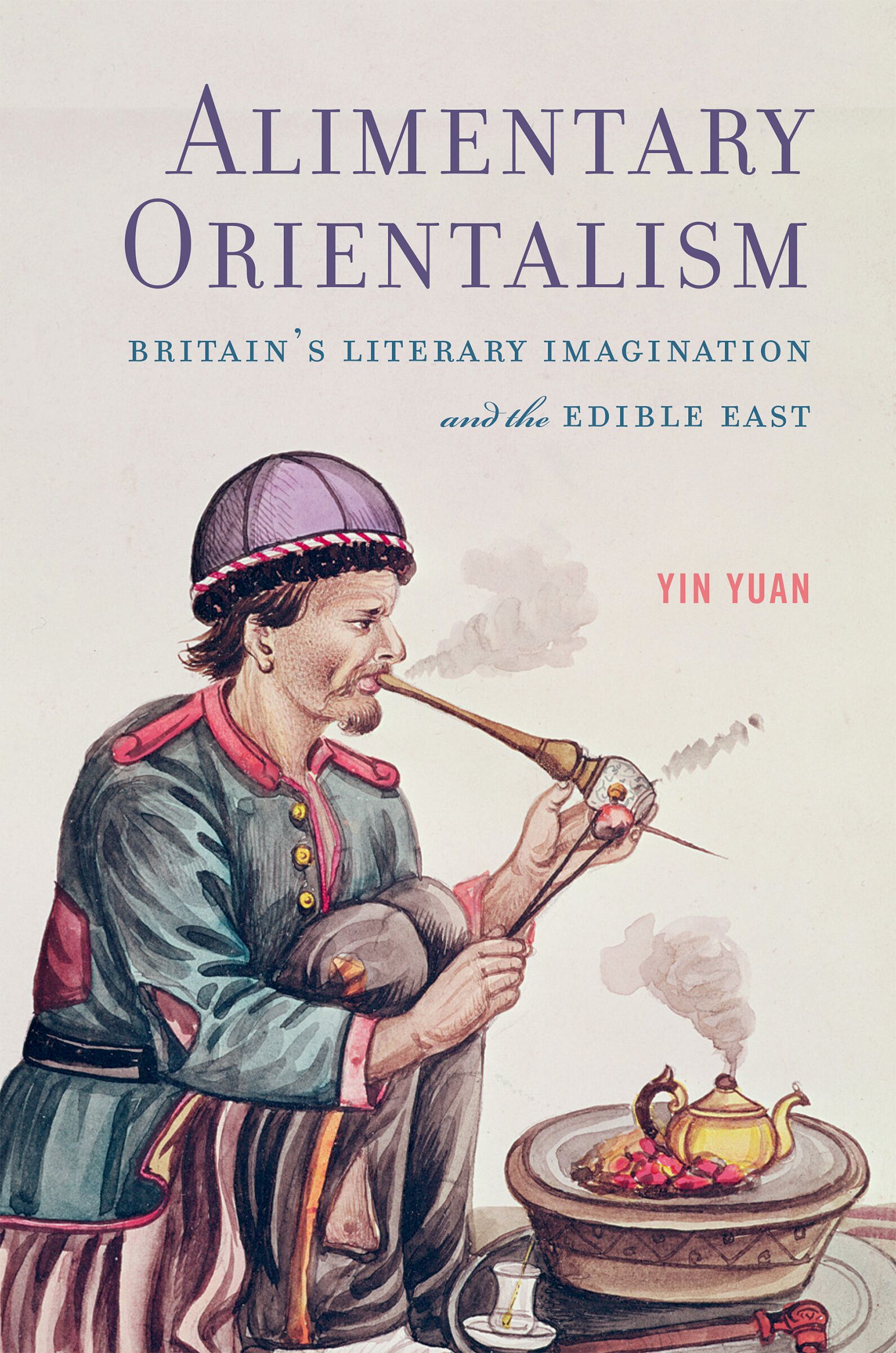
Alimentary Orientalism
What, exactly, did tea, sugar, and opium mean in eighteenth- and nineteenth-century Britain?Alimentary Orientalism reassesses the politics of Orientalist representation by examining the contentious debates surrounding these exotic, recently popularized, and literally consumable things.
eBook

Religion and Politics in International Relations: The Modern Myth
Religion and Politics in International Relations: The Modern Myth Fitzgerald, Timothy. 2011. Religion and Politics in International Relations: The Modern Myth. Religion in International Relations. The Global Resurgence of Religion and the Transformation of International Relations.
Journal Article