
Catalogue Search | MBRL


Are you sure you want to remove the book from the shelf?

{{itemTitle}}
5,909
result(s) for
"Thrillers (Fiction)"
Sort by:

Poison feather
\"When jailed billionaire Charles Merrick hints publicly that he has stashed a fortune in an offshore cache, a school of sharks converges upon his release from Federal prison. Among his swindled victims is Judge Hammond Birk, the man who saved Gibson Vaughn's life when he was a troubled teenager. Now Gibson intends to repay that debt by recovering Merrick's victims' money. But Gibson isn't the only one on the trail of the hidden fortune.The promise of billions has drawn a horde of ruthless treasure hunters, including an edgy ex-con, a female bartender with a mysterious history, a Chinese spy with a passion for fly-fishing, and a veritable army of hardened mercenaries. To stay ahead of the sharks and win justice for his mentor, Gibson will need all his formidable skills. But at the end of the road, he'll still have to face 'Poisonfeather'-- a geopolitical secret that just might get Gibson killed ... or worse\"-- Dust jacket.
Book
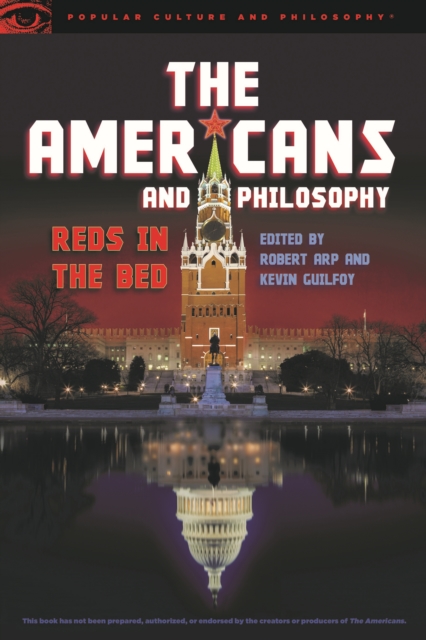
The Americans and Philosophy
The Americans, a dark, tense, action thriller with comic touches, has been hailed by many critics as currently the best show on television. The story, created by a former CIA spy, centers on two Soviet agents posing as an ordinary American couple, Philip and Elizabeth Jennings, in 1980s Washington DC. They have two teenage children who know nothing of their clandestine occupation and function as part of their cover story. The Americans and Philosophy brings together diverse philosophers who take a close look at the metaphysical and ethical aspects of the The Americans. The Jenningses believe they are living in a decadent capitalist society and draw emotional uplift from their dedication to a higher ideal. Just one step ahead of the FBI, they practice murder and seduction as instruments to further the goals of Communist subversion. This gives their lives more meaning and more excitement than those of the other people around them, and serious questions arise as to whether their lives can be truly fulfilling and ennobled. Quaint-looking 1980s culture plays a conspicuous role in The Americans, an example being the psychotherapeutic self-awareness cult known as est, which features in the story and also serves as an allegory of espionage, as est (along with ancient philosophy) asks the question, Do our secret, inner lives truly align with how we act? The gadgetry of espionage, including the poorly adapted but actually historically accurate \"mail robot\" of the 1980s FBI, prompt speculations about the interaction of humans with artificial intelligence. Philip and Elizabeth's genuine horror when they find that one of their children is praying and attending church brings out the ambiguities in the popular notion of brainwashing and indoctrination. Since the Jenningses' children enjoy a comfortable life with many opportunities, can it be true that they are immorally exploited? Knowing that all weapons of war are intended to kill and maim, can we uniquely stigmatize some weapons (such as the biological weapon called \"Glanders\" in Season Four) as unacceptable? All governments practice the duplicity and deception of espionage, but special problems arise when continual lying invades personal relationships. Is it true that in the modern world, devotion to the state has become a \"sacred fiction,\" like a religion? Lying is everywhere in The Americans, but much of the lying is very similar to everyday deception: parents often withhold from their children facts about the parents' jobs which might cause needless anxiety, and tell their children apparently harmless fibs like saying that Santa Claus exists. The boundary between criminal lying and everyday lying is a continual irony in the script of The Americans. Can the demands of a lofty cause, even the survival of freedom or justice in the world, justify the deliberate killing of an innocent individual? Such questions continually bombard the show's protagonists, while existentialist philosophy poses the question: Is Elizabeth truly free to quit being a spy?
eBook

The good lie : a novel
\"An ... international political thriller [in which] Peter Rena is hired by the president to investigate the bombing of an American military base overseas\"-- Provide by publisher.
Book
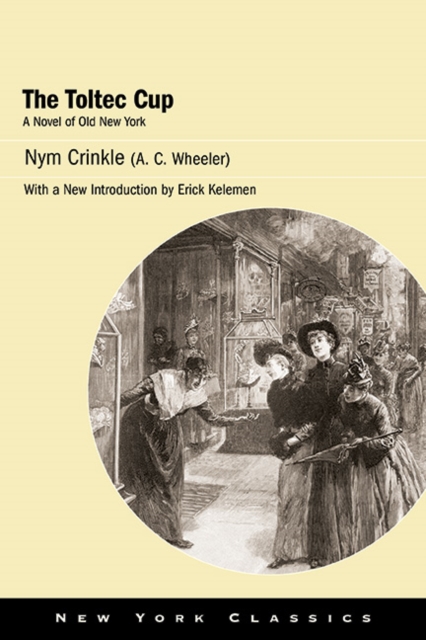
The Toltec Cup
The Toltec Cup was published in 1890 by A. C. Wheeler
under the pseudonym of \"Nym Crinkle.\" A tale of conspiracy and love
triangles, the novel centers on a mysterious silver cup covered in
hieroglyphs that goes missing just days after its owner's death.
New York Police Inspector John Wilder grows suspicious when someone
offers a huge reward for the cup's return. Wilder traces the reward
to Colin Carteret, an artist engaged to the murdered man's
daughter, who swears he did not know of the cup before the reward
appeared in the newspaper. Together, the two men follow a trail of
clues that lead them to New York City slums, a beautiful young
woman named Manuella Castleton, and a syndicate that believes that
the cup will lead to an extraordinary buried treasure. Contemporary
readers will enjoy the novel's remarkable depictions of
mid-nineteenth-century New York City. Roaming the Gas House
District, the Bowery, Union Square, Harlem, and the Meatpacking
District, The Toltec Cup explores a dynamic landscape and
diverse peoples. This new edition revives a forgotten world for a
new generation of readers.
eBook

You'll never know, dear : a novel of suspense
\"From the award-winning author of Night Night, Sleep Tight comes a novel about a little girl's disappearance and the porcelain doll that may hold the key to her fate.\"--Jacket.
Book

The Killing of Louisa
Louisa Collins was hung in New South Wales in 1889.She was tried four times for the alleged murders of her two husbands.In three of those trials the juries could not agree that she was guilty.At her fourth trial the testimony of Louisa's young daughter, May, contributed to Louisa's conviction.
eBook

Give me your hand
\"Kit Owens harbored only modest ambitions for herself when the mysterious Diane Fleming appeared in her high school chemistry class. But Diane's academic brilliance lit a fire in Kit, and the two developed an unlikely friendship. Until Diane shared a secret that changed everything between them. More than a decade later, Kit thinks she's put Diane behind her forever, and she's begun to fulfill the scientific dreams Diane awakened in her. But the past comes roaring back when she discovers that Diane is her competition for a position both women covet: taking part in groundbreaking new research led by their idol. Soon enough, the two former friends find themselves locked in a dangerous game of cat-and-mouse that threatens to destroy them.\"--Dust jacket.
Book
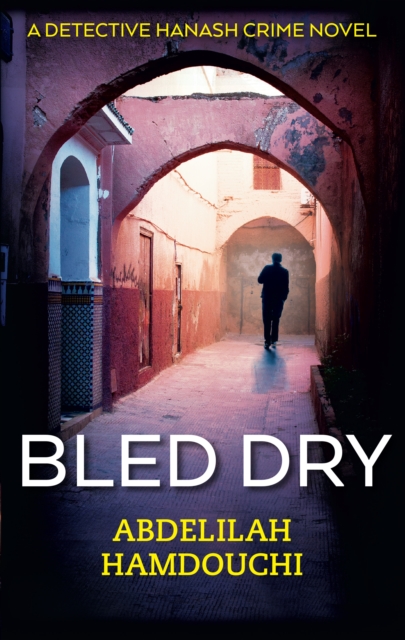
Bled dry
When a prostitute and her ill-fated lover are killed in a gruesome double murder, seasoned investigator Detective Hanash is called in. The case draws him into Casablanca's slums, blighted by criminality, religious extremism, and despair. Hanash's years on the job have made him intimately familiar with the city's seedy underbelly, but this time he harbors a personal connection to one of the victims, one he must conceal at all costs.
eBook

Sunburn : a novel
A \"novel of psychological suspense about a pair of lovers with the best intentions and the worst luck: two people locked in a passionate yet uncompromising game of cat and mouse. But instead of rules, this game has dark secrets, forbidden desires, inevitable betrayals, and cold-blooded murder. One is playing a long game. But which one?\"--Jacket flap.
Book

The Cambridge Companion to Crime Fiction
The Cambridge Companion to Crime Fiction covers British and American crime fiction from the eighteenth century to the end of the twentieth. As well as discussing the detective fiction of writers like Arthur Conan Doyle, Agatha Christie and Raymond Chandler, it considers other kinds of fiction where crime plays a substantial part, such as the thriller and spy fiction. It also includes chapters on the treatment of crime in eighteenth-century literature, French and Victorian fiction, women and black detectives, crime on film and TV, police fiction and postmodernist uses of the detective form. The collection, by an international team of established specialists, offers students invaluable reference material including a chronology and guides to further reading. The volume aims to ensure that its readers will be grounded in the history of crime fiction and its critical reception.
eBook