
Catalogue Search | MBRL


Are you sure you want to remove the book from the shelf?

{{itemTitle}}
57
result(s) for
"Tierethik"
Sort by:

The ethical case against animal experiments
\"At present, human beings worldwide are using an estimated 115.3 million animals in experiments--a normalization of the unthinkable on an immense scale. In terms of harm, pain, suffering, and death, animal experiments constitute one of the major moral issues of our time. Given today's deeper understanding of animal sentience, the contributors to this volume argue that we must afford animals a special moral consideration that precludes their use in experiments. The Ethical Case against Animal Experiments begins with the Oxford Centre for Animal Ethics's groundbreaking and comprehensive ethical critique of the practice of animal experiments. A second section offers original writings that engage with, and elaborate on, aspects of the Oxford Centre report. The essayists explore historical, philosophical, and personal perspectives that range from animal experiments in classical times to the place of necessity in animal research to one researcher's painful journey from researcher to opponent. A devastating look at a contemporary moral crisis, The Ethical Case against Animal Experiments melds logic and compassion to mount a powerful challenge to human cruelty\" -- Provided by publisher.
Book

Fellow creatures : our obligations to the other animals
This book argues that we are obligated to treat all sentient animals as “ends in themselves.” Drawing on a theory of the good derived from Aristotle, it offers an explanation of why animals are the sorts of beings who have a good. Drawing on a revised version of Kant’s argument for the value of humanity, it argues that rationality commits us to claiming the standing of ends in ourselves in two senses. As autonomous beings, we claim to be ends in ourselves when we claim the standing to make laws for ourselves and each other. As beings who have a good, we also claim to be ends in ourselves when we take the things that are good for us to be good absolutely and so worthy of pursuit. The first claim commits us to joining with other autonomous beings in relations of reciprocal moral lawmaking. The second claim commits us to treating the good of every sentient animal as something of absolute importance. The book also argues that human beings are not more important than, superior to, or better off than the other animals. It criticizes the “marginal cases” argument and advances a view of moral standing as attaching to the atemporal subjects of lives. It offers a non-utilitarian account of the relationship between the good and pleasure, and addresses questions about the badness of extinction and about whether we have the right to eat animals, experiment on them, make them work for us, and keep them as pets.
eBook

The cry of nature : art and the making of animal rights
The cry of nature' reveals how humans engaged in the struggle for animal emancipation and examines for the first time the role of visual art in the growth of animal rights. Embracing the lessons of Montaigne, Rousseau, and many others, they proposed that humans and animals have a shared evolutionary heritage of sentience, intelligence and empathy, and deserve equal access to the domain of moral rights. From the mid-eighteenth century a new and more compassionate understanding of animals began to challenge prevailing views. Witnessing the pain and hearing the outcry of the animals massed together in the great cities of Europe, sympathetic writers and artists argued that animals were neither slaves nor automata, and possessed the capacity to feel and even think. Refuting the biblical dispensation of humans' dominion over animals, they contended that animals possessed inalienable rights. Thus was born a global movement that fundamentally changed how we understand our relationship to the natural world.
Book

Nonhuman Humanitarians
Examining the appearance of nonhuman animals laboring alongside humans in humanitarian operations Both critical and mainstream scholarly work on humanitarianism have largely been framed from anthropocentric perspectives highlighting humanity as the rationale for providing care to others. In Nonhuman Humanitarians, Benjamin Meiches explores the role of animals laboring alongside humans in humanitarian operations, generating new ethical possibilities of care in humanitarian practice. Nonhuman Humanitarians examines how these animals not only improve specific practices of humanitarian aid but have started to transform the basic tenets of humanitarianism. Analyzing case studies of mine-clearance dogs, milk-producing cows and goats, and disease-identifying rats, Nonhuman Humanitarians ultimately argues that nonhuman animal contributions problematize foundational assumptions about the emotional and rational capacities of humanitarian actors as well as the ethical focus on human suffering that defines humanitarianism. Meiches reveals that by integrating nonhuman animals into humanitarian practice, several humanitarian organizations have effectively demonstrated that care, compassion, and creativity are creaturely rather than human and that responses to suffering and injustice do not—and cannot—stop at the boundaries of the human.
eBook


Food and animal welfare
Drawing together the latest research and a range of case studies, Henry Buller and Emma Roe guide readers on a fascinating journey through animal welfare issues 'from farm to fork'.Animal welfare offers a vital lens through which to explore the economies, culture and politics of food.
eBook
Beyond Nature
In Beyond Nature Maurizi tackles the animal question from an unprecedented perspective: strongly criticizing the abstract moralism that has always characterized animal rights activism, the author proposes a revolutionary, historical-materialistic analysis of the relationship between humans and non-humans.
eBook
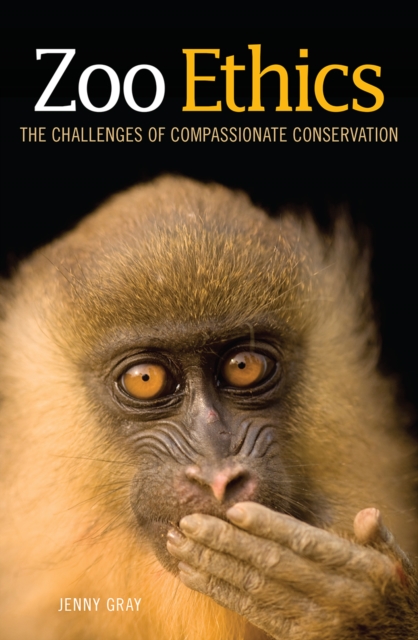
Zoo Ethics
Well-run modern zoos and aquariums do important research and conservation work and teach visitors about the challenges of animals in the wild and the people striving to save them. They help visitors to consider their impact and think about how they can make a difference. Yet for many there is a sense of disquiet and a lingering question remains - can modern zoos be ethically justified? Zoo Ethics examines the workings of modern zoos and considers the core ethical challenges that face those who choose to hold and display animals in zoos, aquariums or sanctuaries. Using recognised ethical frameworks and case studies of 'wicked problems', this book explores the value of animal life and the impacts of modern zoos, including the costs to animals in terms of welfare and the loss of liberty. It also considers the positive welfare and health outcomes of many animals held in zoos, the increased attention and protection for their species in the wild, and the enjoyment and education of the people who visit zoos. A thoughtfully researched work written in a highly readable style, Zoo Ethics will empower students of animal ethics and veterinary sciences, zoo and aquarium professionals and interested zoo visitors to have an informed view of the challenges of compassionate conservation and to develop their own defendable, ethical position.
eBook

For the prevention of cruelty : the history and legacy of animal rights activism in the United States
Animal rights. Those two words conjure diverse but powerful images and reactions. Some nod in agreement, while others roll their eyes in contempt. Most people fall somewhat uncomfortably in the middle, between endorsement and rejection, as they struggle with the profound moral, philosophical, and legal questions provoked by the debate. Today, thousands of organizations lobby, agitate, and educate the public on issues concerning the rights and treatment of nonhumans.
For the Prevention of Cruelty is the first history of organized advocacy on behalf of animals in the United States to appear in nearly a half century. Diane Beers demonstrates how the cause has shaped and reshaped itself as it has evolved within the broader social context of the shift from an industrial to a postindustrial society.
Until now, the legacy of the movement in the United States has not been examined. Few Americans today perceive either the companionship or the consumption of animals in the same manner as did earlier generations. Moreover, powerful and lingering bonds connect the seemingly disparate American Society for the Prevention of Cruelty to Animals of the nineteenth century and the People for the Ethical Treatment of Animals of today. For the Prevention of Cruelty tells an intriguing and important story that reveals society's often changing relationship with animals through the lens of those who struggled to shepherd the public toward a greater compassion.
eBook
Thinking about animals in the age of the Anthropocene
The term \"Anthropocene\", the era of mankind, is increasingly being used as a scientific designation for the current geological epoch.This is because the human species now dominates ecosystems worldwide, and affects nature in a way that rivals natural forces in magnitude and scale.
eBook