
Catalogue Search | MBRL


Are you sure you want to remove the book from the shelf?

{{itemTitle}}
25
result(s) for
"Tierrecht."
Sort by:

The cry of nature : art and the making of animal rights
The cry of nature' reveals how humans engaged in the struggle for animal emancipation and examines for the first time the role of visual art in the growth of animal rights. Embracing the lessons of Montaigne, Rousseau, and many others, they proposed that humans and animals have a shared evolutionary heritage of sentience, intelligence and empathy, and deserve equal access to the domain of moral rights. From the mid-eighteenth century a new and more compassionate understanding of animals began to challenge prevailing views. Witnessing the pain and hearing the outcry of the animals massed together in the great cities of Europe, sympathetic writers and artists argued that animals were neither slaves nor automata, and possessed the capacity to feel and even think. Refuting the biblical dispensation of humans' dominion over animals, they contended that animals possessed inalienable rights. Thus was born a global movement that fundamentally changed how we understand our relationship to the natural world.
Book

Beyond Nature
In Beyond Nature Maurizi tackles the animal question from an unprecedented perspective: strongly criticizing the abstract moralism that has always characterized animal rights activism, the author proposes a revolutionary, historical-materialistic analysis of the relationship between humans and non-humans.
eBook

For the prevention of cruelty : the history and legacy of animal rights activism in the United States
Animal rights. Those two words conjure diverse but powerful images and reactions. Some nod in agreement, while others roll their eyes in contempt. Most people fall somewhat uncomfortably in the middle, between endorsement and rejection, as they struggle with the profound moral, philosophical, and legal questions provoked by the debate. Today, thousands of organizations lobby, agitate, and educate the public on issues concerning the rights and treatment of nonhumans. For the Prevention of Cruelty is the first history of organized advocacy on behalf of animals in the United States to appear in nearly a half century. Diane Beers demonstrates how the cause has shaped and reshaped itself as it has evolved within the broader social context of the shift from an industrial to a postindustrial society. Until now, the legacy of the movement in the United States has not been examined. Few Americans today perceive either the companionship or the consumption of animals in the same manner as did earlier generations. Moreover, powerful and lingering bonds connect the seemingly disparate American Society for the Prevention of Cruelty to Animals of the nineteenth century and the People for the Ethical Treatment of Animals of today. For the Prevention of Cruelty tells an intriguing and important story that reveals society's often changing relationship with animals through the lens of those who struggled to shepherd the public toward a greater compassion.
eBook

Every Twelve Seconds
This is an account of industrialized killing from a participant's point of view. The author, political scientist Timothy Pachirat, was employed undercover for five months in a Great Plains slaughterhouse where 2,500 cattle were killed per day-one every twelve seconds. Working in the cooler as a liver hanger, in the chutes as a cattle driver, and on the kill floor as a food-safety quality-control worker, Pachirat experienced firsthand the realities of the work of killing in modern society. He uses those experiences to explore not only the slaughter industry but also how, as a society, we facilitate violent labor and hide away that which is too repugnant to contemplate.
Through his vivid narrative and ethnographic approach, Pachirat brings to life massive, routine killing from the perspective of those who take part in it. He shows how surveillance and sequestration operate within the slaughterhouse and in its interactions with the community at large. He also considers how society is organized to distance and hide uncomfortable realities from view. With much to say about issues ranging from the sociology of violence and modern food production to animal rights and welfare,Every Twelve Secondsis an important and disturbing work.
eBook

Pet Politics
Although scholars in the disciplines of law, psychology, philosophy, and sociology have published a considerable number of prescriptive, normative, and theoretical studies of animals in society, Pet Politics presents the first study of the development of companion animal or pet law and policy in Canada and the United States by political scientists. The authors examine how people and governments classify three species of pets or companion animals-cats, dogs, and horses-for various degrees of legal protection. They then detail how interest groups shape the agenda for companion animal legislation and regulation, and the legislative and administrative formulation of anticruelty, kennel licensing, horse slaughter, feral and roaming cat, and breed ban policies. Finally, they examine the enforcement of these laws and policies by agencies and the courts. Using an eclectic mix of original empirical data, original case studies, and interviews-and relying on general theories and research about the policy process and the sociopolitical function of legality-the authors illustrate that pet policy is a unique field of political struggle, a conflict that originates from differing perspectives about whether pets are property or autonomous beings, and clashing norms about the care of animals. The result of the political struggle, the authors argue, is difficulty in the enactment of policies and especially in the implementation and enforcement of laws that might improve the welfare of companion animals.
eBook
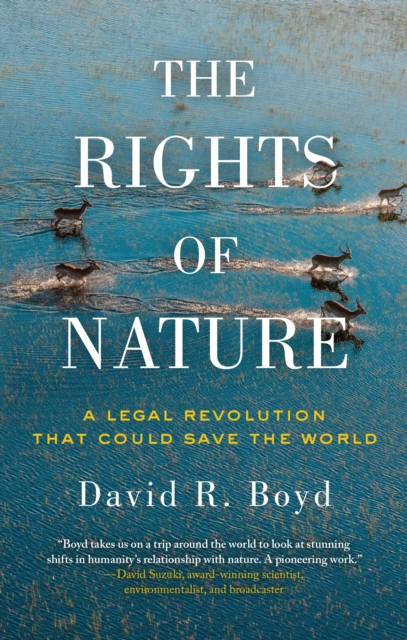
The Rights of Nature
A growing body of law around the world supports the idea that humans are not the only species with rights. More laws are being passed recognizing that ecosystems -- rivers, forests, mountains, and more -- have legally enforceable rights. And if nature has rights, then humans have responsibilities.
eBook

The Politics of Species
The assumption that humans are cognitively and morally superior to other animals is fundamental to social democracies and legal systems worldwide. It legitimises treating members of other animal species as inferior to humans. The last few decades have seen a growing awareness of this issue, as evidence continues to show that individuals of many other species have rich mental, emotional and social lives. Bringing together leading experts from a range of disciplines, this volume identifies the key barriers to a definition of moral respect that includes nonhuman animals. It sets out to increase concern, empathy and inclusiveness by developing strategies that can be used to protect other animals from exploitation in the wild and from suffering in captivity. The chapters link scientific data with normative and philosophical reflections, offering unique insight into controversial issues around the ethical, political and legal status of other species.
eBook

The Capitalist Commodification of Animals
This volume offers analysis regarding the historical transformations in the material conditions and ideological conceptions of nonhuman animals, alienated speciesism, the ecological crisis that is undermining the conditions of life for all species, and the capitalist commodification of animals that results in suffering, death, and profits.
eBook
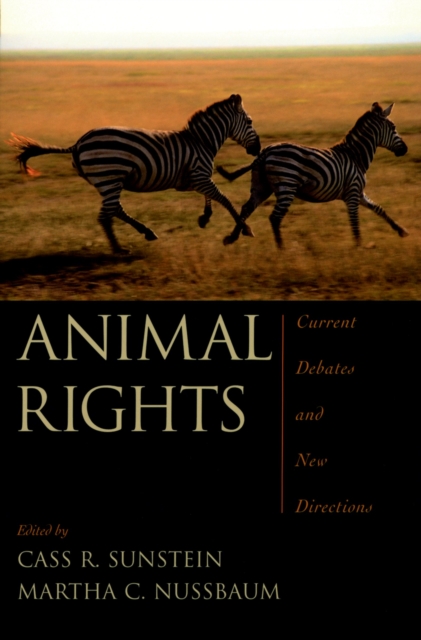
Animal Rights
This book explores the legal and political issues that underlie the campaign for animal rights and the opposition to it. Addressing ethical questions about ownership, protection against unjustified suffering, and the ability of animals to make their own choices free from human control, its chapters offer numerous different perspectives on animal rights and animal welfare. They show that whatever one's ultimate conclusions, the relationship between human beings and nonhuman animals is being fundamentally rethought. The book offers a modern treatment of that rethinking.
eBook
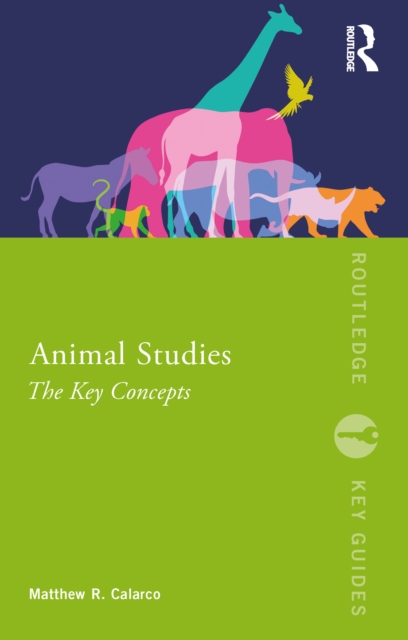
Animal Studies
Prefaced with a brief introduction to the field of animal studies, the text explores the key influential terms, topics and debates which have had a major impact on the field, and that students are most likely to encounter in their animal studies classes.
Animal Studies provides a guide to key concepts in the burgeoning interdisciplinary field of animal studies, laid out in A–Z format. While Human–Animal Studies and Critical Animal Studies are the main frameworks that inform the bulk of the writings in animal studies and the key concepts discussed in the volume, other approaches such as anthrozoology and cognitive ethology are also explored. The entries in the volume attend to the differences in ongoing debates among scholars and activists, showing that what is commonly called “animal studies” is far from a unified body of work. A full bibliography of sources is included at the end of the book, along with an extensive index.
The book will be a valuable guide to undergraduate and postgraduate students in geography, philosophy, sociology, anthropology, women’s studies, and other related disciplines. Seasoned researchers will find the book helpful, when researching topics outside of their specialization. Outside of academia, it will be of interest to activists, as well as professional organizations.
eBook