
Catalogue Search | MBRL


Are you sure you want to remove the book from the shelf?

{{itemTitle}}
24
result(s) for
"Tiles Asia"
Sort by:
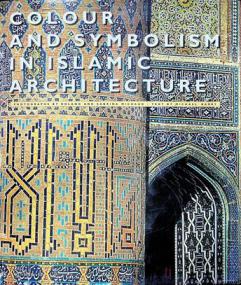
Colour and symbolism in Islamic architecture : eight centuries of the tile-maker's art
\"Colour and Symbolism in Islamic Architecture gathers together the largest collection of photographs ever published of the astonishing tiled domes, minarets and walls of Islamic Asia. Over three decades Roland and Sabrina Michaud have travelled from Turkey to the Chinese borders, through towns and cities such as Herat, Samarkand, Esfahan, Konya and Lahore, to photograph the mosques and buildings that carry the distinctive mark of the tile-maker's art. Exquisitely decorated, these often fragile architectural structures are adorned with thousands of ceramic tiles bearing the 'seven colours of heaven': turquoise, night-blue, black, green, red, ochre and white - a dazzling testimony to the ceramist's art.\" \"Michael Barry's text draws on a wealth of technical and iconographic information to illuminate the history and meaning of these remarkable decorations. He traces the history of Islamic architectural tiles from their first major appearance at the end of the twelfth century as a means of protection from the weather, through their apogee in the fifteenth century which saw them perhaps at their most ornate, right up to the present day when Herat's tilemasters still perpetuate the finest medieval traditions.\" \"Beginning with a highly evocative traveller's impression of modern Afghanistan, the text combines profound historical knowledge with insight into the technical innovations that shaped the course of tile decoration in medieval Islam. In addition, in order to explore the symbolism behind the seven colours Michael Barry turns to one of the greatest medieval Persian-language poets, Nezami of Ganjeh, and his verse romance The Brides of the Seven Climes. He translates this series of tales, which are as charming and gripping as any in the Thousand and One Nights, and in his commentary provides a fascinating glimpse of the philosophical, literary and religious context for Nezami's work\"--Jacket
Book

Two Traditions
The production of Khmer roof tiles underwent dramatic technical and stylistic changes during the pre-Angkorian (ca. C.E. 500–802) and Angkorian (C.E. 802–1431) periods. It has long been assumed that the regional expansion of Khmer political power and its intensive interregional trade and interactions with China during the Angkorian period were crucial factors in this transformation. This article presents the first integrated study on the production sequence and usage of Khmer roof tiles in Angkor (Cambodia) and its provincial centers in Northeast Thailand. Furthermore, it evaluates the extent to which the Khmer people made technological and social choices as they embraced new ceramic manufacturing technologies. Combining archaeological excavation findings with comparative analyses of two regions, this study argues that the contact the Khmer had with China motivated Khmer to begin roof tile production for elite residences and temples. The subsequent Khmer local architectural tradition is defined by distinctive production techniques of Khmer roof tiles and ancient ranking systems for roof tile usage in the greater Angkorian region. This article makes important observations about the specific choices that were made in the process of emulating the roof tile tradition. Roof tile manufacture and usage were ways for Khmer rulers to establish the legitimacy of their polities in mainland Southeast Asia.
Journal Article

Characteristics of the raw materials of glazed tile bodies in the southern area of the Bao'ensi site, Nanjing, China
The Nanjing Bao'ensi site is the largest and highest-ranking royal temple from the Ming Dynasty, and it is famous for its full-body glass pagoda. In this study, the glazed tiles excavated from the southern area of the Bao'ensi site were selected and analysed using X-ray diffraction, thermal dilation and energy-dispersive X-ray fluorescence to determine their phase composition, firing temperature and chemical composition. The glazed tile bodies of the Bao'ensi site consist mainly of quartz and mullite, although some samples contain trace amounts of other minerals. All of the body samples were fired to the same temperature range (i.e. 1000-1100°C). The firing temperature combined with the phase composition indicate that the raw materials and firing process of the glazed tile body samples have similarities, but there are certain differences. The source of the raw materials for a portion of the glazed tile bodies is Dangtu, Anhui, whilst the source of the raw materials for the remaining materials remains to be discovered.
Journal Article
Muttalip green clay and its ultraviolet and infrared absorption and reflection
The search for sufficiently high-quality clays for use in the tile industry represents a significant challenge. This study aimed to prepare Muttalip green clay tiles with flexural strengths adhering to the TS EN 1304:2016 standard. Muttalip green clay was subjected to sieving, vacuum pressed, dried and then baked to obtain galette tiles. The tiles were analysed subsequently using optical techniques, including X-ray diffraction, X-ray fluorescence spectrometry and field-emission scanning electron microscopy. The influence of various firing temperatures (900, 950 and 1000°C) on the flexural strength of the tiles was also investigated. The tiles obtained at 950°C exhibited a maximum flexural strength of 153.91 kg cm-2. Fourier-transform infrared spectroscopy revealed that the tiles reflect ultraviolet A radiation and absorb infrared radiation. Muttalip green clay is a suitable material for preparing tiles for roofing applications.
Journal Article
The Gumuskoy (Kutahya, Turkey) kaolin deposit and its ceramic properties
The Gumuskoy kaolin clay deposit, located ∼40 km northwest of Kutahya, Turkey, has promising reserves for ceramic production. In order to evaluate the potential use of this region, five representative clay samples were collected and characterized with X-ray diffraction, polarized light optical microscopy, X-ray fluorescence spectrometry, differential thermal analysis and scanning electron microscopy coupled with energy-dispersive X-ray spectroscopy. According to the Chemical Index of Alteration and Plagioclase Index of Alteration, the kaolin samples were formed by strong chemical alteration of the Tavsanli volcanites. The clays contain kaolinite, illite, pyrophyllite, montmorillonite and minor halloysite, as well as quartz, plagioclase (andesine), biotite, sanidine, rutile and goethite. The clay samples were used for thermal and physical tests. The plasticity, particle-size distributions firing properties (water absorption, apparent porosity, linear shrinkage, dry bending strength, fired bending strength) and colour parameters of the fired samples were determined. The kaolinitic clay samples from Gumuskoy are suitable for making wall tiles, floor tiles and kiln wares after shaping by dry pressing and extrusion.
Journal Article

The Ancient Mediterranean Trade in Ceramic Building Materials
This study (the second volume in the Archaeopress series devoted to the publication of ceramics in the Roman Mediterranean and outlying territories from the late Republic to late Antiquity) addresses the level of interregional trade of ceramic building material (CBM), traditionally seen as a high bulk low value commodity, within the ancient Mediterranean between the third century BC and the seventh century AD. It examines the impact of different modes of production, distribution and consumption of CBM and how archaeological assemblages differ from what is predicted by current models of the ancient economy. It also explores how CBM can be used to investigate cultural identity and urban form. CBM has great potential in investigating these topics. It survives in large quantities in the archaeological record; it is transported as a commodity in its own right, not as a container for other products like amphorae. The amount of CBM used in a building can be estimated, and this can be extrapolated to urban centres to model consumption in ways that are not possible for other goods. This allows the potential derivation of economic information to a higher level of precision than is the case for other materials. The material used in this study derives from stratified assemblages from two major ports of the ancient Mediterranean: Carthage and Beirut. CBM as a material is comparable to pottery, only it does not exhibit the same range of forms. This leaves fabric as a major means of analysing CBM samples. For this reason a programme of petrological thin sectioning has been carried out on these assemblages. These data have been combined with the taphonomic and dating evidence from the excavations. The results showed that the levels of imports of CBM into these two cities were much higher than would normally be expected from the orthodox model of the consumer city. They also suggest that CBM can be used as a tool to investigate cultural identity. This study is the second volume in the Archaeopress series devoted to the publication of ceramics in the Roman Mediterranean and outlying territories from the late Republic to late Antiquity. See below for LRFW 1. Late Roman Fine Wares. Solving problems of typology and chronology. A review of the evidence, debate and new contexts (2012) edited by Miguel Ángel Cau, Paul Reynolds and Michel Bonifay. ISBN 9781905739462.
eBook

Energy Smart Buildings: Potential for Conservation and Efficiency of Energy
Globally demand for energy is escalating with the passage of time due to increased population and consumption. In order to meet the increased energy demand and ensure its sustainable supply, different options are being considered. Pakistan is also facing the severe energy crisis from last couple of years. This energy crisis has seriously hampered the economic growth and development progress. In this situation intensive efforts are being invested by concerned departments and agencies to enhance the production and supply to reduce the current shortfall. However, there are certain demand side issues which can be worked out to achieve the energy conservation and efficiency. Keeping energy conservation and efficiency in view, present study focuses the energy smart buildings. These buildings have relatively reduced energy demand and better efficiency that can significantly contribute to the conservation of energy. Study is a quantitative analysis that is based on secondary data sources collected from concerned departments (e.g. ENERCON). Research also examines the government's proposed conservation strategies and buildings code of Pakistan. The findings of the present research reveal that energy smart buildings have significant potential for conservation and efficiency of energy. Moreover, we can save lot of money by adopting energy conservation technologies in buildings.
Journal Article
Buffer Zone Trade in Northeast Asia in the Second Century B.C
This article employs the theory of buffer zone trade to understand archaeological data related to trade in Wiman Chosŏn (195-108 B.C.), one of the earliest states in Korean history. Buffer zone trade is performed by an entity (B) placed between a fully developed state with a centralized government (C), and an underdeveloped polity in a periphery (P). B creates a route to convey C's advanced products, and exports imported goods from C as well as its own products to neighboring polities in the periphery, while controlling the flow of luxury materials. Significantly, in this process B moderates the impact of more powerful and regionally dominant civilizations on the polities in the periphery, therefore preventing these peripheral polities from losing their indigenous cultures entirely or experiencing structural collapse. Furthermore, B exercises authority over the polities in the periphery, controlling the flow of advanced materials. Wiman Chosön imported Han's monetary currency, iron products, weapons, farming tools, high-fired pottery, horse trappings, bronze mirrors, and bronze vessels, while exporting a few simple iron tools like hand knives, bronze mirrors, slender daggers, and fine-lined mirrors to Chin. Interestingly, the discrepancy of both the quality and quantity of the imported Han products takes place in the Korean Peninsula. Additionally, there was no influx of Han currencies and iron weaponry in the southern Korean Peninsula before the second century B.C. I believe that this phenomenon represents a result of trade conducted by Wiman Chosön and that Wiman Chosòn functioned in this way as a semi-core.
Journal Article

Firm and Group Dynamics in the Small and Medium Enterprise Sector in Indonesia
This paper discusses the role of clusters and subcontracting as factors in the evolution of small and medium firms in Indonesia during the last quarter century. It is argued that a number of such firms have become successful exporters of rattan furniture, wood furniture and garments on the strength of subcontracting relationships with foreign investors and buyers as well as agglomeration economies achieved by clustering in selected locations. Examples are provided to show that clustered enterprises are more likely to be in the exports business and to adopt product and process innovations as compared to more dispersed firms. Public policy support for fostering subcontracting links and cluster formation is also discussed.
Journal Article

The apse decoration of the Akhiza cathedral: documents and materials in the museums of Georgia
The meagre evidence, based on reports in sources and the material gleaned in the course of surveys by several researchers, of the fortress of Akhiza (northeast Turkey), which was renovated in the reign of King Vakhtang Gorgasali (446–522), and on the Episcopal See set up there, may be supplemented by archival material preserved at the Sh. Amiranashvili Museum of Art, as well as by recourse to the artefacts deposited at the S. Janashia Museum of Georgia, both in Tbilisi. In particular, a letter of A. Florenski, a collaborator with the Caucasian Museum in Tbilisi, written early in the 20th century to D. Gordeev (1889–1964) makes it clear that, at that time, a mosaic image of the Virgin Orans existed in the chancel of the ruined cathedral. According to Florenski, the mosaic was destroyed by a resident of Ardanuch, Usta-Gevork, at the beginning of the 20th century. Some of the material collected by Florenski from Akhiza (including a finger-ring with a cameo bearing the image of the Archangel Michael and distinguished for its high artistic features) found its way to St Petersburg, while two antefixes with representations of leaved crosses and deer, as well as up to three dozen mosaic tesserae are kept in the S. Janashia Museum of Georgia. At the time of the creation of the mosaic, it is worth noting that, after the Arab conquests (in the 730s), Akhiza, with its cathedral, must have ceased to exist as an Episcopal See. In this connection, the antefixes supply additional dating evidence, the artistic peculiarities of the images adorning them clearly pointing to the fifth to sixth century. Kral Vakhtang Gorgasali (446–522) döneminde yenilenmiş ve piskoposlar tarafından idare olunan Akhiza Kalesi (kuzeydoğu Türkiye) hakkında hem yazılı kaynaklarda çok kısıtlı bilgi vardır, hem de yüzey araştırmaları sırasında sabırla toplanmış olan buluntular az sayıdadır. Bu kısıtlı bilgilerin her ikisin de Tiblis'de bulunan Sh. Amiranashvili Museum of Art daki arşiv belgeleri ve S. Janashia Museum of Georgia da bulunan fiziksel malzeme ile desteklenebileceğini düşünmekteyim. Tiblis'de bulunan Caucasian Museum üyesi, A. Florenski tarafından 20. yüzyılın başlarında D. Gordeev'e (1889–1964) yazılan bir mektup, mektubun yazıldığı dönemde yıkık durumdaki katedralin mihrap yerinde Virgin Orans a ait bir mozaiğin bulunduğunu ortaya koymaktadır. Florenski'ye göre mozaik Usta-Gevork isimli bir Ardanuch'lu tarafından 20. yüzyılın başında tahrip edilmiştir. Florenski tarafından Akhiza'dan toplanmış olan malzeme (kabartmasına Archangel Michael'ın bir resmi hakedilmiş olan kıymetli bir yüzük dahil olmak üzere) bir şekilde St Petersburg'a gitmiştir. Üzerinde yapraklarla sarılı haçlar ve geyikler bulunan iki antefix ile üç düzine mozaik ise S. Janashia Museum of Georgia tarafından sahiplenilmiştir. Mozaiğin yapıldığı tarihlerdeki şu durumun göz önüne alınması gereklidir. 730'lu yıllardaki Arap istilasının ardından Akhiza'nın piskoposlar tarafından idare ediliyor olması mümkün değildir. Bu bağlamda, antefixler bize daha doğru tarihleme yapabileceğimiz bilgiler sunmaktadır. Bu süslemeler çok net bir şekilde 5. ve 6. yüzyılları işaret eder.
Journal Article