
Catalogue Search | MBRL


Are you sure you want to remove the book from the shelf?

{{itemTitle}}
51
result(s) for
"Time Religious aspects Islam."
Sort by:


Time in Early Modern Islam
The prophet Muhammad and the early Islamic community radically redefined the concept of time that they had inherited from earlier religions' beliefs and practices. This new temporal system, based on a lunar calendar and era, was complex and required sophistication and accuracy. From the ninth to the sixteenth centuries, it was the Muslim astronomers of the Ottoman, Safavid and Mughal empires who were responsible for the major advances in mathematics, astronomy and astrology. This fascinating study compares the Islamic concept of time, and its historical and cultural significance, across these three great empires. Each empire, while mindful of earlier models, created a new temporal system, fashioning a new solar calendar and era and a new round of rituals and ceremonies from the cultural resources at hand. This book contributes to our understanding of the Muslim temporal system and our appreciation of the influence of Islamic science on the Western world.
eBook


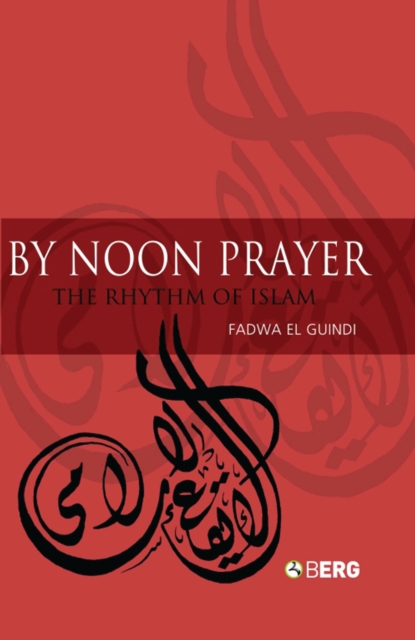
By noon prayer : the rhythm of Islam
A groundbreaking anthropological analysis of Islam as experienced by Muslims, By Noon Prayer builds a conceptual model of Islam as a whole, while travelling along a comparative path of biblical, Egyptological, ethnographic, poetic, scriptural and visual materials.
eBook

Can Islam Be French?
Can Islam Be French? is an anthropological examination of how Muslims are responding to the conditions of life in France. Following up on his book Why the French Don't Like Headscarves, John Bowen turns his attention away from the perspectives of French non-Muslims to focus on those of the country's Muslims themselves. Bowen asks not the usual question--how well are Muslims integrating in France?--but, rather, how do French Muslims think about Islam? In particular, Bowen examines how French Muslims are fashioning new Islamic institutions and developing new ways of reasoning and teaching. He looks at some of the quite distinct ways in which mosques have connected with broader social and political forces, how Islamic educational entrepreneurs have fashioned niches for new forms of schooling, and how major Islamic public actors have set out a specifically French approach to religious norms. All of these efforts have provoked sharp responses in France and from overseas centers of Islamic scholarship, so Bowen also looks closely at debates over how--and how far--Muslims should adapt their religious traditions to these new social conditions. He argues that the particular ways in which Muslims have settled in France, and in which France governs religions, have created incentives for Muslims to develop new, pragmatic ways of thinking about religious issues in French society.
eBook

Terrified
In July 2010, Terry Jones, the pastor of a small fundamentalist church in Florida, announced plans to burn two hundred Qur'ans on the anniversary of the September 11 attacks. Though he ended up canceling the stunt in the face of widespread public backlash, his threat sparked violent protests across the Muslim world that left at least twenty people dead. InTerrified, Christopher Bail demonstrates how the beliefs of fanatics like Jones are inspired by a rapidly expanding network of anti-Muslim organizations that exert profound influence on American understanding of Islam.
Bail traces how the anti-Muslim narrative of the political fringe has captivated large segments of the American media, government, and general public, validating the views of extremists who argue that the United States is at war with Islam and marginalizing mainstream Muslim-Americans who are uniquely positioned to discredit such claims. Drawing on cultural sociology, social network theory, and social psychology, he shows how anti-Muslim organizations gained visibility in the public sphere, commandeered a sense of legitimacy, and redefined the contours of contemporary debate, shifting it ever outward toward the fringe. Bail illustrates his pioneering theoretical argument through a big-data analysis of more than one hundred organizations struggling to shape public discourse about Islam, tracing their impact on hundreds of thousands of newspaper articles, television transcripts, legislative debates, and social media messages produced since the September 11 attacks. The book also features in-depth interviews with the leaders of these organizations, providing a rare look at how anti-Muslim organizations entered the American mainstream.
eBook

Does fasting in Ramadan increase the risk of traffic accidents? A time series analysis
Background
Ramadan in the Muslim world has its rituals and customs which can cause more traffic at certain times of the day. Getting stuck in traffic for hours near Iftar decreases blood sugar and can lead to stress, anger, ignoring driving rules and finally traffic accidents.
Method
This is a descriptive, analytical, and retrospective study on the data of traffic accidents leading to vehicle damage in addition to occupant injury, and death in Guilan, which was conducted from 2013 to 2016. The data were obtained from two databases of Iran Road Maintenance and Transportation Organization and Meteorological Organization in Guilan province. The trends of traffic accidents before and after Ramadan were compared in three different years using time series (TS) analysis. All analyses were performed with STATA SE v13.1 software.
P
-value less than 0.05 was considered significant.
Results
The average daily traffic accidents (
p
-value = 0.040) and injuries (
p
-value = 0.001). increased significantly in the month of Ramadan. The amount of traffic increased significantly. Daily accidents had a significant relationship with the variables of traffic (
p
-value = 0.000), rainfall (
p
-value = 0.000), Ramadan month (
p
-value = 0.000), and holidays (
p
-value = 0.000). Daily injuries was significantly associated with the variables of traffic (
p
-value = 0.000), rainfall (
p
-value = 0.000), Ramadan month (
p
-value = 0.000), and holidays (
p
-value = 0.000). IRR showed that if you consider rainfall, holiday, and traffic, as constant variables then the number of traffic accidents and injuries in Ramadan was higher than that of other months.
Conclusion
The responsible organizations in Muslim country are expected to inform the people about increase in traffic accidents and related injuries during Ramadan. Institutions responsible for traffic safety in developing countries like Iran should educate the society to be more attentive about driving behavior in this month. More comprehensive monitoring of traffic and speed control should be performed. Traffic penalties can be a good solution for wrongful drivers to help reduce traffic incidents and injuries.
Journal Article

The archaeology of complexity and cosmopolitanism in medieval Ethiopia: an introduction
Archaeology increasingly attests the complex and cosmopolitan nature of societies in medieval Ethiopia (c. seventh to early eighteenth centuries AD). Without negating the existence of relations of dominance and periods of isolation, key emergent themes of such research are pluralism and interaction. Four religious traditions are relevant to this theme: Islam, Judaism, Christianity and Indigenous religions. This article introduces a special section of contributions on medieval Ethiopia and sets the scheme by highlighting the temporality of cosmopolitanism as episodic rather than continuous. The following articles address varied aspects of this cosmopolitanism, identifying issues of general relevance for studies of the archaeology of religion, as well as the need for further research in Ethiopia.
Journal Article

Psychological and Psychiatric Consequences of Prolonged Fasting: Neurobiological, Clinical, and Therapeutic Perspectives
Background/Objectives: Prolonged fasting—defined as voluntary abstinence from caloric intake for periods exceeding 24 h—is increasingly recognized not only as a metabolic intervention but also as a psycho-behavioral modulator. According to the 2024 international consensus, intermittent fasting encompasses diverse temporal patterns including time-restricted feeding, alternate-day fasting, and periodic fasting of multi-day duration. While metabolic benefits are well documented, the psychoneurobiological and psychiatric consequences remain incompletely characterized. This review critically appraises current evidence on the psychological and psychiatric effects of prolonged and intermittent fasting, including both secular and religious practices. Methods: A narrative synthesis was conducted on clinical trials, observational studies, and translational research published between January 2010 and June 2025 in PubMed, Scopus, and PsycINFO. Search terms included combinations of “prolonged fasting,” “intermittent fasting,” “psychological,” “psychiatric,” “religious fasting,” “Ramadan,” and “Orthodox Church.” Eligible studies required explicit evaluation of mood, cognition, stress physiology, or psychiatric symptoms. Data were analyzed qualitatively, with particular attention to study quality, fasting regimen characteristics, and participant vulnerability. This is a non-registered narrative synthesis drawing on clinical trials, observational studies, and preclinical evidence published between January 2010 and June 2025. Results: Eighty-seven studies met inclusion criteria (39 human; 48 preclinical). In metabolically healthy adults, short-term time-restricted eating and supervised prolonged fasting were associated with modest reductions in depressive symptoms and perceived stress, with small improvements in executive functioning—typically observed in small samples and with limited follow-up. Religious fasting during Ramadan and the Orthodox Christian fasting periods demonstrated similar neuropsychological effects, including greater perceived spiritual meaning and affective modulation, though cultural context played a moderating role. Potential adverse mental-health impacts included mood destabilization, anxiety exacerbation, and rare psychotic or manic decompensations in vulnerable individuals. Randomized trials reported few adverse events and no signal for severe psychiatric harm, whereas observational studies more often noted symptom exacerbations in at-risk groups. Patients with eating disorder phenotypes exhibited increased cognitive preoccupation with food and a heightened risk of behavioral relapse. Methodological heterogeneity across studies—including variation in fasting protocols, psychological assessments, and follow-up duration—limited cross-study comparability. Conclusions: Evidence indicates a bidirectional relationship wherein fasting may foster psychological resilience in select populations while posing significant psychiatric risks in others. Inclusion of religious fasting traditions enriches understanding of culturally mediated outcomes. To enhance rigor and safety, future studies should incorporate clinician-rated outcomes (e.g., HDRS-17, CGI-S/CGI-I), standardized adverse-event tracking using validated psychiatric terminology, and prospective safety monitoring protocols, with ≥6–12-month follow-up.
Journal Article