
Catalogue Search | MBRL


Are you sure you want to remove the book from the shelf?

{{itemTitle}}
72
result(s) for
"Timor-Leste Relations Indonesia."
Sort by:

Metropolitan identities and twentieth century decolonization
\"Focuses on the role of the processes and mechanisms involved in metropolitan identity construction, maintenance, and change in twentieth century decolonization, an event integral to world politics but little studied in International Relations. Besides contributing to a more complete picture of the various mechanisms which are involved in decolonization, this book questions ideational and constructivist approaches and complicates the argument that the adoption of positive norms like racial equality, democracy, human rights, and self-determination by colonial powers and their extension to their colonies were primarily responsible for how the colonial power came to reject colonialism. More specifically, the author examines Britain and India during the interwar period and the Indonesian disengagement from East Timor and argues that what were previously considered uncomplicated positive norms like democracy and human rights are embedded in discursive structures, processes, and mechanisms of far greater complexity than previously realized. These ideas must be examined for a more complete understanding of their role not only in decolonization but in the relationship between the North and South more generally\"-- Provided by publisher.
Book

If you leave us here, we will die : how genocide was stopped in East Timor
\"Tells the story of East Timor, a half-island that suffered genocide after Indonesia invaded in 1975, and which was again laid to waste after the population voted for independence from Indonesia in 1999. Before international forces intervened, more than half the population had been displaced and 1,500 people killed. Geoffrey Robinson, an expert in Southeast Asian history, was in East Timor with the United Nations in 1999 and provides a gripping first-person account of the violence, as well as a rigorous assessment of the politics and history behind it. Robinson debunks claims that the militias committing the violence in East Timor acted spontaneously, attributing their actions instead to the calculation of Indonesian leaders, and to a \"culture of terror\" within the Indonesian army. He argues that major powers--notably the United States, Australia, and the United Kingdom--were complicit in the genocide of the late 1970s and the violence of 1999. At the same time, Robinson stresses that armed intervention supported by those powers in late 1999 was vital in averting a second genocide. Advocating accountability, the book chronicles the failure to bring those responsible for the violence to justice. A riveting narrative filled with personal observations, documentary evidence, and eyewitness accounts, [this book] engages essential questions about political violence, international humanitarian intervention, genocide, and transitional justice\"--From publisher description.
eBook
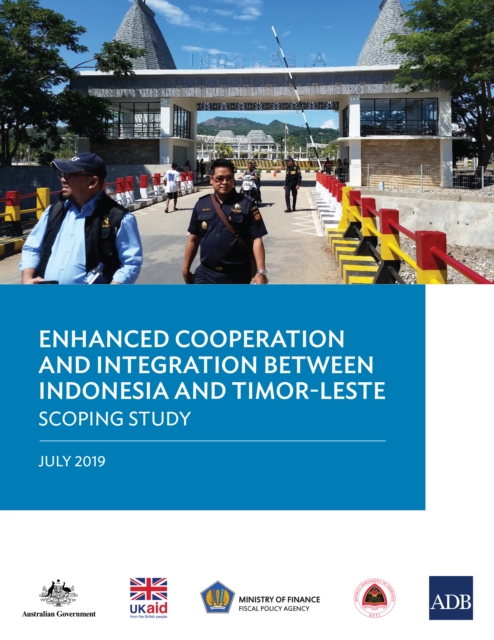
Enhanced Cooperation and Integration Between Indonesia and Timor-Leste
This report explores the challenges and opportunities for enhancing cross-border cooperation and integration between Indonesia---specifically the province of Nusa Tenggara Timur---and Timor-Leste. It is based on the findings of a study undertaken at the request of the governments of Indonesia and Timor-Leste and reflects their mutual appreciation of the benefits that greater cross-border trade, investment, and cooperative production contribute to socioeconomic development. The report focuses on transport connectivity, trade, business and investment, tourism, and livestock. It makes immediate and long-term recommendations to inform the design of future activities to support cross-border cooperation between the two countries.
eBook

Timor-Leste in ASEAN
Timor-Leste has put in place institutional structures and implementing agencies for advancing cooperation with ASEAN. It is also moving towards harmonizing its laws with ASEAN instruments. However, its capacity remains in question due to a lack of substantive knowledge and technical expertise among government officials, as well as inadequate infrastructure, logistics and facilities for hosting ASEAN meetings.
eBook


Timor-Leste
Timor-Leste: The History and Development of Asia’s Newest Nation is a study of how a small Asia-Pacific nation has emerged from protracted conflict and successfully navigated a path to durable peace and sustainable development. Despite early setbacks, Timor-Leste has made an amazing turnaround and today finds itself in a new era in which it will certainly continue its advance toward the goal of long-term stability and prosperity, leaving permanently behind the past that was once marked by a descending spiral of destruction. Yet, a number of development challenges lie ahead for Timor-Leste, particularly in strengthening human, institutional, and infrastructural capacities in the short to medium term, and in transforming the national economy from oil-based to more diversified and better balanced in the longer run. Other countries may draw valuable lessons from Timor-Leste’s experience, especially those that are emerging from as well as are currently affected by conflict and instability. Such lessons would center on the questions such as management of natural resources, empowerment of the vulnerable, implementation of transparent and accountable governance, advancement of women, and mobilization of civil society and the public in general for democratization and the national development process.
eBook

Returning the Rock and Protecting the Game
This article explores how in Timor-Leste the implementation of national law is shaped by local conditions. In Oecussi District, the ability of the state to regulate hunting is both constrained and enabled by the continuing importance of indigenous (meto) socio-spiritual frameworks ontologically distinct from those assumed to be normative by both the State and outside actors. Through the case study of a public servant tasked with upholding these laws, I show how in Timor-Leste the seeming stability of centralized control cloaks a more complex reality whereby the daily practice of governance emerges from the interaction of local perspectives on nature and governance with state authorized authority.
Journal Article

The Role of Foreign Aid in Procuring Civil War Party Consent to Peacekeeping
Successful peacekeeping depends heavily on the conflict parties providing unrestricted consent to the intervention. Consent is, however, often withheld or limited by one or more parties who calculate a higher cost to peace than to continued fighting. We highlight the role of international economic incentives in the form of foreign development aid in overcoming hurdles to obtaining consent. We argue that past aid sends a credible signal of future, post-conflict material benefits if the belligerents work toward peace. This conditionality of future benefits thereby incentivizes the belligerents to work toward peace and stability, including providing unrestricted consent to peacekeeping missions. Analyses of 119 post-Cold War civil wars and a brief narrative of East Timor demonstrate that foreign aid significantly and substantially increases the likelihood of unrestricted consent. The findings have implications for the literature on international influences on domestic political contestation and for research on the effectiveness of peacekeeping operations.
Journal Article

Local Actions, Global Impact: Women's Agency in Timor-Leste and Pragmatic Indonesia-Timor-Leste Relations Through a Decolonial Lens
This article examines the often-overlooked agency of East Timorese women in domestic peacebuilding and international diplomacy, particularly in the evolving Indonesia-Timor-Leste relationship. Applying a decolonial feminist lens, it explores how intersecting legacies of colonialism, patriarchy and post-conflict reconstruction have shaped women's roles in Timor-Leste's political and social transformation. Drawing on qualitative methods and interviews with civil society leaders, veteran activists, officials and policymakers, this article highlights how local women's organizations have been central to shaping transitional justice, institutional reform and regional engagement. It argues that grassroots mobilization and indigenous knowledge systems, when integrated into national and foreign policy processes, provide more inclusive and sustainable frameworks for peacebuilding. In linking women's activism from the resistance era to contemporary diplomacy, this study demonstrates how decolonial feminist praxis can advance more equitable post-conflict development and pragmatic international relations in Southeast Asia.
Journal Article