
Catalogue Search | MBRL


Are you sure you want to remove the book from the shelf?

{{itemTitle}}
408
result(s) for
"Titian"
Sort by:


Titian
Titians works are often seen as embodying the famous tradition of Venetian Renaissance painting. But how Venetian was Titian, and can his unique works be taken as truly representative of his adoptive city? This comprehensive new study, covering Titians long career and varied output, highlights the tensions between the individualism of his work and the conservative mores of Venice. Titian and the End of the Venetian Renaissance argues that Titians works were self-consciously original, freely and intentionally undermining the traditional, more modest approach to painting in Venice a position that frequently caused disputes with local artists and patrons. This book, now available in paperback, charts Titians early stylistic independence from his master Giovanni Bellini, his radical innovations to the classical altarpiece and his meteoric break from the normal connes of Venices artistic culture. Titian competitively cultivated a professional identity and his dynamic career was epitomized by the development of his late style, which set him apart from all predecessors and was intended to defy emulation by any followers. It was through this nal individualistic departure that Titian effectively brought the Renaissance tradition of painting to an end. This ground-breaking interpretation will be of interest to all scholars and students of Renaissance and Venetian art history.
eBook

Titian : a fresh look at nature
In this short illustrated book, Mazzotta presents the experience, together with Titian's native landscape of PievediCadore, as crucial influence in the artist's early representation of nature. The recently restored \"Flight into Egypt\" (now in the Hermitage Museum, St. Petersburg) - probably painted when Titian was still a teenager - is a vivid proof of his interest in the depiction of animals, plants and figures in the landscape. The chosen comparisons by the author suggest that Titian was as innovative and as influential in his view of nature as he was in portraiture.
Book

Titian and the Renaissance in Venice
Humfrey reviews Titian and the Renaissance in Venice, an exhibition of paintings by Titian and various Renaissance art in Venice, at the Stadel Museum in Frankfurt.
Journal Article

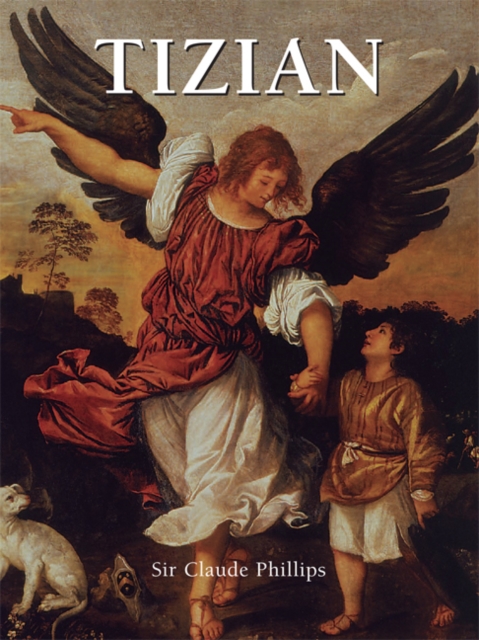
Tizian
Dieses Buch bietet nicht nur eine kenntnis- und aufschlussreiche Einfuhrung in das Werk eines der groten Maler der Menschheitsgeschichte. Es ladt uns vielmehr zur Entdeckung des faszinierenden Mikrokosmos der venezianischen Kunstwelt ein, in der Tizian lebte und arbeitete. Von seinen fruhen Jahren in der Kunstlerwerkstatt des Giovanni Bellini uber sein Treffen mit Michelangelo bis hin zu seiner Rivalitat mit Pordenone - die Geschichte von Tizians Werdegang erzahlt auch die Geschichte der einflussreichsten geistigen und kunstlerischen Stromung, die Italien je erfasst hat: der Renaissance.
eBook
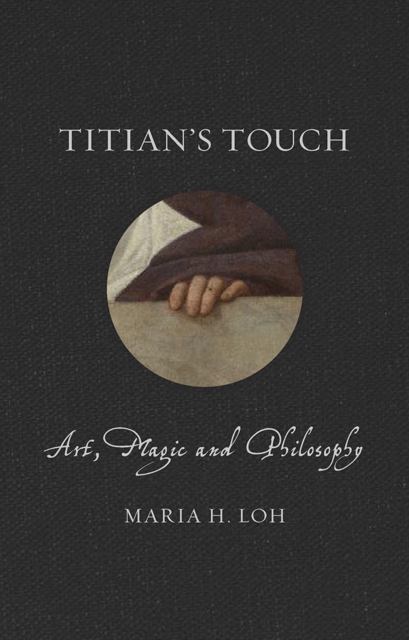
Titian’s Touch
At the end of his long, prolific life, Titian was rumoured to paint directly on the canvas with his bare hands. He would slide his fingers across bright ridges of oil paint, loosening the colours, blending, blurring, and then bringing them together again. With nothing more than the stroke of a thumb or the flick of a nail, Titian's touch brought the world to life. The clinking of glasses, the clanging of swords, and the cry of a woman's grief. The sensation of hair brushing up against naked flesh. The sudden blush of unplanned desire, and the dry taste of fear in a lost, shadowy place. Titian's art was a synaesthetic experience. To see was at once to hear, to smell, to taste, and to touch. But while Titian was fully attached to the world around him, he also held the universe in his hands. Like a magician, he could conjure appearances out of thin air. Like a philosopher, his exploration into the very nature of things channelled and challenged the controversial ideas of his day. But as a painter, he created the world. Dogs, babies, rubies and pearls. Falcons, flowers, gloves and stone. Shepherds, mothers, gods and men. Paint, canvas, blood, sweat and tears. In a series of close visual investigations, Maria H. Loh guides the reader through the lush, vibrant world of Titian's touch.
eBook

Titian's Ecce Homo on Slate: Stone, Oil, and the Transubstantiation of Painting
Titian's Ecce Homo (Museo del Prado, Madrid) stands out for many reasons. First, the painting was a gift, so it reflects Titian's volition rather than the will of a patron. Second, the material that Titian elected to use demands attention: Ecce Homo is painted on slate. It is the only painting that Titian ever painted on slate, yet modern scholarship has largely ignored Titian's unique artistic material. The painter heightened the affective immediacy of Christian devotion by underlining the associations between the spiritual content of his image and the physical characteristics of its material substrate.
Journal Article
Titian: Love, Desire, Death
Tagliaferro reviews Titian: Love, Desire, Death, an exhibition at National Gallery in London England which reunited the celebrated series of six mythological scenes painted by Titian, Venice's most famous Renaissance master for Philip II of Spain between c.1551 and 1562.
Journal Article
‘Changing images: reciprocity between nineteenth-century paintings conservation and art history’. Review of: Matthew Hayes, The Renaissance Restored. Paintings Conservation and the Birth of Modern Art History in nineteenth-century Europe, Los Angeles: Getty Conservation Institute, 2021
Matthew Hayes’ volume examines the influence of nineteenth-century scholarship on the activities of contemporary paintings restorers, and, vice-versa, investigates how the visual effects of conservation treatments impacted contemporary scholarship. This reciprocal relationship is explored in four case studies, two situated in Italy (Giottesque frescoes and paintings by Titian), on in the United Kingdom (National Gallery London) and one in Germany (the Berlin museums). Hayes focuses on the treatment of paintings from the Renaissance, a period that knew strong interest from nineteenth-century scholars. He weaves together historical archival material (personal notes, correspondence, restoration records, historical photographs, etc.) and period texts (a.o. by Jacob Burckhardt, G.B. Cavalcaselle, Joseph Crowe), into a rich and accessible account, interspersed with examples of historical restoration treatments of well-known paintings and with restorer biographies. The resulting volume provides an entertaining and very accessible entry into the topic, whether the reader comes from (art) history or has a background in conservation.
Journal Article