
Catalogue Search | MBRL


Are you sure you want to remove the book from the shelf?

{{itemTitle}}
4,497
result(s) for
"To 1200"
Sort by:

The decline of ancient Indian civilization
How do civilizations rise and, ultimately, fall? U.S. students can have a difficult time understanding that empires come and go throughout the course of history. This volume explains how a once-flourishing civilization ran into decline, once foreign invaders took over the weakened government and spread their influence. Students will learn how India evolved into the country it is today. With engaging text, rich and colorful illustrations, and an enhanced e-book option, this title is a valuable resource for students researching reports. Bibliography, Detailed Table of Contents, Full-Color Photographs, Further Information Section, Glossary, Index, Primary Sources, Websites.
Book
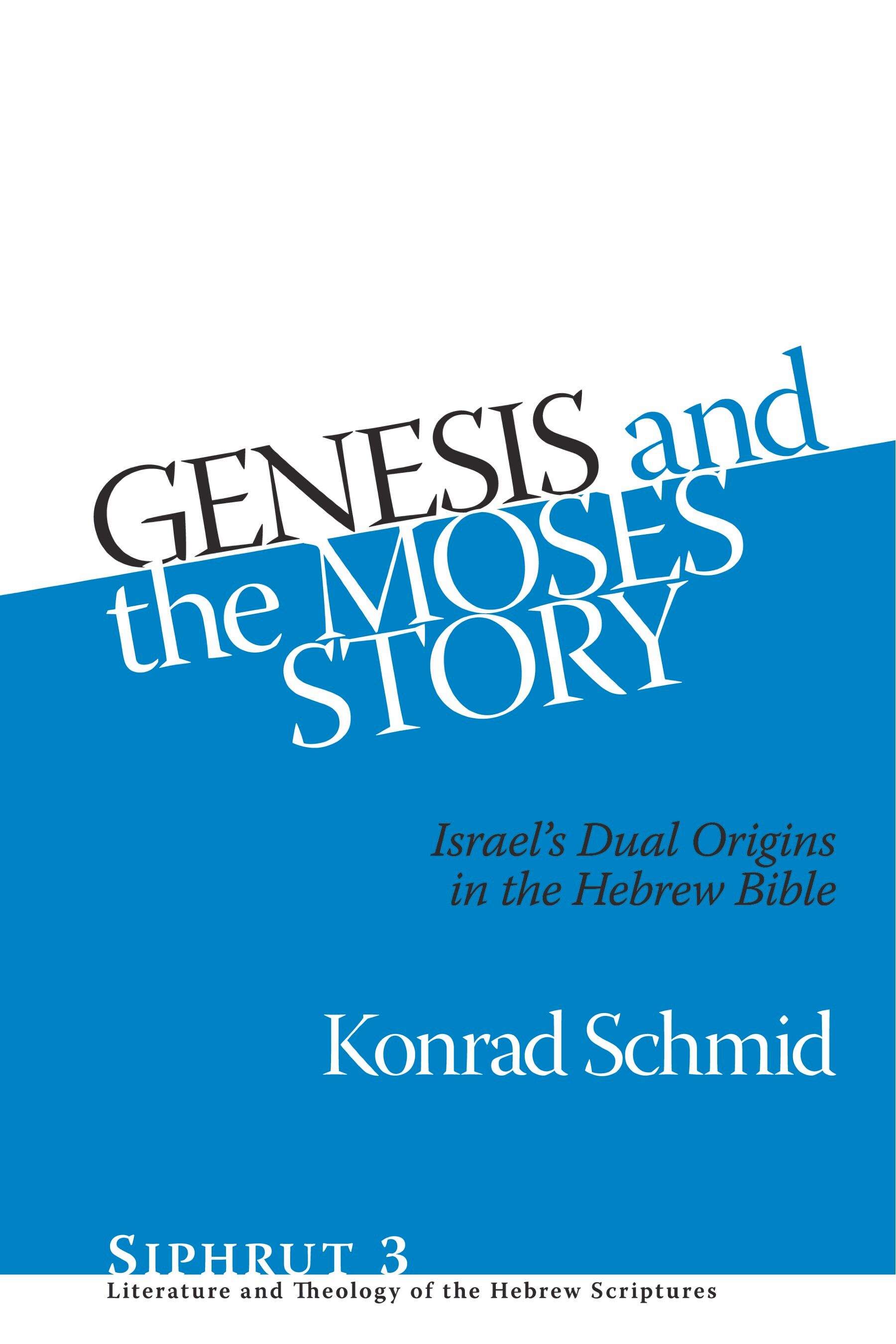
Genesis and the Moses story : Israel's dual origins in the Hebrew Bible
Konrad Schmid is a Swiss biblical scholar who belongs to a larger group of Continental researchers proposing new directions in the study of the Pentateuch. In this volume, a translation of his Erzväter und Exodus, Schmid argues that the ancestor tradition in Genesis and the Moses story in Exodus were two competing traditions of Israel's origins and were not combined until the time of the Priestly Code—that is, the early Persian period. Schmid interacts with the long tradition of European scholarship on the Hebrew Bible but departs from some of the main tenets of the Documentary Hypothesis: he argues that the pre-Priestly material in both text blocks is literarily and theologically so divergent that their present linkage is more appropriately interpreted as the result of a secondary redaction than as thematic variation stemming from J's oral prehistory. He dates Genesis–2 Kings to the Persian period and considers it a redactional work that, in its present shape, is a historical introduction to the message of future hope presented in the prophetic corpus of Isaiah-Malachi.
Scholars and students alike will be pleased that this translation makes Schmid's important work readily available in English, both for the contributions made by Schmid and the summary of continental interpretation that he presents. In this edition, some passages have been expanded or modified in order to clarify issues or to engage with more-recent scholarship. The notes and bibliography have also been updated.
Dr. Schmid is Professor of Old Testament and Early Judaism at the University of Zürich.
eBook

Ancient India
\"In Ancient India, readers discover the history and impressive accomplishments of the people of ancient India, including their enduring religions and rich literary traditions. Engaging text provides details on the civilization's history, development, daily life, culture, art, technology, warfare, social organization, and more.\"--Publisher's web site.
Book

Jewish History Must Be Defended
This essay stages an encounter between Michel Foucault and Franz Rosenzweig by juxtaposing their parallel observations on the continuity between history and war. While Foucault analyzes the strategies organizing seventeenth-century historical writing about the Norman conquest of England and the Frankish invasion of Gaul, Rosenzweig opposes the warlike progress of Christian history to the eternal peace of Jewish time. Through this comparison, the essay reevaluates the terms governing well-known debates about Jewish history and Jewish memory. It asks what role the concept of “war” has played in the emergence of modern Jewish historicism and the so-called Jewish return to history. The essay concludes by submitting the Israelite conquest of Canaan as a supplement to Foucault’s examples and as a critical index of the bellicose grammar underwriting the representation of Jewish history as a field of struggle.
Journal Article


Guilty or not Guilty? An Investigation into the Accusations of Syria-Palestine Vassals against the Egyptian Royal Commissioners in the Amarna Letters
The present study is an attempt to investigate the accusations of the Canaanite rulers to the royal Egyptian commissioners by means of a series of analyses, depending on the corpus of Amarna letters in order to determine the behaviour of members of Egyptian administration and local Canaanite elites, and these accusations reflect the weakness of the Egyptian administration at Syria-Palestine, by the hidden conflict between the Canaanite rulers and the Egyptian royal commissioners. This conflict reflects the desire of the Canaan rulers to confirm sovereignty over the administrative framework. The article explores the credibility of these allegations and the role of foreign officials in further administrative deterioration. The study concludes with statistics on the nature of the relationship between the commissioners and the local mayors (whether positive or negative). This relationship can provide us an accurate image of the tensions and mistrust's places in the Egyptian administration in Syro-Palestine during the Amarna Age.
Journal Article


The Wilderness Period without Generation Change: The Deuteronomic Portrait of Israel's Forty-Year Journey
Abstract
The Deuteronomic authors (D) include several references to the Israelites' forty-year sojourn in the wilderness. Yet even where it can be shown that these writers depend upon source material for this tradition, they seek to recast its purpose, a process that also requires modification of particular story elements. Specifically, D transforms the extended wilderness sojourn from a period of punishment to one of preparation. In so doing, it eliminates the tradition of Israelite generation change during this time. Subsequent interpolations were introduced non-systematically into Deuteronomy in order to harmonize D's views with those found elsewhere in the Pentateuch.
Journal Article

Universe and Inner Self in Early Indian and Early Greek Thought
From the sixth century BCE onwards there occurred a revolution in thought, with novel ideas such as such as that understanding the inner self is both vital for human well-being and central to understanding the universe. This intellectual transformation is sometimes called the beginning of philosophy. And it occurred – independently it seems - in both India and Greece, but not in the vast Persian Empire that divided them. How was this possible? This is a puzzle that has never been solved. This volume brings together Hellenists and Indologists representing a variety of perspectives on the similarities and differences between the two cultures, and on how to explain them. It offers a collaborative contribution to the burgeoning interest in the Axial Age and will be of interest to anyone intrigued by the big questions inspired by the ancient world.
eBook