
Catalogue Search | MBRL


Are you sure you want to remove the book from the shelf?

{{itemTitle}}
118
result(s) for
"To 1519"
Sort by:


The Death of Aztec Tenochtitlan, the Life of Mexico City
The capital of the Aztec empire, Tenochtitlan, was, in its era, one of the largest cities in the world. Built on an island in the middle of a shallow lake, its population numbered perhaps 150,000, with another 350,000 people in the urban network clustered around the lake shores. In 1521, at the height of Tenochtitlan's power, which extended over much of Central Mexico, Hernando Cortés and his followers conquered the city. Cortés boasted to King Charles V of Spain that Tenochtitlan was \"destroyed and razed to the ground.\" But was it?Drawing on period representations of the city in sculptures, texts, and maps, The Death of Aztec Tenochtitlan, the Life of Mexico City builds a convincing case that this global capital remained, through the sixteenth century, very much an Amerindian city. Barbara E. Mundy foregrounds the role the city's indigenous peoples, the Nahua, played in shaping Mexico City through the construction of permanent architecture and engagement in ceremonial actions. She demonstrates that the Aztec ruling elites, who retained power even after the conquest, were instrumental in building and then rebuilding the city. Mundy shows how the Nahua entered into mutually advantageous alliances with the Franciscans to maintain the city's sacred nodes. She also focuses on the practical and symbolic role of the city's extraordinary waterworks—the product of a massive ecological manipulation begun in the fifteenth century—to reveal how the Nahua struggled to maintain control of water resources in early Mexico City.
eBook

Mexico : from the Olmecs to the Aztecs
This volume has been revised throughout and expanded, with new images and accounts of the major discoveries of recent years. Updates begin with the earliest periods: one of the enduring puzzles surrounding Mexican prehistory, the origins of maize farming, has at last been solved. There are insights into the latest finds at the Olmec sites at Chiapas de Corzo and Zazacatla. The classic city of Teotihuacan continues to yield new discoveries, changing the way we look at this major site. The post-classic Huastec people are covered in greater detail. And the unearthing of burial deposits in the centre of the Aztec capital of Tenochtitlan has led to a fresh understanding of the history and symbolism of this hallowed area.
Book
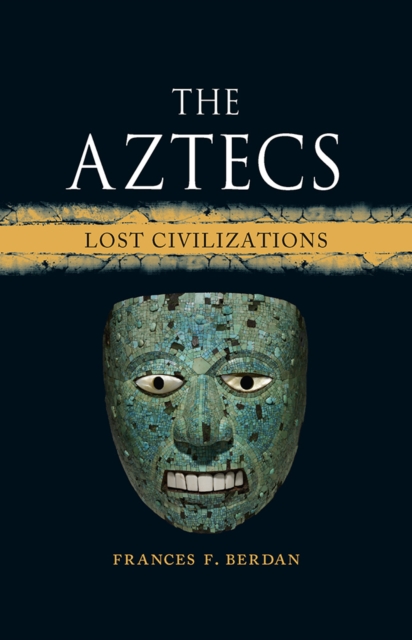
The Aztecs
In this rich and surprising book, Frances F. Berdan shines fresh light on the enigmatic ancient Aztecs. She casts her net wide, covering topics as diverse as ethnicity, empire-building, palace life, etiquette, origin myths, and human sacrifice. While the Aztecs are often described as \"stone age, \" their achievements were remarkable. They constructed lofty temples and produced fine arts in precious stones, gold, and shimmering feathers. They crafted beautiful poetry and studied the sciences. They had schools and libraries, entrepreneurs and money, and a bewildering array of deities and dramatic ceremonies. Based on the latest research and lavishly illustrated, this book reveals the Aztecs to have created a civilization of sophistication and finesse.
eBook

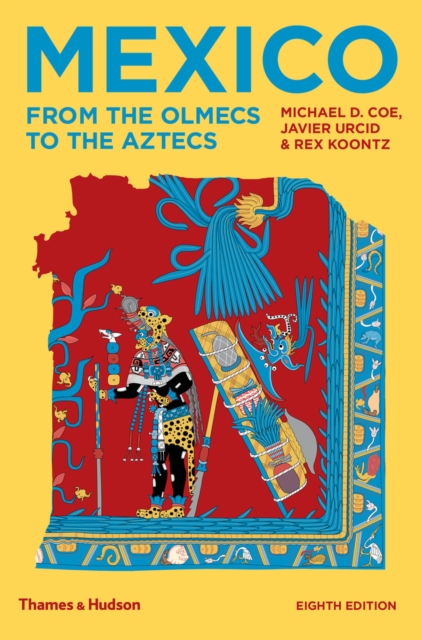
Mexico
This authoritative volume has been revised throughout and expanded, with stunning new images and accounts of the major discoveries of recent years. Recent findings have been added to expand our understanding of the Olmecs outside of their heartland, and new research on the legacy of the Maya offers a wider and more cohesive narrative of Mexicos history. New co-author Javier Urcid has added greater coverage of Oaxaca and of Monté Alban, one of the earliest cities in Mesoamerica and the center of the Zapotec civilization, and a fully revised Epilogue discusses the survival of indigenous populations in Mexico from the Conquest up to the present. This longstanding classic now features full-colour photos of the vibrant art and architecture of ancient Mesoamerica throughout.
eBook


Multiethnicity and Migration at Teopancazco
Like modern-day New York City, the ancient city of Teotihuacan in Central Mexico was built by a flood of immigrants who created a complex and diverse urban landscape. The city benefited from the knowledge, technical expertise, and experience that foreigners brought. The neighborhoods also competed with each other in displaying the finest crafts, the rarest raw materials, and the most lavish sumptuary goods.
This detailed volume looks at 116 formal burials in Teopancazco, a powerful neighborhood that controlled the distribution of foreign raw materials from Teotihuacan toward Nautla in Veracruz. Applying sophisticated bioarchaeological analyses of stable and strontium isotopes, trace elements, funerary patterns, and ancient DNA, this holistic study identifies the population's age and sex profiles, paleopathologies, paleodiet, provenance, and facial approximations. What emerges is a detailed portrait of a multiethnic group working and interacting in one of the largest urban sites in the preindustrial world. Contributors: Luis Adrián Alvarado | Brenda A. Alvarez-Sandoval | María Isabel Casar-Aldrete | Edith Cienfuegos | Lilia Escorcia | José Ramón Gallego | Teodoro Hernández | Peter Horn | Becket Lailson | Linda R. Manzanilla | Gabriela Inés Mejía-Appel | Rafael Montiel | Pedro A. Morales-Puente | Francisco Javier Otero | Peter Schaaf | Gabriela Natalia Solís-Pichardo
eBook

Alva Ixtlilxochitl's native archive and the circulation of knowledge in colonial Mexico
\"Focusing on the production and circulation of native knowledge through collaborations between indigenous, mestizo, and creole intellectuals in colonial Mexico, this book proceeds through an in-depth case study of the exchange of native materials between the family of don Fernando de Alva Ixtlilxochtil and don Carlos de Sigèuenza y Gâongora\"--Provided by publisher.
Book

Alva Ixtlilxochitl's Native Archive and the Circulation of Knowledge in Colonial Mexico
Modern Language Association's Katherine Singer Kovacs
Prize, Honorable Mention, 2016 Born between 1568 and 1580,
Alva Ixtlilxochitl was a direct descendant of Ixtlilxochitl I and
Ixtlilxochitl II, who had been rulers of Texcoco, one of the major
city-states in pre-Conquest Mesoamerica. After a distinguished
education and introduction into the life of the empire of New Spain
in Mexico, Ixtlilxochitl was employed by the viceroy to write
histories of the indigenous peoples in Mexico. Engaging with this
history and delving deep into the resultant archives of this life's
work, Amber Brian addresses the question of how knowledge and
history came to be crafted in this era. Brian takes the reader
through not only the history of the archives itself, but explores
how its inheritors played as crucial a role in shaping this
indigenous history as the author. The archive helped inspire an
emerging nationalism at a crucial juncture in Latin American
history, as Creoles and indigenous peoples appropriated the history
to give rise to a belief in Mexican exceptionalism. This belief,
ultimately, shaped the modern state and impacted the course of
history in the Americas. Without the work of Ixtlilxochitl, that
history would look very different today.
eBook