
Catalogue Search | MBRL


Are you sure you want to remove the book from the shelf?

{{itemTitle}}
4,857
result(s) for
"To 1899"
Sort by:

The railway navvies : a history of the men who made the railways
This is the definitive story of the men who built the railways - the unknown Victorian labourers who blasted, tunnelled, drank and brawled their way across nineteenth-century England. Preached at and plundered, sworn at and swindled, this anarchic elite endured perils and disasters, and carved out of the English countryside an industrial-age architecture unparalleled in grandeur and audacity since the building of the cathedrals.
Book

Archives of Times Past
Archives of Times Past: Conversations about South Africa's
Deep History explores particular sources of evidence on
southern Africa's time before the colonial era. It gathers recent
ideas about archives and archiving from scholars in southern Africa
and elsewhere, focusing on the question: 'How do we know, or think
we know, what happened in the times before European colonialism?'
Historians who specialise in researching early history have learnt
to use a wide range of materials from the past as source materials.
What are these materials? Where can we find them? Who made them?
When? Why? What are the problems with using them? The essays by
well-known historians, archaeologists and researchers engage these
questions from a range of perspectives and in illuminating ways.
Written from personal experience, they capture how these experts
encountered their archives of knowledge beyond the textbook. The
book aims to make us think critically about where ideas about the
time before the colonial era originate. It encourages us to think
about why people in South Africa often refer to this 'deep history'
when arguing about public affairs in the present. The essays are
written at a time when public discussion about the history of
southern Africa before the colonial era is taking place more openly
than at any other time in the last hundred years. They will appeal
to students, academics, educationists, teachers, archivists, and
heritage, museum practitioners and the general public.
Archives of Times Past explores particular sources of
evidence on southern Africa's time before the colonial era. It
gathers recent ideas about archives and archiving from scholars in
southern Africa and elsewhere, focusing on the question: 'How do we
know, or think we know, what happened in the times before European
colonialism?' The essays by well-known historians, archaeologists
and researchers engage these questions from a range of perspectives
and in illuminating ways. Written from personal experience, they
capture how these experts encountered their archives of knowledge
beyond the textbook. The essays are written at a time when public
discussion about the history of southern Africa before the colonial
era is taking place more openly than at any other time in the last
hundred years They will appeal to students, academics,
educationists, teachers, archivists, and heritage, museum
practitioners and the general public.
eBook


Writing about the Merovingians in the Early United States
In a young American republic seeking to define itself in relation to European cultural and political models past and present, it was assumed that the history of Europe's peoples could be tracked across time over the longue durée. From this perspective, even the barbarous long-haired kings of the distant Merovingian era helped to define the political and cultural identity of a France-and, indeed, a Europe-whose actions Americans recognized as relevant to their own republic. Americans saw medieval parallels not only in the actions of successive French regimes, but in contemporary transatlantic issues of anxiety, including the adjudication of claims of political legitimacy and the debate over the perpetuation of racial slavery. That early American writers located their own meanings in the history of Merovingian Francia is indicative of a less linear, and more diverse and transnational, historiography than previously recognized.
eBook

A primary source investigation of slavery
\"A book for middle school students about slavery.\"--Provided by publisher.
Book
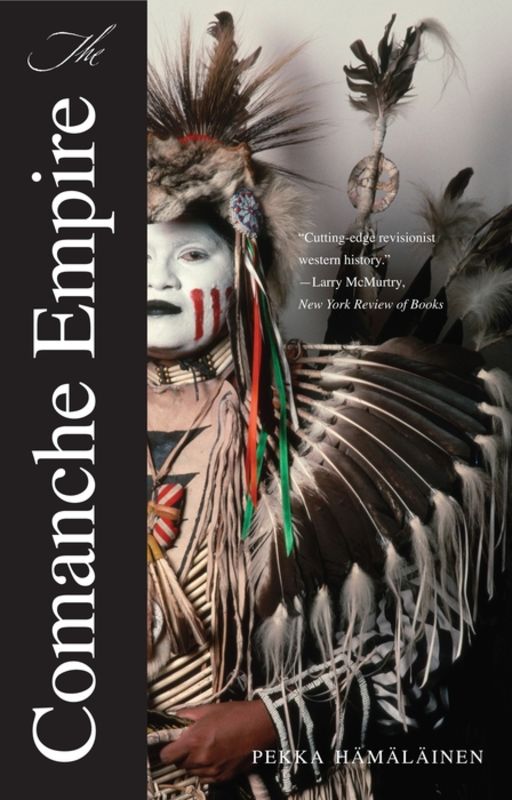
The Comanche Empire
In the eighteenth and early nineteenth centuries, a Native American empire rose to dominate the fiercely contested lands of the American Southwest, the southern Great Plains, and northern Mexico. This powerful empire, built by the Comanche Indians, eclipsed its various European rivals in military prowess, political prestige, economic power, commercial reach, and cultural influence. Yet, until now, the Comanche empire has gone unrecognized in American history.
This compelling and original book uncovers the lost story of the Comanches. It is a story that challenges the idea of indigenous peoples as victims of European expansion and offers a new model for the history of colonial expansion, colonial frontiers, and Native-European relations in North America and elsewhere. Pekka Hämäläinen shows in vivid detail how the Comanches built their unique empire and resisted European colonization, and why they fell to defeat in 1875. With extensive knowledge and deep insight, the author brings into clear relief the Comanches' remarkable impact on the trajectory of history.
eBook

West African warfare in Bahia and Cuba : soldier slaves in the Atlantic world, 1807-1844
\"Examines the extent to which a series of African-led plots and armed movements that took place in western Cuba and Bahia between 1807 and 1844 were the result--or a continuation--of events that had occurred in and around the Yoruba and Hausa kingdoms in the same period.\"--Book jacket
Book

What Virtue There Is in Fire
The 1899 lynching of Sam Hose in Newnan, Georgia, was one of the earliest and most gruesome events in a tragic chapter of U.S. history. Hose was a black laborer accused of killing Alfred Cranford, a white farmer, and raping his wife. The national media closely followed the manhunt and Hose's capture. An armed mob intercepted Hose's Atlanta-bound train and took the prisoner back to Newnan. There, in front of a large gathering on a Sunday afternoon, Hose was mutilated and set on fire. His body was dismembered and pieces of it were kept by souvenir hunters. Born and raised twenty miles from Newnan, Edwin T. Arnold was troubled and fascinated by the fact that this horrific chain of events had been largely shut out of local public memory. In \"What Virtue There Is in Fire,\" Arnold offers the first in-depth examination of the lynching of Sam Hose. Arnold analyzes newspapers, letters, and speeches to understand reactions to this brutal incident, without trying to resolve the still-disputed facts of the crime. Firsthand accounts were often contradictory, and portrayals of Hose differed starkly--from \"black beast\" to innocent martyr. Arnold traces how different groups interpreted and co-opted the story for their own purposes through the years. Reflecting on recent efforts to remember the lynching of Sam Hose, Arnold offers the portrait of a place still trying to reconcile itself, a century later, to its painful past.
eBook

The search for Snake River
A family must survive the dangerous ford of the wild Snake River along the Oregon Trail, in a book where the reader's choices determine the outcome of the expedition.
Book

Post-translational modifications of intermediate filament proteins: mechanisms and functions
Key Points
Intermediate filament (IF) proteins comprise a large family of tissue-specific cytoskeletal proteins that include the nuclear IFs (lamins) and cytoplasmic IFs (keratins, vimentin, desmin, peripherin, glial fibrillary acidic protein, neurofilaments (NFs), nestin, filensin, phakinin, synemin and syncoilin). Mutations in genes encoding IF proteins cause or predispose to more than 80 human diseases.
IF proteins undergo several post-translational modifications (PTMs), including phosphorylation, glycosylation, sumoylation, acetylation, prenylation, ubiquitylation and transamidation, which regulate each other through crosstalk and binding of IFs to other proteins. Prenylation is found exclusively in lamins, whereas most of the remaining modifications involve both cytoplasmic and nuclear IFs.
IF phosphorylation is a multifunctional PTM that regulates axonal transport (NFs), cell growth and stress responses (keratins), nuclear viral egress and nucleocytoplasmic transport of ribonucleoproteins (lamins), neuromuscular development (nestin), epithelial-to-mesenchymal transition and cell migration (vimentin and keratins).
IF sumoylation has been identified in lamins, keratins and vimentin, but is likely to involve most, if not all, IFs. Low-level sumoylation promotes IF solubility, whereas hypersumoylation inhibits it. Hypersumoylation is found in stress and disease contexts.
Other functional roles for IF PTMs include sensing of the metabolic environment (acetylation), regulation of IF turnover (ubiquitylation), regulation of cell survival mechanisms and protein–protein interactions (glycosylation and phosphorylation), association with the nuclear membrane (farnesylation) and formation of the cornified envelope in the skin (transamidation).
IFs undergo considerable disease-associated PTM changes that may manifest as site-specific decreases or increases. An increase in a site-specific PTM is exemplified by IF hyperphosphorylation (a stress marker in many diseases), IF hyperubiquitylation (due to proteasome inhibition) and IF transamidation (found in hepatocyte Mallory–Denk body inclusions). IF PTMs are attractive candidates as biomarkers of human disease and potential therapeutic targets.
Intermediate filaments (IFs) are cytoskeletal and nucleoskeletal structures that promote cell integrity and intracellular communication and contribute to subcellular and tissue-specific functions. Our understanding of how post-translational modifications of IF proteins (including nuclear lamins and cytoplasmic keratins, vimentin, desmin, neurofilaments and glial fibrillary acidic protein, among others) regulate IF function is increasing.
Intermediate filaments (IFs) are cytoskeletal and nucleoskeletal structures that provide mechanical and stress-coping resilience to cells, contribute to subcellular and tissue-specific biological functions, and facilitate intracellular communication. IFs, including nuclear lamins and those in the cytoplasm (keratins, vimentin, desmin, neurofilaments and glial fibrillary acidic protein, among others), are functionally regulated by post-translational modifications (PTMs). Proteomic advances highlight the enormous complexity and regulatory potential of IF protein PTMs, which include phosphorylation, glycosylation, sumoylation, acetylation and prenylation, with novel modifications becoming increasingly appreciated. Future studies will need to characterize their on–off mechanisms, crosstalk and utility as biomarkers and targets for diseases involving the IF cytoskeleton.
Journal Article