
Catalogue Search | MBRL


Are you sure you want to remove the book from the shelf?

{{itemTitle}}
1,607
result(s) for
"To 640"
Sort by:


The History and Culture of Iran and Central Asia
This volume examines the major cultural, religious,
political, and urban changes that took place in the Iranian world
of Inner and Central Asia in the transition from the pre-Islamic to
the Islamic periods.
One of the major civilizations of the first millennium was that
of the Iranian linguistic and cultural world, which stretched from
today's Iraq to what is now the Xinjiang Autonomous Region of
China. No other region of the world underwent such radical
transformation, which fundamentally altered the course of world
history, as this area did during the centuries of transition from
the pre-Islamic to the Islamic period. This transformation included
the religious victory of Islam over Buddhism, Nestorian
Christianity, and the other religions of the area; the military and
political wresting of Inner Asia from the Chinese to the Islamic
sphere of primary cultural influence; and the shifting of Central
Asia from a culturally and demographically Iranian civilization to
a Turkic one. This book contains essays by many of the preeminent
scholars working in the fields of archeology, history, linguistics,
and literature of both the pre-Islamic and the Islamic-era Iranian
world, shedding light on some of the most significant aspects of
the major changes that this important portion of the Asian
continent underwent during this tumultuous era in its history. This
collection of cutting-edge research will be read by scholars of
Middle Eastern, Central Asian, Iranian, and Islamic studies and
archaeology.
Contributors: D. G. Tor, Frantz Grenet, Nicholas Sims-Williams,
Etsuko Kageyama, Yutaka Yoshida, Michael Shenkar, Minoru Inaba,
Rocco Rante, Arezou Azad, Sören Stark, Louise Marlow, Gabrielle van
den Berg, and Dilnoza Duturaeva.
eBook

Empire of ancient Egypt
Presents a clear, detailed picture of the life and history of the ancient Egyptians. Explains why religion played such an important part in Egyptian politics, who stood atop the Egyptian social pyramid, what games Egyptian children played, and why Egypt eventually succumbed to the Roman Empire, as well as its connections to the modern world.
Book

Semiramis' Legacy
There are only a few detailed histories of Persia from Ancient Greek historiography that have survived time. Diodorus of Sicily, a first century BC author, is the only one to have written a comprehensive history in which more than cursory attention is paid to Persia.
eBook
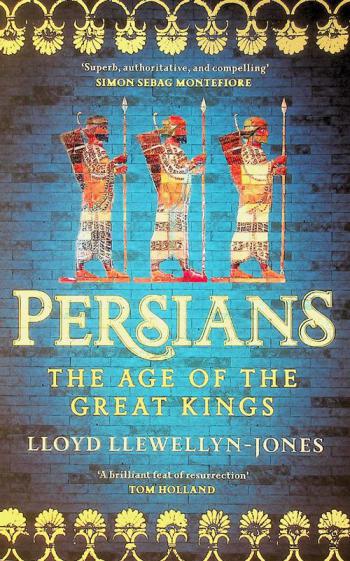
Persians : the age of the great kings
\"The Achaemenid Persian kings ruled over the largest empire of antiquity, stretching from Libya to the steppes of Asia and from Ethiopia to Pakistan. From the palace-city of Persepolis, Cyrus the Great, Darius, Xerxes, and their heirs reigned supreme for centuries until the conquests of Alexander of Macedon brought the empire to a swift and unexpected end in the late 330s BCE. In Persians, historian Lloyd Llewellyn-Jones tells the epic story of this dynasty and the world it ruled. Drawing on Iranian inscriptions, cuneiform tablets, art, and archaeology, he shows how the Achaemenid Persian Empire was the world's first superpower--one built, despite its imperial ambition, on cooperation and tolerance. This is the definitive history of the Achaemenid dynasty and its legacies in modern-day Iran, a book that completely reshapes our understanding of the ancient world.\"--Amazon.

King and Court in Ancient Persia 559 to 331 BCE
This book explores the representation of Persian monarchy and the court of the Achaemenid Great Kings from the point of view of the ancient Iranians themselves and through the sometimes distorted prism of Classical authors.
eBook

Iran and its histories : from the beginnings through the Achaemenid Empire : proceedings of the first and second Payravi lectures on Ancient Iranian history, UC Irvine, March 23rd, 2018, & March 11th-12th, 2019
Dealing with the \"history\" of Iran is a challenge for many reasons. \"Iran\" is a term with different meanings through the ages. Today, it refers to the boundaries of modern Iran, but historically and culturally it covers a much larger territory. The western term \"Persia\" exemplifies these uncertainties for it is used colloquially as a synonym for \"Iran,\" but can also refer to the Achaemenid, Arsacid or Sasanian Empires and later empires on the Iranian Plateau. Besides these geographical ambiguities there is also the \"ethnic\" and linguistic dimension of the term \"Iran\". Iranian languages are a major branch of the Indo-European language family and people using these languages have played a decisive role in the history of \"Iran\" since the first millennium BCE. How should we situate the autochthonous civilizations on the plateau, such as those at Konar Sandal (Jiroft), Sialk in Kashan, or for that matter the region of Elam with its longue durée history and influence? So what does it mean when we talk about \"Persia\" and \"Iran\" from a historical point of view? This volume brings together the contributions of the first and second Payravi conferences on Ancient Iranian History, held at the University of California Irvine in 2018 and 2019. The 16 contributions united in this volume tackle various problems of early Iranian history in many ways. They cover a wide range of time, from the Paleolithic to the end of the Achaemenid empire and Alexander III (\"the Great\") and give vibrant insights into the dynamic processes of the history of Iran within the framework of the most recent results of scholarly research. -- (from back cover).
Book

Reorienting the Sasanians : East Iran in late antiquity
In the mediaeval period, Central Asia rose to prominence as a centre of Persian-Islamic culture, from the Seljuks to the Mongols. Khodadad Rezakhani tells the back story of this rise to prominence, the story of the famed Kushans and mysterious 'Asian Huns', and their role in shaping both the Sasanian Empire and the rest of the Middle East.
eBook


Zaraθustrōtəma
This Festschrift is a collection of articles dedicated to one of the most distinguished scholars of Iranian Studies and a most prolific teacher of Zoroastrian and Kurdish literatures and religions, Philip G. Kreyenbroek.
eBook