
Catalogue Search | MBRL


Are you sure you want to remove the book from the shelf?

{{itemTitle}}
16
result(s) for
"Toronto (Ont.) Biographies."
Sort by:

Red diaper baby : a boyhood in the age of McCarthyism
\"Red Diaper Baby is James Laxer's compelling and extraordinary memoir of growing up in a communist family during the height of the Cold War. When Jim was born in a Montreal hospital, his father was living in hiding under an assumed name. And when it came time to begin school in Ottawa, Jim was enrolled under a false birth date. Throughout his childhood he was repeatedly instructed not to tell anyone what his father did for work. Laxer's parents were dedicated members of the Communist Party, true believers in an ideology that was generally reviled and had been outlawed during much of World War II. From an early age, Laxer was collecting signatures on ban-the-bomb petitions, delivering Party flyers door to door, attending eccentric left-wing Camp Naivelt, and campaigning for the charismatic J. B. Salsberg, a Communist MPP in the Ontario legislature. Dramatic, humorous, and full of period detail, Red Diaper Baby offers a rare look at the McCarthy years through the eyes of a child. It also explains a great deal about Laxer's eventual and crucial role in the founding of the Waffle faction of the NDP, his continued engagement with the left, and his evolution into one of Canada's preeminent intellectuals.\"-- Provided by publisher.
Book

Seven Eggs Today
Offers an intriguing glimpse into the daily life of an average Toronto woman in the mid-nineteenth century.
Mary Armstrong's diaries are a window into the daily life of a middle-class woman in a new and changing land, and a revealing account of life in early Toronto just before and after confederation. Her journals are one of very few published by Canadian women, especially women outside the upper classes, in the decades surrounding the mid-nineteenth century.
Mary Armstrong was the wife of a butcher / farmer who lived in what is now the Yorkville and Deer Park area of Toronto from the 1830s to the 1880s. She had immigrated with her parents and siblings from England in 1834. Her diaries, which cover five months in 1859 and eight months in 1869, reflect her multiplicity of interests and concerns including family, women's work, faith, status and class, occupation and trade, community networks, and local and national identity.
Jackson W. Armstrong's introduction examines who Mary was, what her world was like, and how she saw her own place in it; it also explains the origin and history of the diaries. His extensive primary research supports the well-annotated diaries, and gives contextual information on the events, people, and places that Mary mentions.
Seven Eggs Today offers new information and a new perspective on mid-Victorian English Canada, and will be welcomed by general readers and scholars interested in colonial life, biography, immigrant experiences, family or local history, or women's studies.
eBook
The Controversialist: An Intellectual Life of Goldwin Smith
Goldwin Smith (1823-1910) was a celebrated, transatlantic writer on current events, politics, religion, history, and literature. While he made his academic mark teaching at Oxford, Cornell, and later as a resident guru at Toronto, his facile pen earned him a far greater reputation with general readers throughout the English-speaking world. Determined to rouse concern over issues that he deemed to be important to the advancement of humanity, Smith was deemed the controversialist by the Dictionary of National Biography. A study of his life and his writings provides new insight into liberalism, anti-semitism, the role of the journalist, and other aspects of life in late 19th century North America and Britain. As a public intellectual, Goldwin Smith spoke out on a variety of issues, frequently provoking intense debate. Phillips argues that the core of Smith's thought and the driving force behind his role as a controversialist lay in his moral philosophy, which provided a sense of direction to Smith's many and sometimes disparate writings and activities. This study will also probe the serious dilemma posed by Smith's path to agnosticism in the last decades of his life. By moving to a position of virtual unbelief, Smith risked damage not only to his carefully-crafted public persona, but also to a life's work as an impassioned moralist.
eBook

Fuzzy Logic and Neural Networks
About the Book: The primary purpose of this book is to provide the student with a comprehensive knowledge of basic concepts of fuzzy logic and neural networks. The hybridization of fuzzy logic and neural networks is also included. No previous knowledge of fuzzy logic and neural networks is required. Fuzzy logic and neural networks have been discussed in detail through illustrative examples, methods and generic applications. Extensive and carefully selected references is an invaluable resource for further study of fuzzy logic and neural networks. Each chapter is followed by a question bank which is intended to help in the preparation for external examination. This book consists of 125 illustrations. Contents: Introduction Part I: Fuzzy Logic Fuzzy Sets and Fuzzy Logic Fuzzy Relations Fuzzy Implications The Theory of Approximate Reasoning Fuzzy Rule-Based Systems Fuzzy Reasoning Schemes Fuzzy Logic Controllers Fuzzy Logic Applications Part II: Neural Networks Fundamentals Perceptron and Adaline Back-Propagation Recurrent Networks Self-Organising Networks Reinforcement Learning Neural Networks Applications Part III: Hybrid Fuzzy Neural Networks Hybrid Fuzzy Neural Networks Hybrid Fuzzy Neural Networks Applications.
eBook

Becoming My Mother’s Daughter
Becoming My Mother's Daughter: A Story of Survival and Renewal tells the story of three generations of a Jewish Hungarian family whose fate has been inextricably bound up with the turbulent history of Europe, from the First World War through the Holocaust and the communist takeover after World War II, to the family's dramatic escape and emmigration to Canada. The emotional centre and narrative voice of the story belong to Eva, an artist, dreamer, and writer trying to work through her complex and deep relationship with her mother, whose portrait she cannot paint until she completes her journey through memory.
The core of the book is Eva's riveting recollection of the last months of World War II in Budapest, seen through a child's eyes, and is reminiscent in its power of scenes in Joy Kogawa's Obasan. Exploring the bond between generations of mothers and daughters, the book illustrates the struggle between the need for independence and the search for continuity, the significant impact of childhood on adult life, the reshaping of personality in immigration, the importance of dreams in making us face reality, and the redemptive power of memory. Illustrations by the author throughout the book, some in colour, enhance the story.
eBook

Some Assembly Required
Michael Sorkin is widely hailed as one of the best architecture critics writing today. Iconoclastic and often controversial, he is a witty, entertaining, yet ultimately serious writer. In this new collection, Sorkin reviews the state of contemporary architecture and surveys the dramatic changes in the urban environment of the past decade. From New York to New Delhi, from Shanghai to Cairo, Sorkin offers a sweeping assessment of the impact of globalization, environmental degradation, electronic media, rapid growth, and the legacies of modernist planning.
eBook

Healing home : health and homelessness in the life stories of young women
Applying a strong, articulate, and systemic analysis to on-the-ground narratives, Oliver is able to offer fresh, incisive recommendations for health and social service providers with the potential to effect real-world change for this marginalized population.
eBook
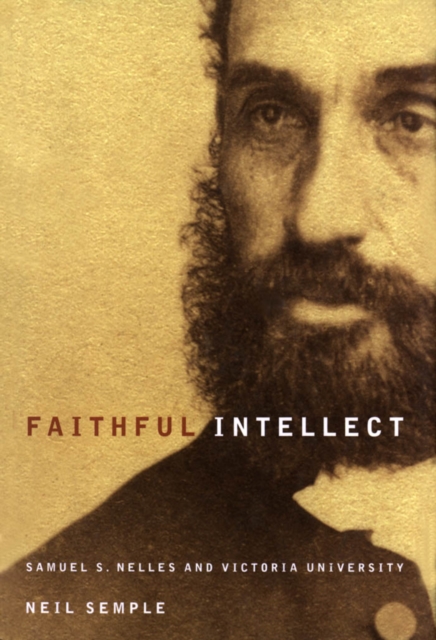
Faithful intellect
In 1850, Samuel Nelles, a well-educated Methodist minister, was selected to resuscitate the debt-ridden and declining Victoria University. As principal, and later as president and chancellor, he fought against shortsighted government educational policies while making the school into one of the premier universities in Canada. A true academic, Nelles believed in the importance of testing assumed laws, dogmas, and creeds. However his pursuit of intellectual inquiry was always guided by a rational faith in God, as well as the expectation of the future greatness and goodness of humanity. \"Faithful Intellect\" expands the reader's understanding of many of the key intellectual, religious, and political concerns of nineteenth-century English Canada while providing an essential contribution to the study of Canada’s system of higher education.
eBook

Someone to Teach Them
From the early 1960s to the 1970s, the province of Ontario witnessed an explosion in university enrolment. So dramatic was the increase that there were neither the institutions nor the faculty in place to meet the demand. In response, a dozen new universities from Trent in the southeast to Lakehead in the northwest were established, and faculty had to be recruited wherever they could be found. It was the events and developments of this decade, many argue, that created the university system that exists in Ontario today.
Someone to Teach Themis an insider's account of this period as told by historian John T. Saywell. As Dean of Arts at York University from 1963 to 1973, Saywell witnessed the expansion of the university from 500 students in 1963 to 7000 by 1970, and the many changes it took to accommodate such a change. York managed to recruit the necessary faculty, he writes, but the large number of American instructors led to a radical attack on the so-called Americanization of the universities. Saywell also elucidates the adverse effect that the reduction of government funding and enrolment had on the administration of the university in the 1970s.
Featuring many of the elements of personal memoir, this is also a thoroughly researched account of a critical decade for the history of education in Ontario.
eBook
Lyndhurst
Lyndhurst was the first facility in Canada to focus solely on people with spinal cord injuries, eventually also treating people with related disabilities, such as polio. Geoffrey Reaume details the changes in treatment of paraplegia and quadriplegia that allowed more people to survive and to return to the community, the evolution of social policies that emphasized greater inclusiveness in society for people with physical disabilities, and the role of disability activism in helping to advance these changes.
eBook