
Catalogue Search | MBRL


Are you sure you want to remove the book from the shelf?

{{itemTitle}}
255
result(s) for
"Torture United States History."
Sort by:

Civilizing torture : an American tradition
\"The pilgrims and merchants who first came to America from Europe professed an intention to create a society free of the barbarism of Old World tyranny and New World savagery. But over the centuries Americans have turned to torture during moments of crisis at home and abroad and have debated its legitimacy in defense of law and order. From the Indian wars to Civil War POW prisons and early penitentiaries, from \"the third degree\" in police stations and racial lynchings to the War on Terror, US institutions have proven to be far more amenable to torture than the nation's professed commitment to liberty would suggest. Legal and racial inequality fostered many opportunities for state agents to wield excessive power, which they justified as essential for American safety and well-being. Reconciling state violence with the aspirations of Americans for social and political justice is an enduring challenge. By tracing the historical debates about the efficacy of torture and the attempt to adapt it to democratic values, Civilizing Torture reveals the recurring struggle to decide what limits Americans are willing to impose on the power of the state. At a time of escalating rhetoric aimed at cleansing the nation of the undeserving, as well as ongoing military involvement in conflicts around the world, the debate over torture remains a critical and unresolved part of America's tradition.\"-- Provided by publisher
Book
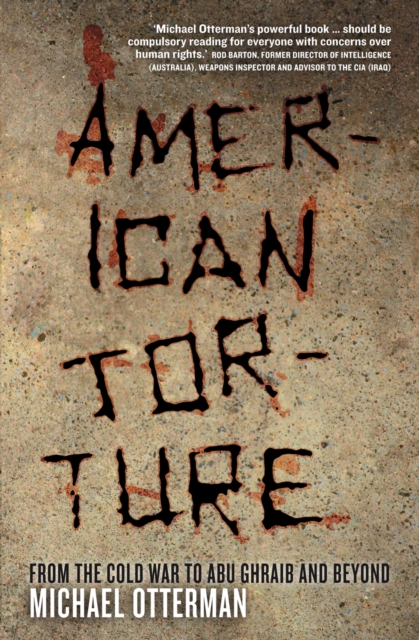
American torture : from the Cold War to Abu Ghraib and beyond
George W. Bush calls them an 'alternative set of procedures', vital tools needed 'to protect the American people and our allies'. American Torture reveals how torture became standard practice in today's War on Terror. 'Tools' including being forced standing for up to forty hours, sleep deprivation for weeks on end and dousing naked prisoners with ice are undeniably torture, and they are used by the United States of America. Long before Abu Ghraib became a household name, the US military and CIA used torture with impunity at home and abroad. Billions of dollars were spent during the Cold War studying, refining, then teaching these techniques to American interrogators and to foreign officers charged with keeping Communism at bay. This book writes the history of these methods and their invention and adoption by US military personnel.
eBook

How the gloves came off : lawyers, policy makers, and norms in the debate on torture
\"The treatment of detainees at Abu Ghraib prison, Guantánamo Bay, and far-flung CIA 'black sites' after the attacks of 9/11 included cruelty that defied legal and normative prohibitions in U.S. and international law. The antitorture stance of the United States was brushed aside. Since then, the guarantee of American civil liberties and due process for POWs and detainees has grown muddled, threatening the norms that sustain modern democracies. 'How the Gloves Came Off' considers the legal and political arguments that led to this standoff between civility and chaos and their significant consequences for the strategic interests and standing of the United States. Unpacking the rhetoric surrounding the push for unitary executive action in wartime, 'How the Gloves Came Off' traces the unmaking of the consensus against torture. It implicates U.S. military commanders, high-level government administrators, lawyers, and policy makers from both parties, exposing the ease with which powerful actors manipulated ambiguities to strip detainees of their humanity. By targeting the language and logic that made torture thinkable, this book shows how future decision makers can craft an effective counternarrative and set a new course for U.S. policy toward POWs and detainees. Whether leaders use their influence to reinforce a prohibition of cruelty to prisoners or continue to undermine long-standing international law will determine whether the United States retains a core component of its founding identity.\"--Provided by publisher.
Book

Torture in the National Security Imagination
Reassessing the role of torture in the context of police
violence, mass incarceration, and racial capitalism
At the midpoint of a century of imperial expansion, marked on
one end by the Philippine-American War of 1899-1902 and on the
other by post-9/11 debates over waterboarding, the United States
embraced a vision of \"national security torture,\" one contrived to
cut ties with domestic torture and mass racial terror and to
promote torture instead as a minimalist interrogation tool.
Torture in the National Security Imagination argues that
dispelling this vision requires a new set of questions about the
everyday work that torture does for U.S. society.
Stephanie Athey describes the role of torture in the
proliferation of a U.S. national security stance and imagination:
as U.S. domestic tortures were refined in the Philippines at the
turn of the twentieth century, then in mid-century
counterinsurgency theory and the networks that brought it home in
the form of law-and-order policing and mass incarceration.
Drawing on examples from news to military reports, legal
writing, and activist media, Athey shows that torture must be seen
as a colonial legacy with a corporate future, highlighting the
centrality of torture to the American empire-including its role in
colonial settlement, American Indian boarding schools, and police
violence. She brings to the fore the spectators and commentators,
the communal energy of violence, and the teams and target groups
necessary to a mass undertaking (equipment suppliers, contractors,
bureaucrats, university researchers, and profiteers) to demonstrate
that, at base, torture is propelled by local social functions,
conducted by networked professional collaborations, and publicly
supported by a durable social imaginary.
eBook

The politics of torture
\"Why did it happen? Why did the United States begin to torture detainees during the War on Terror? Instead of an indictment, this book presents an explanation. Crises produce rare opportunities for overcoming the domestic and foreign logjams facing political leaders. But what if the projects used to address the crisis and provide cover for their actions come under serious threat from clandestine opponents? Then the restraints on interrogation can be overwhelmed, leading to informal institutions that allow the official establishment of torture. These ideas are tested using comparative historical narratives drawn from two cases where torture was adopted--the War on Terror and the Stalinist Terror--and one where it was not--the Mexican War. The book concludes with some thoughts about how the United States can avoid the legal establishment of torture in the future\"-- Provided by publisher.
Book

Torture and Impunity
Many Americans have condemned the “enhanced interrogation” techniques used in the War on Terror as a transgression of human rights. But the United States has done almost nothing to prosecute past abuses or prevent future violations. Tracing this knotty contradiction from the 1950s to the present, historian Alfred W. McCoy probes the political and cultural dynamics that have made impunity for torture a bipartisan policy of the U.S. government. During the Cold War, McCoy argues, the U.S. Central Intelligence Agency covertly funded psychological experiments designed to weaken a subject’s resistance to interrogation. After the 9/11 terrorist attacks, the CIA revived these harsh methods, while U.S. media was flooded with seductive images that normalized torture for many Americans. Ten years later, the U.S. had failed to punish the perpetrators or the powerful who commanded them, and continued to exploit intelligence extracted under torture by surrogates from Somalia to Afghanistan. Although Washington has publicly distanced itself from torture, disturbing images from the prisons at Abu Ghraib and Guantanamo are seared into human memory, doing lasting damage to America’s moral authority as a world leader.
eBook


The Babylon Complex: Theopolitical Fantasies of War, Sex, and Sovereignty
Babylon is a surprisingly multivalent symbol in U.S. culture and politics. Political citations of Babylon range widely, from torture at Abu Ghraib to depictions of Hollywood glamour and decadence. In political discourse, Babylon appears in conservative ruminations on democratic law, liberal appeals to unity, Tea Party warnings about equality, and religious advocacy for family values. A composite biblical figure, Babylon is used to celebrate diversity and also to condemn it, to sell sexuality and to regulate it, to galvanize war and to worry about imperialism. Erin Runions explores the significance of these shifts and contradictions, arguing that together they reveal a theopolitics that tries to balance the drive for U.S. dominance with the countervailing ideals and subjectivities of economic globalization. Examining the confluence of cultural formations, biblical interpretations, and (bio)political philosophies, The Babylon Complex shows how theopolitical arguments for war, sexual regulation, and political control both assuage and contribute to anxieties about waning national sovereignty. Theoretically sophisticated and engaging, this remarkable book complicates our understanding of how the Bible affects U.S. political ideals and subjectivities.
eBook
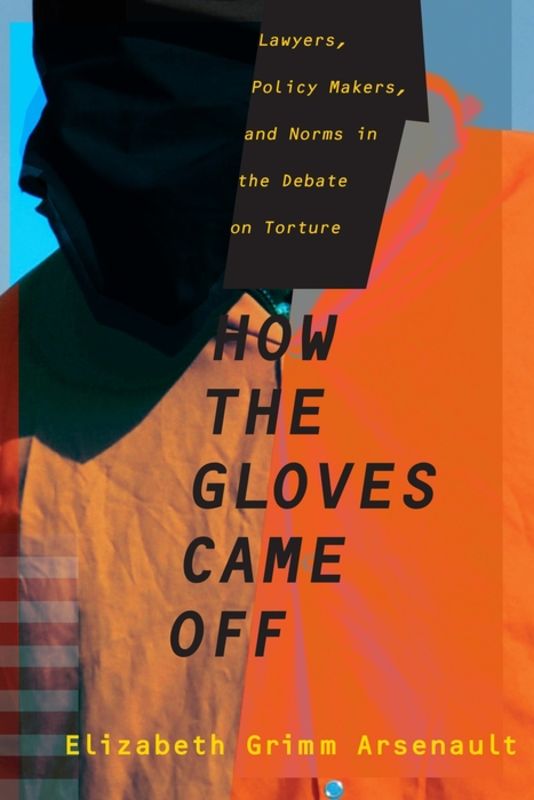
How the Gloves Came Off
The treatment of detainees at Abu Ghraib prison, Guantánamo Bay, and far-flung CIA \"black sites\" after the attacks of 9/11 included cruelty that defied legal and normative prohibitions in U.S. and international law. The antitorture stance of the United States was brushed aside. Since then, the guarantee of American civil liberties and due process for POWs and detainees has grown muddled, threatening the norms that sustain modern democracies.How the Gloves Came Offconsiders the legal and political arguments that led to this standoff between civility and chaos and their significant consequences for the strategic interests and standing of the United States.
Unpacking the rhetoric surrounding the push for unitary executive action in wartime,How the Gloves Came Offtraces the unmaking of the consensus against torture. It implicates U.S. military commanders, high-level government administrators, lawyers, and policy makers from both parties, exposing the ease with which powerful actors manipulated ambiguities to strip detainees of their humanity. By targeting the language and logic that made torture thinkable, this book shows how future decision makers can craft an effective counternarrative and set a new course for U.S. policy toward POWs and detainees. Whether leaders use their influence to reinforce a prohibition of cruelty to prisoners or continue to undermine long-standing international law will determine whether the United States retains a core component of its founding identity.
eBook

Understanding torture
Prohibiting torture will not end it. In Understanding Torture, John T. Parry explains that torture is already a normal part of the state coercive apparatus. Torture is about dominating the victim for a variety of purposes, including public order; control of racial, ethnic, and religious minorities; and— critically—domination for the sake of domination. Seen in this way, Abu Ghraib sits on a continuum with contemporary police violence in U.S. cities; violent repression of racial minorities throughout U.S. history; and the exercise of power in a variety of political, social, and interpersonal contacts. Creating a separate category for an intentionally narrow set of practices labeled and banned as torture, Parry argues, serves to normalize and legitimate the remaining practices that are \"not torture.\" Consequently, we must question the hope that law can play an important role in regulating state violence. No one who reads this book can fail to understand the centrality of torture in modern law, politics, and governance.
eBook