
Catalogue Search | MBRL


Are you sure you want to remove the book from the shelf?

{{itemTitle}}
327
result(s) for
"Tourism/travel"
Sort by:

Travel Motivation during COVID-19: A Case from Nepal
The tourism industry is one of the most affected industries by the COVID-19 pandemic. Understanding travel motivation is necessary for the tourism movement, even in the COVID-19 pandemic. Thus, this quantitative study aimed to explore travel motivation and its determinants. We collected 181 samples through a web-based questionnaire survey of the Nepali people in January and February 2021. The data were analyzed using a probit regression model through two different travel companion perspectives, i.e., traveling with friends and traveling with family members. We found that travel motivation, attributes, travel purpose, and transport mode preferences differed in companion groups. Specifically, those who want to travel with friends are government employees, 20–29 years of age, set health and wellness purposes, choose the bike for transportation, are less willing to visit homestay and agritourism, and want to travel for around one week. Those who plan to travel with family members use the coach to travel, choose rural destinations, including villages, and spend around two weeks. Based on these findings, we suggest that the Nepalese tourism destination and public transport companies make tourism packages targeting the groups. Since both groups showed interest in visiting rural destinations, we can say that tourism in rural destinations may revive earlier than urban tourism after the pandemic. However, a low-risk travel environment should be ensured for traveling to attract more tourists during and the post-disaster.
Journal Article
Diasporic Medical Tourism: examining tourists' profiles, antecedents and behavioural intention
This study focuses on diasporic medical tourism (DMT), an offshoot of migration-led tourism and medical tourism. There has been growing recognition of the significance of a diasporic dimension of medical tourism worldwide, yet little is known about these travellers, especially quantitatively. This paper examines the antecedents and behavioural intention of the DMT by applying the extended Theory of Planned Behaviour. A cross-sectional survey was conducted in three European countries (Belgium, the Netherlands, and Luxembourg) among the Polish diaspora (N=i,288), which constitutes one of the largest migrant populations in Europe. The results analysed via PLS-SEM demonstrated that the model explained 53 % of the variance (R2= 0.527, Q2= 0.392), indicating a good model fit. Constructs of Attitude (ß = 0.329), Subjective Norms (ß = 0.277), Perceived Behavioural Control (ß = 0.112), and Past Behaviour (ß = 0.302) were all statistically significant. The caring/affective/trusting relationship with doctors, familiarity with the system, second opinion, encouragement/recommendation from referents, and facilitating factors influenced the decisions to undertake the DMT. 'Committed' and 'Contended' travellers accounted for 76% of all surveyed diasporic medical travellers, indicating the significant potential of those 'hidden' medical travellers. Diasporic medical tourism was compared to foreign medical tourism. This study provides theoretical/practical implications and contributes to the research on medical tourism, diaspora tourism and the interrelation between tourism and migration, specifically in the European context.
Journal Article
The Effects of Travelers’ Price Sensitivity on Information Search Behaviors
In a remarkably heterogeneous tourism market, marketers apply a wide range of strategies which help them ward off competitors and attract customers. The openness of travel information such as product and service quality and price is essential but still a challenge for marketers since traveler characteristics are often multi-dimensional. This study devotes special attention to travelers’ price sensitivity, and aims to investigate whether price sensitivity can segment travelers and the effects on information search behavior. For this purpose, the research study conducted Analysis of Variance (ANOVA) and regression analysis using survey data of 310 respondents. The results confirm the existence of heterogeneity in price sensitivity and there is a clear difference in the use of information by travelers resulting from this variable. Marketers should therefore utilize different communication strategies for travelers with different price sensitivities. For example, to obtain price-sensitive travelers it is more efficient to provide travel information with a clear difference in price between products and services that will reduce their search efforts. On the other hand, to target price-insensitive travelers, marketers should provide sufficient information about product attributes through online personal information sources including organizations such as Trip Advisor, Twitter, Facebook, and Instagram.
Journal Article

The Internationalisation of Healthcare and Business Aspirations of Medical Professionals
Interest in international patient travel and trade in healthcare has grown considerably over the past decade. Whilst the field is under-researched, patients' motivation to travel to seek healthcare solutions has attracted significant attention. In contrast, the perspective of the medical doctors (MDs) remains unexplored. This article directs attention to medical professionals as key players in the internationalisation of private healthcare provision. Through the lens of the sociology of the professions, it examines the ongoing initiatives of MDs in Greece to attract patients from abroad. Findings indicate that international patient movement has given an incentive to MDs to exhibit an entrepreneurial approach. Their attitudes portray professionals with business aspirations which go well beyond their role as medics, and stand in contrast to the traditional image of medical professionals. In addition, it fosters competition among professionals at a domestic and international level, threatening the cohesion of the medical community.
Journal Article
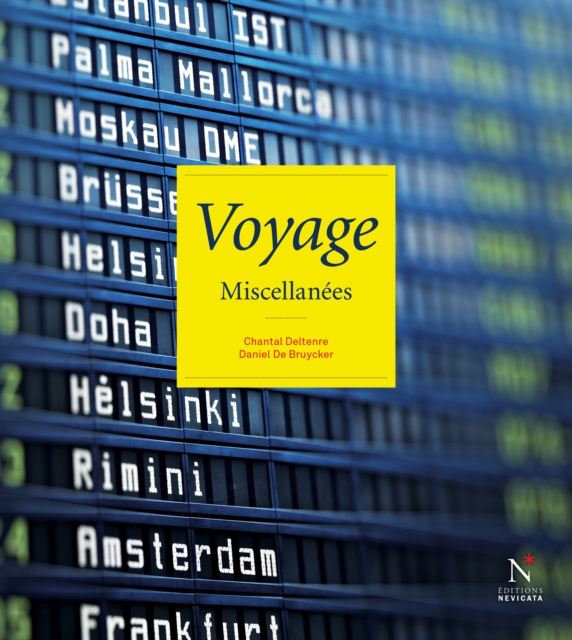
Voyage
Decouvrez le voyage sous ses multiples facettes... Voici 150 facons de gouter l'experience du voyage, de partager l'effervescence d'un depart, le charme d'une rencontre, la surprise d'une decouverte, le bonheur d'un retour. Autant d'emotions qui marquent tous nos voyages, que l'on parte en explorateur ou comme simple touriste.Des petits textes a lire au hasard de vos envies, a poser puis a reprendre, pour entrer en voyage par la litterature ou la poesie, l'histoire ou la mythologie, le cinema ou la peinture, l'ethnologie ou l'aventure, les croyances et les reves... Un vade-mecum pour tenter de saisir ce qui pousse depuis toujours voyageuses et voyageurs a prendre la route A PROPOS DE L'AUTEURRomanciere et ethnologue, Chantal Deltenre est l'auteur de plusieurs romans et essais qui ont pour cadre sa region d'origine en Belgique ou les pays qu'elle a sillonnes : l'Egypte, la Roumanie ou encore le Japon.
eBook

Tourism and \The Third Ear\: Further Prospects for Qualitative Inquiry
This commentary on the state of the art of qualitative research in Tourism Studies is prompted and inspired by the recent appearance of Phillimore and Goodson's valuable coverage of the ontological and epistemological issues involved in the conduct of the enlarging body of qualitative
research that has lately emerged in the field. It also stands as a follow-up article to the work of Jamal and Hollinshead in Tourism Management on similar matters. Like the latter, that is, that timely \"Qualitative Research as a Forbidden Zone\" article, this Tourism Analysis
review article is premised upon the view that just as travel and tourism mirror so much of the social, communal, and political realities of the cultural world \"out there,\" so research in Tourism Studies can mirror and much more advantageously utilize so many of the emergent phenomenological
and ethnographic advances in research praxis that have followed in the wake of the so-called interpretive turn and the so-called literary turn of the human sciences. In viewing travel and tourism as critical and dynamic fields of seeing, being, experiencing, inventing, and knowing
of and about the world, this review article positions travel and tourism as an inherently endlessly creative and mediating field of lived experience that, therefore, should be much more deeply explored interpretively, and thereby \"qualitatively,\" in the light of the new insights that qualitative
researchers have lately gained across human science disciplines into matters of meaning, textuality, and rhetorical power. Although The Forbidden Zone of Jamal and Hollinshead (in Tourism Management) explored the relevance of matters of \"messy text,\" \"confirmability,\" \"engaged
interestedness,\" and \"locality\" for Tourism Studies, this follow-up article here in Tourism Analysis peruses related questions of \"text,\" \"voice,\" \"reflexivity,\" and \"audience.\" It broadly concludes that-after Wichroski (1997)-the inexperienced qualitative researcher in
travel/tourism/any domain can normally improve his or her sensibilities to the interpretive issues faced and to the contextual situation encountered by learning how to deploy \"a third ear\" to actively sense the involved difficult matters of \"tacit\" individual presence, \"unstated\" communal
existence, and \"undeclared\" researcher power and authority in both the research locales and the investigative processes he/she is engaged in. Although this follow-up (Third Ear) article posits many strengths in the use of qualitative research in Tourism Studies-particularly in
tapping the misty plurivocality of populations and the exacting, contested narratives about places and pasts-the endeavor to understand the different styles of interpretive/ethnographic/textual insight that course through various qualitative techniques is no soft option in research,
and demands considerable sensitivity to the unfixities of meaning, affiliation, and identity. Overall then, as did Phillimore and Goodson, this Third Ear review article seeks to shift the debate about the merit and value of qualitative research beyond concerns of \"technique\" and away
from the strictures of \"method,\" per se, towards the need for the collective field of Tourism Studies to encourage more of its researchers towards flexible, interpretive approaches that demand enhanced situational use of their human intuitive and creative capacities themselves as a
perceptual, diagnostic, and inferential resource. Thereby, the article calls for a more reasoned use of these sorts of creatively informed human capacities where they can be utilized sensitively in critical-vigorous fashion to gauge the held local/situational realities of and about the world,
and with critical-rigor over the care in which those found understandings are reflexively captured and crosschecked. But the authors of this review article recognize that the new/emergent intersubjectivities and the new/unfolding moral discourse of qualitative inquiry are still rupturing,
still messy, and (for many researchers) still a rather dark matter. As the field of Tourism Studies continues into the 21st century, there are so many new options and opportunities in the engagement with the ever-expanding portfolio of qualitative research approaches-but there is still
so much to learn in situ about how each one of them may be sensibly and appropriately deployed in each of those specific research locales.
Journal Article

Antecedents of Revisit Intention of Thai Cultural Tourist in Thailand
The objectives of this research are (1) to develop the causal relationship model for antecedents of revisit intention of Thai cultural tourist in Thailand and (2) to validate the causal relationship model of antecedents of revisit intention of Thai cultural tourist in Thailand with empirical data. This research adopts quantitative research utilizing a questionnaire as a tool to collect data from 416 Thai cultural tourists. This research employed non-probability sampling with quota sampling. Statistical analysis includes frequency, percentage, mean, standard deviation, and structural equation modeling. The findings of the study revealed that (1.1) travel motivation, novelty seeking and destination image positively influence the memorable experiences of Thai cultural tourist in Thailand; (1.2) travel motivation, novelty seeking, destination image and memorable experiences positively affect the satisfaction of Thai cultural tourist in Thailand; (1.3) memorable experiences and satisfaction have a positive impact on positive word of mouth of Thai cultural tourist in Thailand and (1.4) Memorable experiences, satisfaction and positive word of mouth positively influence the revisit intention of Thai cultural tourist in Thailand. The causal relationship model of antecedents of revisit intention of Thai cultural tourist in Thailand was consistent with empirical data.
Journal Article
Indigenous Ecotourism: Sustainable Development and Management
Dealing with indigenous ecotourism as a special type of nature-based tourism, Indigenous Ecotourism examines the key principles of this field through global case studies and analyses the key factors for sustainable development.
eBook

TripAdvisor
Un guide pratique et accessible pour découvrir la Success Story de TripAdvisor Quelle histoire se cache derrière le succès international du hibou aux yeux bicolores de TripAdvisor ? Comment cette plateforme, aujourd'hui considérée comme la plus grande communauté de voyageurs au monde, s'est-elle hissée au rang de géant du secteur de l'e-tourisme, se faisant une place aux côtés de Booking ou d'Expedia ? Ce livre vous aidera à : Percevoir les prémices et les enjeux de l'avènement du Web 2.0 Comprendre les motivations et ambitions de la plateforme au célèbre hibou Analyser les fondements du crowdsourcing Et bien plus encore ! Le mot de l'éditeur : « Avec l'auteur, Charlotte Bouillot, nous avons cherché à présenter aux lecteurs la formidable aventure du hibou aux yeux vert et rouge au travers de la vie de Stephen Kaufer et de sa femme, de l'analyse du business model ainsi que des éléments d'actualité qui enrichissent toujours un peu plus le parcours de ce géant de l'e-toursime. » Juliette Nève À PROPOS DE LA SÉRIE 50MINUTES | Business Stories La série « Business Stories » de la collection 50MINUTES propose des documents qui invitent tous les curieux à réfléchir et à s'inspirer des plus grandes entreprises qui ont marqué notre histoire ou qui participent au paysage économique actuel. Nous avons conçu la collection Business & Economics en pensant aux nombreux professionnels obligés de se former en permanence en économie, en management, en stratégie ou en marketing. Nos auteurs combinent des éléments de théorie, des pistes de réflexion, et, pour certains sujets, des études de cas et de nombreux exemples pratiques pour permettre aux lecteurs de développer leurs compétences et leur expertise.
eBook
Tourism, progress and peace
Tourism has the potential to contribute to world peace, and through appropriate management, to address current realities such as globalization, migration, conflicts, prejudices and poverty. By providing a range of international perspectives and case studies, this book discusses the interrelation between peace, conflict resolution and tourism, the role of industry and the role of the individual, and tourism as a catalyst for change and development. Exploring the ideas that there is more to peace than the absence of war and that there is more to tourism than economic interests, this book is the first of its kind and an essential resource for researchers, students and policymakers in tourism and related subjects.
eBook