
Catalogue Search | MBRL


Are you sure you want to remove the book from the shelf?

{{itemTitle}}
1,155
result(s) for
"Tourism - Israel"
Sort by:

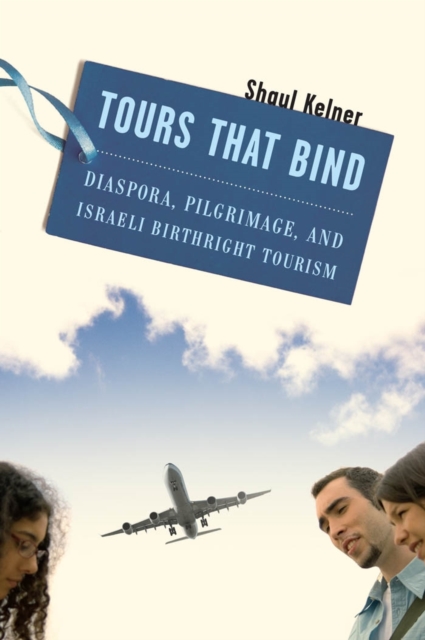
Tours That Bind
Since 1999 hundreds of thousands of young American Jews have visited Israel on an all-expense-paid 10-day pilgrimage-tour known as Birthright Israel. The most elaborate of the state-supported homeland tours that are cropping up all over the world, this tour seeks to foster in the American Jewish diaspora a lifelong sense of attachment to Israel based on ethnic and political solidarity. Over a half-billion dollars (and counting) has been spent cultivating this attachment, and despite 9/11 and the ongoing Israeli-Palestinian conflict the tours are still going strong. Based on over seven years of first-hand observation in modern day Israel, Shaul Kelner provides an on-the-ground look at this hotly debated and widely emulated use of tourism to forge transnational ties. We ride the bus, attend speeches with the Prime Minister, hang out in the hotel bar, and get a fresh feel for young American Jewish identity and contemporary Israel. We see how tourism's dynamism coupled with the vibrant human agency of the individual tourists inevitably complicate tour leaders' efforts to rein tourism in and bring it under control. By looking at the broader meaning of tourism, Kelner brings to light the contradictions inherent in the tours and the ways that people understandtheir relationship to place both materially and symbolically. Rich in detail, engagingly written, and sensitive to the complexities of modern travel and modern diaspora Jewishness, Tours that Bind offers a new way of thinking about tourism as a way through which people develop understandings of place, society, and self.
eBook

Itineraries in conflict : Israelis, Palestinians, and the political lives of tourism
In Itineraries in Conflict, Rebecca L. Stein argues that through tourist practices—acts of cultural consumption, routes and imaginary voyages to neighboring Arab countries, culinary desires—Israeli citizens are negotiating Israel's changing place in the contemporary Middle East. Drawing on ethnographic and archival research conducted throughout the last decade, Stein analyzes the divergent meanings that Jewish and Palestinian citizens of Israel have attached to tourist cultures, and she considers their resonance with histories of travel in Israel, its Occupied Territories, and pre-1948 Palestine. Stein argues that tourism's cultural performances, spaces, souvenirs, and maps have provided Israelis in varying social locations with a set of malleable tools to contend with the political changes of the last decade: the rise and fall of a Middle East Peace Process (the Oslo Process), globalization and neoliberal reform, and a second Palestinian uprising in 2000.
Combining vivid ethnographic detail, postcolonial theory, and readings of Israeli and Palestinian popular texts, Stein considers a broad range of Israeli leisure cultures of the Oslo period with a focus on the Jewish desires for Arab things, landscapes, and people that regional diplomacy catalyzed. Moving beyond conventional accounts, she situates tourism within a broader field of \"discrepant mobility,\" foregrounding the relationship between histories of mobility and immobility, leisure and exile, consumption and militarism. She contends that the study of Israeli tourism must open into broader interrogations of the Israeli occupation, the history of Palestinian dispossession, and Israel's future in the Arab Middle East. Itineraries in Conflict is both a cultural history of the Oslo process and a call to fellow scholars to rethink the contours of the Arab-Israeli conflict by considering the politics of popular culture in everyday Israeli and Palestinian lives.
eBook

“Hot Guys” in Tel Aviv
The LGBTQ+ (lesbian, gay, bisexual, transgender, and questioning) community is warmly embraced by the city of Tel Aviv. This phenomenon is exemplified by the fact that the Tel Aviv City Hall has been taking a leading part in the organization, financing, and promotion of Pride parades and events in recent years. The present article analyzes a quantitative survey of overseas participants in the 2016 Pride events in Tel Aviv. It explores the motivations, attitudes, satisfaction, and behaviors of tourists, both LGBTQ+ and non- LGBTQ+. The results show that Tel Aviv is perceived as gay friendly by all participants, regardless of their affiliation with the LGBTQ+ community. We discuss the advantages of being a gay-friendly city via high visibility and social inclusion. Finally, we address ‘pinkwashing’, an umbrella term employed to describe the efforts by Israeli authorities to promote a positive image of Israel despite its questioned geopolitical reputation.
Journal Article

Regional Effects of Terrorism on Tourism in Three Mediterranean Countries
A consumer-choice theoretical model is developed to test the regional effects of terrorism on competitors' market shares in the tourism sector where involved countries enjoy significant tourism activities but are subject to a high frequency of terrorist attacks. Using data for three Mediterranean countries-Greece, Israel, and Turkey-for the period from January 1991 to December 2000, results show significant own and spillover effects of terrorism on market shares. Terrorist incidents are decomposed to better identify the impacts of terrorism on tourism. Significant contagion effects of terrorism on market shares in the region are documented, as is evidence of the effect of terrorism on the substitutability between countries.
Journal Article

Established Practice
The Dead Sea, the lowest point on Earth, is one of the natural wonders of the world. Rich in minerals and salt, the lake has attracted visitors for millennia, and the economic value of its mineral riches has been important to both the local Palestinian population and to every colonial power that has ruled the area. Today, Israel exercises total control over the Dead Sea, the northern basin of which lies in the occupied Palestinian territories. Israeli settlements and international businesses, aided by state-funded initiatives, have established a profitable tourism sector and extractive industries based on the Dead Sea’s natural resources, while Palestinians remain effectively excluded from pursuing such opportunities. Qumran National Park, private beach resorts, and the cosmetics company AHAVA, among others, reap enormous profits from settlements in the Dead Sea area, benefiting from Israel’s occupation and unlawful policies and helping to drive a self-serving narrative of the area’s history.
Journal Article

'I Wish They Had Birthright for Adults!': The Effect of Birthright Israel on Jewish Parents' Interest in Visiting Israel
This study assesses the impact of the Taglit-Birthright Israel travel program on parents of participants—in particular, on the ways in which parents' indirect exposure to their adult children's experiences in the program affect those parents' connections to Israel. Birthright Israel is a large-scale, successful, educational travel program that provides a gift of 10-day trips to Israel to Jewish young adults. A substantial body of research has demonstrated the effectiveness of Birthright Israel in strengthening the Jewish identity of young diaspora Jews. Anecdotal evidence suggests that participants whose interest in Israel is enhanced by their Birthright Israel experience share what they have learned with their parents, and that this results in an increase in Israel interest for the parents. This study is the first to systematically analyze the program's impact on such parents. Based on semistructured interviews of Birthright Israel parents and on pre-trip and post-trip surveys of more than 1,500 parents, this paper shows that, for Jewish parents, the primary impact of Birthright Israel is an increased interest in visiting Israel and a reduced concern about the safety of Israel travel. The effect of the program was most pronounced for parents who had never been to Israel. Parental interest in trips like Birthright Israel presents an opportunity to reach the generation of American Jews during midlife in ways not previously considered.
Journal Article
The Role of Personal Experience in Contributing to Different Patterns of Response to Rare Terrorist Attacks
An examination of the behavioral effect of repeated terrorist attacks reveals that local residents (of the attacked area) appear to be much less sensitive to this risk than international tourists. Furthermore, the limited sensitivity on the part of local residents seems to diminish with time, even when the attacks continue. An experimental study shows a similar pattern in a laboratory experiment that focuses on a basic decision task: when making a single decision based on a description of the problem, people tend to be more risk averse. Personal experience with the problem reduces this sensitivity. These results highlight an interesting relationship between basic decision-making research and the study of the response to traumatic events.
Journal Article

Ethnographers and History
Before he addresses that, however, Vilnay's initial concern is to \"recover roots,\" to use Yael Zerubavel's turn of phrase-to assert historical continuity between contemporary practice and the Jewish past.2 Vilnay's first chapter is given over to consideration of the bibli- cal pilgrimage festivals and to later Jewish travel writings in the land of Israel, such as r. estori ha-Parhi's 1322 Sefer Kaftor va-Ferah and r. Moses Cordovero's accounts in Sefer Gerushin of sixteenth-century kabbalistic excursions in the environs of Safed.3 In writing Tours That Bind: Diaspora, Pilgrimage and Israeli Birthright Tourism4, an ethnography of the state-sponsored tours that have brought more than 300,000 Diaspora Jews to Israel since 1999, I knew well that Vilnay's perspective was widely shared among educators engaged in the enterprise. [...]this would also have been misleading. [...]although the ethnography studied Birthright Israel, the history I traced looked beyond Birthright to newer innovations in the Israel-experience field, such as Kivunim, a travel program that uses Israel as a base of operations from which Di- aspora Jews go forth and explore the Jewish historical experience across europe, asia and north africa.
Journal Article
Locating Palestine’s Summer Residence
The carving up of the Ottoman Levant into British and French Mandates after World War I introduced new realities for the inhabitants of the region. This article uses Lebanese tourism and the promotion of Lebanon as a tourist destination to Palestinians of all religious backgrounds as a case study to investigate the challenges and potentials of the new Mandate structures. Using Palestinian government archives and newspapers, it examines how Lebanon was marketed to Palestinian vacationers. It concludes by suggesting that tourism, with its mixture of private and government sector interests, serves as a key node for observing the messy process of relational identities when two sets of neighbors worked to reframe themselves in national terms.
Journal Article