
Catalogue Search | MBRL


Are you sure you want to remove the book from the shelf?

{{itemTitle}}
1,532
result(s) for
"Tourist trade"
Sort by:

Industrial Tourism
Industrial tourism presents opportunities, both in terms of income and as a tool of management, for individual firms who open their doors - and consequently their local regions - to the public. But how can these opportunities be organised in a way that enables both the city and the enterprise to take advantage? This book analyzes the conditions for successful industrial tourism development using case studies of Wolfsburg, Cologne, Pays de la Loire, Turin, Shanghai and Rotterdam, and makes astute recommendations for cities and companies with ambitions in this field.
eBook

OECD Tourism Trends and Policies 2018
The 2018 edition analyses tourism performance and policy trends across 49 OECD countries and partner economies. It highlights the need for coherent and comprehensive approaches to tourism policy making, and the significance of the tourism economy, with data covering domestic, inbound and outbound tourism, enterprises and employment, and internal tourism consumption. Thematic chapters explore how understanding the potential impacts of megatrends can better shape the future of tourism, and the need for a shift towards investment and financing for sustainable tourism growth.
eBook

The Economics of Recreation, Leisure and Tourism
This textbook describes the relevance of economics to the tourism and leisure industries, helping you to pass an economics module as part of a tourism, recreation or sport management degree.
It applies economic theory to a range of tourism industry issues at the consumer, business, national and international level by using topical examples to give the theory real-world context. The author explains the impact of the global economic crisis and the importance of understanding what has happened over the course of previous economic business cycles to prepare for what may happen in the future. Contrasting evidence is put forward to provide a sense of the dynamics of world economies.
1. Introduction Part 1: Organisations and markets 2. Organisations 3. Markets Part 2: Further issues of demand and supply 4. Demand: Time Preference 5. Elasticity and Forecasting 6. Supply and Costs Part 3: Markets in Practice 7. Market Structure and Pricing 8. Market Intervention Part 4: The External Operating Environment 9. The Competitive, Technological, Political and Sociocultural Environment 10. The Macro-Economic Environment Politics and Socio-culture Part 5: Investment 11. Investment in the Private Sector 12. Investment in the Public Sector Part 6: Economic Impacts 13. Income, Employment and Prices 14. Economic Development and Regeneration Part 7: The Global Economy 15. The Balance of Payments and Exchange Rates 16. Globalisation Part 8: Environmental Economics 17. Environmental Impacts 18. Sustainability 19. Critique 20. Critique, Alternative Perspectives and Change 21. Political, and Social Economy?
eBook
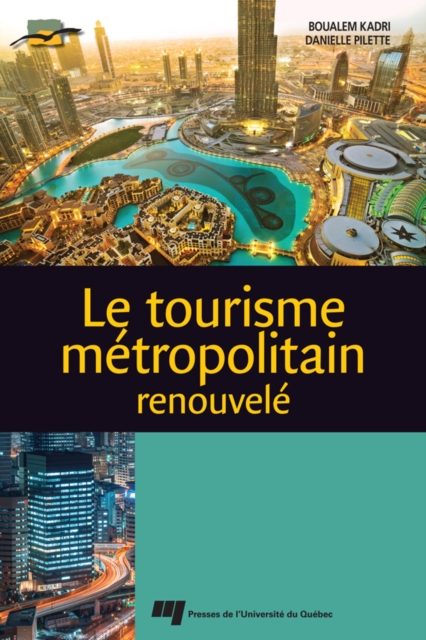
Le TOURISME METROPOLITAIN RENOUVELE
Dans sa formule renouvelée, le tourisme métropolitain est à la mesure ou à la démesure du gigantisme de la taille, du métissage démographique, des ressources et des réseaux des nouvelles métropoles, souvent d'Orient et du Sud. Il s'insère dans la construction et la reconstruction du territoire, s'ancre dans le spectaculaire et promeut les innovations, tant sociales que technologiques. Il est le fruit de la gouvernance et de l'exercice du leadership métropolitain, impliquant à la fois les collectivités locales, l'État national, les intérêts des entreprises oeuvrant dans différents secteurs et ceux des groupes de pression. Aujourd'hui, les entreprises du secteur numérique, des finances et du divertissement propulsent les nouvelles formes du tourisme métropolitain qu'elles inscrivent dans de nouveaux réseaux auxquels font même appel les entreprises touristiques traditionnelles.
eBook

Discourse, Communication and Tourism
This book brings together an explicit linkage between empirical and theoretical perspectives on tourism and discourse. A broad social semiotic approach is adopted to analyze a range of spoken, written and visual texts providing a unique resource for researching and teaching tourism in the context of communication studies.
eBook
Tourism and Poverty
Tourism and Poverty addresses a critical question facing many academics, governments, aid agencies, tourism organizations, and conservation bodies around the world: can tourism work as a tool to overcome poverty? This book is the first to present a focused description and critique of the issues surrounding poverty and tourism. Relying on a wealth of primary data on tourism, Regina Scheyvens supports her findings with novel case studies such as innovative partnerships between resorts and fledgling indigenous businesses in Fiji, Oxfam’s work to connect the agriculture and tourism sectors in the Caribbean, and difficulties in alleviating poverty in the Maldives despite the growth of luxury tourism. This book will challenge the way academics and tourism professionals understand the current and potential role of tourism in alleviating poverty.
1. Introduction 2. Poverty and Tourism Unpacked 3. Tourism Entrenches Poverty 4. Poverty Attracts Tourists 5. Tourism Reduces Poverty: Tourism Industry Approaches 6. Tourism Reduces Poverty: Government Approaches 7. Tourism Reduces Poverty: Development Agency Approaches 8. Conclusion
Regina Scheyvens heads the Institute of Development Studies at Massey University, New Zealand. Here she combines a passion for teaching about international development with research on tourism and development. In 2002 she published Tourism for Development: Empowering Communities , and she has written articles on themes such as backpacker tourism, ecotourism, and sustainable tourism.
eBook


Fire Dancers in Thailand's Tourism Industry
Fire Dancers in Thailand's Tourism
Industry explores the evolution of fire
dancing from informal community jam sessions into the iconic,
tourist-oriented performances at beach parties and bars, through a
close consideration of the role of affect in the lives of fire
dancers in the ever-changing scene.
Rather than pursuing the common notion that tourism industries
are exploitative enterprises that oppress workers, Tiffany Rae
Pollock centers the perspectives of fire artists themselves, who
view the industry as simultaneously generative and destructive.
Dancers reveal how they employ affect to navigate their lives, art,
and labor in this context, showcasing how affect is not only a
force that acts on people but also is used and shaped by social
actors toward their own ends. Fire Dancers in Thailand's
Tourism Industry highlights men as affective laborers,
investigating how they manage the eroticization of their identities
and the intersections of art and labor in tourist economies.
Exploring moments of performance and everyday life, Pollock
examines how fire artists reimagine their labor, lives, and
communities in Thailand's tourism industry.
eBook

Handbook of Tourism and Quality-of-Life Research
This book examines research that seeks to understand and measure the impact of tourism on the quality of life of residents of the host communities. It covers research relating to travelers/tourists as well as to the residents of host communities.
eBook
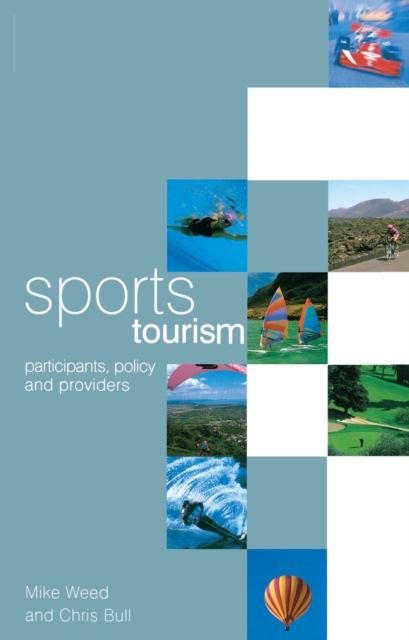
Sports tourism
Sports Tourism: participants, policy and providers is an unparalleled text that explains sports tourism as a social, economic and cultural phenomenon that stems from the unique interaction of activity, people and place. Unlike other texts, it seeks to present sports tourism as a unique area that produces its own unique issues, concerns and controversies.The text tackles these issues from three viewpoints:
participants: examining the profiles, motivations and behaviour patterns of sports tourists to create a typology of participants
policy: analyses the response by policy makers to this phenomenon and the problems of achieving integration between two sectors with historically different cultures
providers: their motivations, aims, objectives and strategies
Illustrated by international case studies in each chapter, and with four extended case study chapters, Sports Tourism: participants, policy and providers examines this area using real life experiences and concrete evidence.
eBook