
Catalogue Search | MBRL


Are you sure you want to remove the book from the shelf?

{{itemTitle}}
170
result(s) for
"Toxicogenetics - methods"
Sort by:

Progress in toxicogenomics to protect human health
Toxicogenomics measures molecular features, such as transcripts, proteins, metabolites and epigenomic modifications, to understand and predict the toxicological effects of environmental and pharmaceutical exposures. Transcriptomics has become an integral tool in contemporary toxicology research owing to innovations in gene expression profiling that can provide mechanistic and quantitative information at scale. These data can be used to predict toxicological hazards through the use of transcriptomic biomarkers, network inference analyses, pattern-matching approaches and artificial intelligence. Furthermore, emerging approaches, such as high-throughput dose–response modelling, can leverage toxicogenomic data for human health protection even in the absence of predicting specific hazards. Finally, single-cell transcriptomics and multi-omics provide detailed insights into toxicological mechanisms. Here, we review the progress since the inception of toxicogenomics in applying transcriptomics towards toxicology testing and highlight advances that are transforming risk assessment.
Toxicogenomics leverages molecular data to predict toxicological effects. In this Review, the authors summarize innovations in transcriptomics and emerging methods, such as single-cell technologies and multi-omics, that offer detailed insights into toxicological mechanisms to enhance hazard prediction and risk assessment.
Journal Article

Toxicity testing in the 21st century: progress in the past decade and future perspectives
Advances in the biological sciences have led to an ongoing paradigm shift in toxicity testing based on expanded application of high-throughput in vitro screening and in silico methods to assess potential health risks of environmental agents. This review examines progress on the vision for toxicity testing elaborated by the US National Research Council (NRC) during the decade that has passed since the 2007 NRC report on Toxicity Testing in the 21st Century (TT21C). Concomitant advances in exposure assessment, including computational approaches and high-throughput exposomics, are also documented. A vision for the next generation of risk science, incorporating risk assessment methodologies suitable for the analysis of new toxicological and exposure data, resulting in human exposure guidelines is described. Case study prototypes indicating how these new approaches to toxicity testing, exposure measurement, and risk assessment are beginning to be applied in practice are presented. Overall, progress on the 20-year transition plan laid out by the US NRC in 2007 has been substantial. Importantly, government agencies within the United States and internationally are beginning to incorporate the new approach methodologies envisaged in the original TT21C vision into regulatory practice. Future perspectives on the continued evolution of toxicity testing to strengthen regulatory risk assessment are provided.
Journal Article

Reconciled rat and human metabolic networks for comparative toxicogenomics and biomarker predictions
The laboratory rat has been used as a surrogate to study human biology for more than a century. Here we present the first genome-scale network reconstruction of
Rattus norvegicus
metabolism,
iRno
, and a significantly improved reconstruction of human metabolism,
iHsa
. These curated models comprehensively capture metabolic features known to distinguish rats from humans including vitamin C and bile acid synthesis pathways. After reconciling network differences between
iRno
and
iHsa
, we integrate toxicogenomics data from rat and human hepatocytes, to generate biomarker predictions in response to 76 drugs. We validate comparative predictions for xanthine derivatives with new experimental data and literature-based evidence delineating metabolite biomarkers unique to humans. Our results provide mechanistic insights into species-specific metabolism and facilitate the selection of biomarkers consistent with rat and human biology. These models can serve as powerful computational platforms for contextualizing experimental data and making functional predictions for clinical and basic science applications.
The rat is a widely-used model for human biology, but we must be aware of metabolic differences. Here, the authors reconstruct the genome-scale metabolic network of the rat, and after reconciling it with an improved human metabolic model, demonstrate the power of the models to integrate toxicogenomics data, providing species-specific biomarker predictions in response to a panel of drugs.
Journal Article

When good drugs go bad
How can we best reduce the risk of severe adverse reactions to marketed drugs? An international group of scientists argues that a global research network is needed to identify genetically at-risk populations.
Going global
Nearly 2 million Americans a year experience a serious adverse drug reaction (SADR) when using marketed drugs, and 100,000 die. The figures are similar in other developed countries. The search for predictive genetic tests for SADRs is therefore of vital importance. In a Commentary, Giacomini
et al
. argue that an important step towards this goal is the creation of a global pharmacogenomics network for the study of SADRs. Some large-scale projects exist — EUDRAGENE in Europe, GATC in Canada — but only a global network will bring the necessary patient numbers.
Journal Article
Recommended approaches in the application of toxicogenomics to derive points of departure for chemical risk assessment
There is increasing interest in the use of quantitative transcriptomic data to determine benchmark dose (BMD) and estimate a point of departure (POD) for human health risk assessment. Although studies have shown that transcriptional PODs correlate with those derived from apical endpoint changes, there is no consensus on the process used to derive a transcriptional POD. Specifically, the subsets of informative genes that produce BMDs that best approximate the doses at which adverse apical effects occur have not been defined. To determine the best way to select predictive groups of genes, we used published microarray data from dose–response studies on six chemicals in rats exposed orally for 5, 14, 28, and 90 days. We evaluated eight approaches for selecting genes for POD derivation and three previously proposed approaches (the lowest pathway BMD, and the mean and median BMD of all genes). The relationship between transcriptional BMDs derived using these 11 approaches and PODs derived from apical data that might be used in chemical risk assessment was examined. Transcriptional BMD values for all 11 approaches were remarkably aligned with corresponding apical PODs, with the vast majority of toxicogenomics PODs being within tenfold of those derived from apical endpoints. We identified at least four approaches that produce BMDs that are effective estimates of apical PODs across multiple sampling time points. Our results support that a variety of approaches can be used to derive reproducible transcriptional PODs that are consistent with PODs produced from traditional methods for chemical risk assessment.
Journal Article
Toxicogenomics directory of chemically exposed human hepatocytes
A long-term goal of numerous research projects is to identify biomarkers for in vitro systems predicting toxicity in vivo. Often, transcriptomics data are used to identify candidates for further evaluation. However, a systematic directory summarizing key features of chemically influenced genes in human hepatocytes is not yet available. To bridge this gap, we used the Open TG-GATES database with Affymetrix files of cultivated human hepatocytes incubated with chemicals, further sets of gene array data with hepatocytes from human donors generated in this study, and publicly available genome-wide datasets of human liver tissue from patients with non-alcoholic steatohepatitis (NASH), cirrhosis, and hepatocellular cancer (HCC). After a curation procedure, expression data of 143 chemicals were included into a comprehensive biostatistical analysis. The results are summarized in the publicly available toxicotranscriptomics directory (
http://wiki.toxbank.net/toxicogenomics-map/
) which provides information for all genes whether they are up- or downregulated by chemicals and, if yes, by which compounds. The directory also informs about the following key features of chemically influenced genes: (1)
Stereotypical stress response.
When chemicals induce strong expression alterations, this usually includes a complex but highly reproducible pattern named ‘stereotypical response.’ On the other hand, more specific expression responses exist that are induced only by individual compounds or small numbers of compounds. The directory differentiates if the gene is part of the stereotypical stress response or if it represents a more specific reaction. (2)
Liver disease-associated genes.
Approximately 20 % of the genes influenced by chemicals are up- or downregulated, also in liver disease. Liver disease genes deregulated in cirrhosis, HCC, and NASH that overlap with genes of the aforementioned stereotypical chemical stress response include CYP3A7, normally expressed in fetal liver; the phase II metabolizing enzyme SULT1C2; ALDH8A1, known to generate the ligand of RXR, one of the master regulators of gene expression in the liver; and several genes involved in normal liver functions: CPS1, PCK1, SLC2A2, CYP8B1, CYP4A11, ABCA8, and ADH4. (3)
Unstable baseline genes.
The process of isolating and the cultivation of hepatocytes was sufficient to induce some stress leading to alterations in the expression of genes, the so-called unstable baseline genes. (4)
Biological function.
Although more than 2,000 genes are transcriptionally influenced by chemicals, they can be assigned to a relatively small group of biological functions, including energy and lipid metabolism, inflammation and immune response, protein modification, endogenous and xenobiotic metabolism, cytoskeletal organization, stress response, and DNA repair. In conclusion, the introduced toxicotranscriptomics directory offers a basis for a rationale choice of candidate genes for biomarker evaluation studies and represents an easy to use source of background information on chemically influenced genes.
Journal Article

Robust hierarchical co-clustering for exploring toxicogenomic biomarkers and their chemical regulators
Toxicity measurement of doses of chemicals (DCs) is one of the most important tasks in toxicology studies and the drug discovery and development process. In this issue, toxicogenomic biomarkers are now playing a vital role in measuring the toxicity of DCs. Differentially expressed genes (DEGs) between DCs-treatment and control groups are considered toxicogenomic biomarkers, and associated chemicals are the regulators of DEGs. The co-clustering technique is now used extensively in toxicogenomic research to investigate co-clusters between genomic biomarkers and their chemical regulators. In the literature, there are few approaches to exploring co-clusters. The hierarchical co-clustering (HCoClust) approach is faster, simpler, and more flexible. Nevertheless, it is not robust against outlier data and there is no instruction about separating upregulatory or downregulatory co-clusters, a crucial goal of toxicogenomic data analysis. Therefore, in this article, we proposed a robust HCoClust (rHCoClust) approach and developed an r-package called “rhcoclust” for its implementation. Simulation results showed that the conventional HCoClust and the proposed rHCoClust performed equally well in detecting co-clusters in the absence of outliers, while rHCoClust performed much better than HCoClust in the presence of outliers. However, rHCoClust outperformed the bi-clustering approaches in detecting co-clusters, since bi-clustering methods only work when row and column clusters are equal, and they have no criterion for detecting upregulatory and downregulatory co-clusters. Then rHCoClust was compared with HCoClust through real data analysis and found that rHCoClust performed better than HCoClust. In the case of real data analysis, the proposed method rHCoClust identified top-ranked two DEGs-clusters (
GSTA5, MGST2, GCLC, GCLM, G6PD
) and (
EHHADH, CYP4A1, ANGPT14, CPT1A
) that were significantly expressed by the influence of top-ranked two DCs-clusters (acetaminophen_High _24.hr, nitrofurazone_High_24.hr, methapyrilene_High_24.hr) and (WY.14643_High_24.hr, clofibrate_High_24.hr, gemfibrozil_High_24.hr, benzbromarone_High_24.hr, aspirin_High_24.hr) through the glutathione metabolism (GMP) and PPAR signaling pathway (PPAR-SP) respectively. The literature review also supported these results. Thus, the proposed method would be useful to explore toxicogenomic biomarkers and their chemical regulators from the robustness point of view.
Journal Article

Entitymetrics: Measuring the Impact of Entities
This paper proposes entitymetrics to measure the impact of knowledge units. Entitymetrics highlight the importance of entities embedded in scientific literature for further knowledge discovery. In this paper, we use Metformin, a drug for diabetes, as an example to form an entity-entity citation network based on literature related to Metformin. We then calculate the network features and compare the centrality ranks of biological entities with results from Comparative Toxicogenomics Database (CTD). The comparison demonstrates the usefulness of entitymetrics to detect most of the outstanding interactions manually curated in CTD.
Journal Article
Toxicogenomic profiling of endocrine disruptor 4-Nonylphenol in male catfish Heteropneustes fossilis with respect to gonads
Toxicogenomics study reveals information of gene activity and proteins within the particular cells or tissue of an organism in response to toxic substances. 4-Nonylphenol is a potent environmental contaminant and endocrine disruptor. This study elucidates the toxic and xeno-estrogenic effect of 4-Nonylphenol from the cellular level to the gene level by in vivo and in silico approach. In vivo, studies show that exposure of 4-Nonylphenol at a low dose 64µgL
− 1
and a high dose of 160µgL
− 1
for 30 days to 60 days of duration during pre-spawning to the spawning period in testes of
Heteropneustes fossilis
causes cellular level toxicity i.e., dose and duration dependent clumping of spermatocytes. Dose and duration-dependent decrease in superoxide dismutase(SOD), Catalase, glutathione peroxidase(GPx) and increase in lipid peroxidase (LPO) level in testes. There was a dose and duration-dependent decrease in total antioxidant status and increased level of total oxidant status in the testicular tissue of
H. fossilis
along with an increase in cortisol level 0.4-NP caused alteration in antioxidant enzyme levels impedes the first line of defense mechanism in the body of an organism. There was a dose-dependent increase in necrosis percentage in testicular cells, cell death, and an increase in total ROS (reactive oxygen species) in a dose-dependent manner in testicular cells of
H. fossilis
. 4-NP causes gene level toxicity i.e., increased DNA migration or DNA fragmentation. Upregulation of gene expression of gonadal aromatase (CYP19a1a) and downregulation of the 3-beta-hydroxysteroid dehydrogenase (3-β HSD) gene in testes were observed. In silico studies also confirmed the interacting potency of 4-NP with steroid enzyme 3- β HSD and CYP19a1a. Present investigations shows that exposure to water bodies contaminated with xenoestrogens like 4-NP has significantly reduced reproductive parameters like fertilization, fecundity, hatching, and larval survival in numerous fish species.4-NP causes alteration in gene expression of the proteins which are very crucial for reproduction and maintenance of maleness. Due to chronic exposure to 4-NP, it becomes a toxicant causing tissue cell death. So, the harmful impact of 4-NP on reproduction in teleost fish is concerning, not just for the fish themselves but for the entire ecosystem. Therefore, efforts should be made to reduce the contamination of water bodies with xenoestrogens.
Journal Article
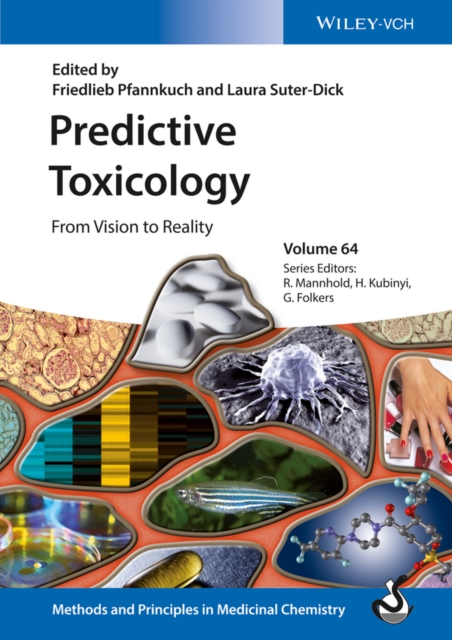
Predictive toxicology : from vision to reality
Tailored to the needs of scientists developing drugs, chemicals, cosmetics and other products this one-stop reference for medicinal chemists covers all the latest developments in the field of predictive toxicology and its applications in safety assessment.
With a keen emphasis on novel approaches, the topics have been tackled by selected expert scientists, who are familiar with the theoretical scientific background as well as with the practical application of current methods. Emerging technologies in toxicity assessment are introduced and evaluated in terms of their predictive power, with separate sections on computer predictions and simulation methods, novel in vitro systems including those employing stem cells, toxicogenomics and novel biomarkers. In each case, the most promising methods are discussed and compared to classical in vitro and in vivo toxicology assays. Finally, an outlook section discusses such forward-looking topics as immunotoxicology assessment and novel regulatory requirements.
With its wealth of methodological knowledge and its critical evaluation of modern approaches, this is a valuable guide for toxicologists working in pharmaceutical development, as well as in safety assessment and the regulation of drugs and chemicals.
eBook