
Catalogue Search | MBRL


Are you sure you want to remove the book from the shelf?

{{itemTitle}}
21,348
result(s) for
"Tractor"
Sort by:


Design and Experiment of an Automatic Leveling System for Tractor-Mounted Implements
The body roll of the tractor propagates through its rigid hitch system to the mounted implement, causing asymmetrical soil penetration depths between the implement’s lateral working elements, which affects the operational effectiveness of the implement. To address this issue, this study developed an automatic leveling system based on a dual closed-loop fuzzy Proportional-Integral-Derivative (PID) algorithm for tractor-mounted implements. The system employed an attitude angle sensor to detect implement posture in real time and utilized two double-acting hydraulic cylinders to provide a compensating torque for the implement that is opposite to the direction of the body’s roll. The relationship model between the implement’s roll angle and the actuator’s response time was established. The controller performed implement leveling by regulating the spool position and holding time of the solenoid directional valve. Simulink simulations showed that under the control of the dual closed-loop fuzzy PID algorithm, the implement’s roll angle adjusted from 10° to 0° in 1.72 s, which was 56.89% shorter than the time required by the fuzzy PID algorithm, with almost no overshoot. This demonstrates that the dual closed-loop fuzzy PID algorithm outperforms the traditional fuzzy PID algorithm. Static tests showed the system adjusted the implement roll angle from ±10° to 0° within 1.3 s. Field experiments demonstrated that the automatic leveling system achieved a maximum absolute error (MaxAE) of 0.91°, a mean absolute error (MAE) of 0.19°, and a root mean square error (RMSE) of 0.28°, with errors within 0.5° for 92.52% of the time. Results from terrain mutation tests indicate that under a sudden 5° vehicle roll angle change, the system confines implement deviation to ±1.5°. The system exhibits high control precision, stability, and robustness, fulfilling the demands of tractor-mounted implement leveling.
Journal Article
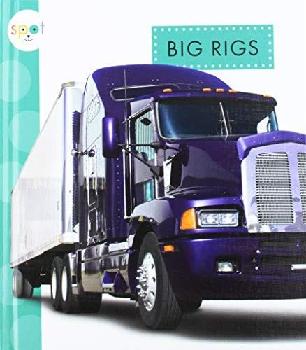
Big rigs
\"This search-and-find book invites early readers to look for new vocabulary words and pictures while giving simple facts about semi trucks and how they are used to haul deliveries across the country\"--Provided by publisher.
Book

Case of Study of the Electrification of a Tractor: Electric Motor Performance Requirements and Design
The focus of this paper is the potential electrification of specialized agricultural tractors involved in vineyards and orchards. This category of machinery has not received research attention to date; however, regulations are encouraging lower emissions and higher efficiency, requiring the adoption of new technologies. Traction makes up only a limited part of this application, and the working cycle is not trivial; therefore, the design of the system is not straightforward. This study takes advantage of experimental measurements carried out under real operating conditions on a traditional specialized tractor, which was chosen as performance target. The performance requirements of the hybrid powertrain components are investigated, with particular focus placed on the electric motor. According to the dimension constraints, the design of the electric motor is carried out considering the requirements in terms of its thermal-equivalent torque and overload capability. The results are validated through a detailed thermal simulation under real duty cycles.
Journal Article


High-speed lateral stability and trajectory tracking performance for a tractor-semitrailer with active trailer steering
An active trailer steering (ATS) controller is investigated to improve the lateral stability and trajectory tracking performance of the tractor-semitrailer. First of all, a linear yaw-roll dynamic model of the tractor-semitrailer with steerable trailer wheels is established, and the model accuracy is verified. Then a linear quadratic regulator (LQR) for actively steering the trailer’s wheels is designed. For the LQR controller, the lateral acceleration and the sideslip angle at the center of gravity (CG) of the trailer are taken as the optimization objectives, and the steering angle of the wheel on the middle axle of the trailer is set as the control input. Finally, the effectiveness of the designed controller is tested based on the co-simulation platform under the single lane-change (SLC) maneuver at the speed of 100 km/h and the double lane-change (DLC) maneuver at the speed of 80 km/h and 88km/h. Research results show that under the high-speed SLC maneuver, the designed LQR controller can significantly improves the lateral stability and trajectory tracking performance of the trailer, and cannot affect apparently the trajectory and dynamic responses of the tractor. Under the high-speed DLC maneuver, the designed controller can still make the tractor-semitrailer reach a new steady state in a short time, and improve the vehicle lateral stability and the trajectory tracking performance of the trailer at the same time.
Journal Article

Big rigs : a first look
\"Big rigs can have eighteen wheels, sometimes more! With all the goods they carry around, they have to be big. Full-color photographs and leveled text give readers a peek inside these huge vehicles\"-- Provided by publisher.
BOOK
Traction Performance Evaluation of the Electric All-Wheel-Drive Tractor
This study aims to design, develop, and evaluate the traction performance of an electric all-wheel-drive (AWD) tractor based on the power transmission and electric systems. The power transmission system includes the electric motor, helical gear reducer, planetary gear reducer, and tires. The electric system consists of a battery pack and charging system. An engine-generator and charger are installed to supply electric energy in emergency situations. The load measurement system consists of analog (current) and digital (battery voltage and rotational speed of the electric motor) components using a controller area network (CAN) bus. A traction test of the electric AWD tractor was performed towing a test vehicle. The output torques of the tractor motors during the traction test were calculated using the current and torque curves provided by the motor manufacturer. The agricultural work performance is verified by comparing the torque and rpm (T–N) curve of the motor with the reduction ratio applied. The traction is calculated using torque and specifications of the wheel, and traction performance is evaluated using tractive efficiency (TE) and dynamic ratio (DR). The results suggest a direction for the improvement of the electric drive system in agricultural research by comparison with the conventional tractor through the analysis of the agricultural performance and traction performance of the electric AWD tractor.
Journal Article

Robust Trajectory Tracking Control of an Autonomous Tractor-Trailer Considering Model Parameter Uncertainties and Disturbances
This paper discusses the robust trajectory tracking control of an autonomous tractor-trailer in agricultural applications. Firstly, considering the model parameter uncertainties and various disturbances, the kinematic and dynamic models of the autonomous tractor-trailer system are established. Moreover, the coordinate transformation is adopted to convert the trajectory tracking error into a new unconstrained error state space model. On this basis, the prescribed performance control (PPC) technique is designed to ensure the convergence speed and final tracking control accuracy of the tractor-trailer control system. Then, this paper designs a double closed-loop control structure. The posture control level adopts the model predictive control (MPC) method, and the dynamic level adopts the sliding mode control (SMC) method. At the same time, it is worth mentioning that the nonlinear disturbance observer (NDO) is designed to estimate all kinds of system disturbances and compensate for the tracking control system to improve the system’s robustness. Finally, the proposed control strategy is validated through comparative simulations, demonstrating its effectiveness in achieving robust trajectory tracking of the autonomous tractor-trailer system.
Journal Article
Energy Saving Performance of Agricultural Tractor Equipped with Mechanic-Electronic-Hydraulic Powertrain System
Tractors are usually applied in field operations, road transport, and other operations. Modern agriculture has higher design requirements for tractor powertrains due to the complicated working environments and various operations. To meet the driving requirements of the tractor under multiple operations, a mechanic-electronic-hydraulic powertrain system (MEH-PS) for tractors has been designed according to the characteristics of the hydro-mechanical composite transmission and electromechanical hybrid system. The principle of multiple driven and transmission modes of MEH-PS are introduced, the speed regulation characteristic curve of hydro-mechanical transmission (HMT) is given, and the related power element model, tractor model, and efficiency model are established. The HMT optimal economy transmission ratio control strategy and hybrid rule-based optimization energy management strategy were developed. Take three typical tractor operations for analysis: ploughing, harvesting, and transport. The results show that the engine operating points are mainly distributed in the higher load area, the tractor maintains high system efficiency, and the relative error between simulated and tested fuel consumption is within 5%, which further proves the reliability of the model. The solution also showed lower fuel consumption in all three operations compared to DLG’s announced PowerShift tractors and CVT tractors. Thus, the powertrain system can meet the tractor’s drive requirements under complex operating conditions and maintain high efficiency and is therefore suitable for tractors that need to operate frequently in the field and on the road.
Journal Article