
Catalogue Search | MBRL


Are you sure you want to remove the book from the shelf?

{{itemTitle}}
1,370
result(s) for
"Tractor trailers."
Sort by:
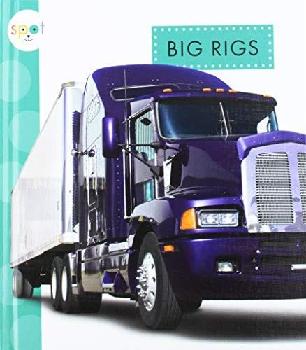
Big rigs
\"This search-and-find book invites early readers to look for new vocabulary words and pictures while giving simple facts about semi trucks and how they are used to haul deliveries across the country\"--Provided by publisher.
Book

High-speed lateral stability and trajectory tracking performance for a tractor-semitrailer with active trailer steering
An active trailer steering (ATS) controller is investigated to improve the lateral stability and trajectory tracking performance of the tractor-semitrailer. First of all, a linear yaw-roll dynamic model of the tractor-semitrailer with steerable trailer wheels is established, and the model accuracy is verified. Then a linear quadratic regulator (LQR) for actively steering the trailer’s wheels is designed. For the LQR controller, the lateral acceleration and the sideslip angle at the center of gravity (CG) of the trailer are taken as the optimization objectives, and the steering angle of the wheel on the middle axle of the trailer is set as the control input. Finally, the effectiveness of the designed controller is tested based on the co-simulation platform under the single lane-change (SLC) maneuver at the speed of 100 km/h and the double lane-change (DLC) maneuver at the speed of 80 km/h and 88km/h. Research results show that under the high-speed SLC maneuver, the designed LQR controller can significantly improves the lateral stability and trajectory tracking performance of the trailer, and cannot affect apparently the trajectory and dynamic responses of the tractor. Under the high-speed DLC maneuver, the designed controller can still make the tractor-semitrailer reach a new steady state in a short time, and improve the vehicle lateral stability and the trajectory tracking performance of the trailer at the same time.
Journal Article

Robust Trajectory Tracking Control of an Autonomous Tractor-Trailer Considering Model Parameter Uncertainties and Disturbances
This paper discusses the robust trajectory tracking control of an autonomous tractor-trailer in agricultural applications. Firstly, considering the model parameter uncertainties and various disturbances, the kinematic and dynamic models of the autonomous tractor-trailer system are established. Moreover, the coordinate transformation is adopted to convert the trajectory tracking error into a new unconstrained error state space model. On this basis, the prescribed performance control (PPC) technique is designed to ensure the convergence speed and final tracking control accuracy of the tractor-trailer control system. Then, this paper designs a double closed-loop control structure. The posture control level adopts the model predictive control (MPC) method, and the dynamic level adopts the sliding mode control (SMC) method. At the same time, it is worth mentioning that the nonlinear disturbance observer (NDO) is designed to estimate all kinds of system disturbances and compensate for the tracking control system to improve the system’s robustness. Finally, the proposed control strategy is validated through comparative simulations, demonstrating its effectiveness in achieving robust trajectory tracking of the autonomous tractor-trailer system.
Journal Article

An Adaptive Backstepping Trajectory Tracking Control of a Tractor Trailer Wheeled Mobile Robot
The considered Tractor Trailer Wheeled Mobile Robot (TTWMR) is type of Mobile Robot including a master robot – Tractor and slave robots – Trailers which moves along Tractor to track a given desired trajectory. The main difficulties of the stabilization and the tracking control of TTWMR are due to nonlinear and underactuated systems subjected to nonholonomic constraints. In order to overcome these problems, firstly, we develop the model of TTWMR and transform the tracking error model to the triangular form to propose a control law and an adaptive law. Secondly, the varying time state feedback controllers are designed to generate actuator torques by using Backstepping technique and Lyapunov direct’s method, in that these are able to guarantee the stability of the whole system including kinematics and dynamics. In addition, the Babarlat’s lemma is used to prove that the proposed tracking errors converge to the origin and the proposed adaptive law is carried on to tackle unknown parameter problem. The simulations are implemented to demonstrate the effective performances of the proposed adaptive law and the proposed control law.
Journal Article

Intelligent coordinated control of an autonomous tractor-trailer and a combine harvester
•The coordinated control of a tractor-trailer and a combine harvester is addressed.•The inter-vehicle connectivity and collision avoidance are preserved during the operation.•The transient and steady-state responses specifications can be adjusted a priori.•Model uncertainties are effectively compensated by a neural adaptive robust controller.•A semi-global uniform ultimate boundedness of the tracking errors are guaranteed.
This paper addresses the tracking control of an autonomous tractor-trailer robot with a desired distance and orientation angle relative to a combine harvester in the presence of model uncertainties for the autonomous unloading of the harvested cereals in agriculture applications. A coordinate transformation and the prescribed performance technique are employed to develop a second-order Euler-Lagrange formulation of the tracking errors. Then, a neural adaptive proportional-integral-derivative (PID) tracking controller is proposed to guarantee that the tracking errors exponentially converge to an arbitrary small ultimate bound with a pre-specified maximum overshoot and convergence rate. By an effective application of the prescribed performance technique, the controller non-singularity, the collision avoidance and connectivity between two vehicles are preserved continuously. The model uncertainties including unknown vehicle parameters, variable trailer mass and moment of inertia during the crop collection, surface friction, climate and crop conditions and external disturbances are compensated by an effective combination of a multi-layer neural network and an adaptive robust control law. Lyapunov's direct method is employed to prove that the tracking errors are semi-globally uniformly ultimately bounded and converge to a neighborhood of the origin with a prescribed performance. Finally, the computer simulation results are presented to demonstrate the effectiveness of the proposed controller.
Journal Article
Trajectory planning and robust tracking control for a class of active articulated tractor-trailer vehicle with on-axle structure
Traditional articulated vehicles exhibit poor steering performance since there exist no direct rotating moment for the underactuated trailers, which cause such vehicles nearly cannot work well in the narrow space. To overcome this shortcoming associated with the traditional articulated vehicles, an active articulated structure is proposed, in which a steering motor is introduced at the articulated joint of tractor and trailer, in addition to utilizing mecanum wheels as trailer wheels. On the basis of this structure, a coordinated control method is designed to ensure the vehicle kinematics constraints and dynamic maneuverability. The coordination control consists of two level controllers. On the level of kinematics, model predictive control (MPC) is adopted as posture controller, which can solve the non-holonomic problem of the whole active articulated tractor-trailer vehicle system; On the dynamic level, a sliding mode control (SMC) is introduced to design a dynamic controller to track the desired velocities generated online, which can increase the robustness of the system. The simulation results show that the proposed active articulated tractor-trailer vehicle system has better maneuverability compared with the traditional one, and the proposed control strategy can ensure the required control effect.
Journal Article

Trajectory tracking control for tractor-trailer vehicles: a coordinated control approach
This article presents a coordinated control approach for a tractor-trailer vehicle such that a satisfactory trajectory tracking performance can be achieved, simultaneously guaranteeing vehicle kinematics restriction and dynamics maneuvers. The coordinated control is consisted of multilevel controllers, each of which is constructed by different algorithms to better clarify their specific advantages and defects, thereby establishing the composition principles of this multilevel architecture. In this regard, on the level of kinematics, linear quadratic regulator and model predictive control (MPC) are used to design the posture controller separately; on the level of dynamics, sliding mode control and global terminal sliding mode control (GTSMC) are introduced to design the dynamic controller for the tracking of the desired velocities generated online. The simulation results suggest that the combination by MPC and GTSMC can offer more favorable control performance for such kind of sophisticated vehicle system.
Journal Article

Remote Driving of Tractor-Trailer Vehicles Based on Predictive Display
This paper presents a remote driving system for tractor-trailer vehicles based on predictive display. The vehicle’s predicted trajectory is superimposed onto the delayed camera image stream by wire frame and presented to the driver wearing a head-mounted display. Predictive display helps the driver to compensate for delayed response of the vehicle as well as to intuitively grasp the spatial relationship between the vehicle and its surroundings. The effectiveness of the developed remote driving system was evaluated with human subjects through tasks simulating different scenes of transportation. The results showed that both efficiency and safety of driving were improved by predictive display.
Journal Article

A novel time-optimal flatness-based trajectory planning for tractor-trailer vehicles
Tra jectory planning for tractor-trailer vehicles (TTVs) presents significant challenges due to their complex characteristics, such as underactuated structures and nonholonomic constraints. This paper proposes a novel time-optimal trajectory planning method based on differential flatness specifically for TTVs. First, a new kinodynamic model for the TTV is established, and its differential flatness property is demonstrated. Building on this foundation, an optimization problem is designed to find time-optimal and kinodynamically feasible trajectories. Finally, a modified model predictive control strategy that incorporates a preview yaw rate reference is employed to track the planned trajectories. The effectiveness of the proposed methodology is verified through various simulations conducted in Matlab/Simulink and Trucksim, and compared across three rigorous criteria: computational efficiency, verification of time optimality, and trajectory quality. Simulation results indicate that our method achieves a 56% reduction in computation time compared to traditional planning methods, guarantees time optimality, and enables better driving curvatures for TTVs than sigmoid-based and hyperbolic-based trajectories.
Journal Article
Quintic Polynomial-based Obstacle Avoidance Trajectory Planning and Tracking Control Framework for Tractor-trailer System
In this paper, a dynamic automatic obstacle avoidance trajectory planning and tracking control framework is proposed for tractor-trailer system. Tractor-trailer is a special class of multibody and nonholonomic system, whose backward and forward operations have difference kinetic mechanisms. Because the obstacle avoidance behaviors are concerned with the two motion modes, the kinematic models including backward and forward movements are firstly derived. Secondly, a time-based quintic polynomial function is developed to plan two kinds of dynamic obstacle avoidance trajectories based on dynamics constraints and the information from on board sensors, so as to minimize the collision risk. Thirdly, a model predictive control (MPC)-based posture controller is designed, by which better tracking performance can be achieved for both forward and backward obstacle avoidance maneuvers. Lastly, the simulation results validate the effectiveness of the proposed dynamic obstacle avoidance framework and the designed methods.
Journal Article