
Catalogue Search | MBRL


Are you sure you want to remove the book from the shelf?

{{itemTitle}}
117
result(s) for
"Traditional ecological knowledge Case studies."
Sort by:

Indigenous knowledge for climate change assessment and adaptation
\"This unique transdisciplinary publication is the result of collaboration between UNESCO's Local and Indigenous Knowledge Systems (LINKS) programme, the United Nations University's Traditional Knowledge Initiative, the IPCC, and other organisations. Chapters, written by indigenous peoples, scientists and development experts, provide insight into how diverse societies observe and adapt to changing environments. A broad range of case studies illustrate how these societies, building upon traditional knowledge handed down through generations, are already developing their own solutions for dealing with a rapidly changing climate and how this might be useful on a global scale. Of interest to policy-makers, social and natural scientists, and indigenous peoples and experts, this book provides an indispensable reference for those interested in climate science, policy and adaptation\"-- Provided by publisher.
Book
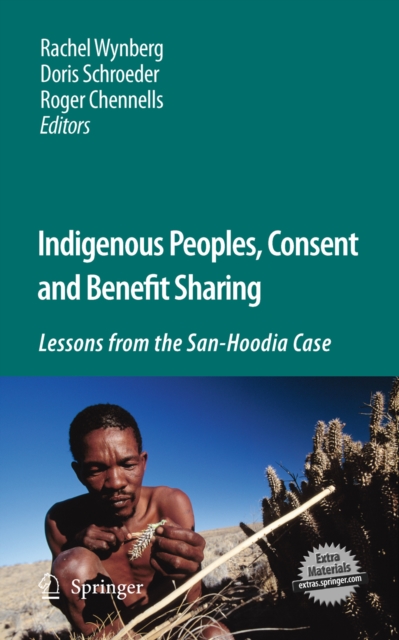
Indigenous peoples, consent and benefit sharing : lessons from the San-Hoodia case
This book offers an in-depth study of a benefit-sharing case that has captured great attention: the use of San knowledge to develop anti-obesity products, and places it in the global context of indigenous peoples' rights, consent and benefit-sharing.
eBook

Genetic resources and traditional knowledge : case studies and conflicting interests
This study describes efforts to define and protect traditional knowledge and the associated issues of access to genetic resources, from the negotiation of the Convention on Biological Diveristy through to the Declaration of Rights of Indigenous Peoples and the Nagoya Protocol.
Book

Hierarchies of knowledge: ethnobotanical knowledge, practices and beliefs of the Vhavenda in South Africa for biodiversity conservation
Background
Indigenous and local knowledge systems are characterised by a ‘knowledge-practice-belief’ complex that plays a critical role for biodiversity management and conservation on indigenous lands. However, few studies take into consideration the interconnected relationship between the social processes underpinning knowledge accumulation, generation and transmission. The study draws on ethnobotanical research to explore plant uses, practices and belief systems developed among the indigenous Vhavenda in South Africa for sustaining indigenous plant resources and highlights some of the forces of change influencing the acquisition and transmission of knowledge.
Methods
Data was collected from September–November 2016 from 31 individuals by means of semi-structured interviews; walks in home gardens, cultivated fields, montane forests and deciduous woodlands; and vouchering of plant species in six villages (Duthuni, Tshidzivhe, Vuvha, Lwamondo, Mashau and Tshiendeulu) in the Vhembe District of South Africa. The Use Value Index (UVI) was used to measure the number of different uses of each species and the Relative Frequency Index (RFI) to measure the local importance of each species. Semi-structured interviews and comparisons with published works also explored cultural practices and belief systems associated with plants, modes and barriers of knowledge transmission.
Results
Eighty-four plant species were reported within 44 families, with Fabaceae representing the highest diversity of plant species. We identified six species not previously documented in the Vhavenda ethnobotanical literature, 68 novel uses of plants and another 14 variations of known uses. Vhavenda plants were predominantly used for food (36.0%) and medicine (26.1%) and consisted mainly of native (73.8%) compared to non-native species (26.2%). The Vhavenda possess a range of practices for managing plant resources that can be attributed to taboos preventing the use of selected species, promotion of sustainable harvesting practices and the propagation of plant species for ecological restoration. Plant knowledge and management practices were transmitted from relatives (48.4%), self-taught through time spent planting and harvesting plants on the land (19.4%), through apprenticeships with traditional healers (16.1%), initiation schools (9.7%) and clan gatherings (6.4%). Changes in traditional learning platforms for knowledge exchange, erosion of cultural institutions and shifting value systems serve as barriers for knowledge transmission among the Vhavenda.
Conclusion
The study points to a need for new partnerships to be forged between conservationists, government actors and local and indigenous knowledge holders to foster hybrid knowledge coproduction for developing strategies to enhance the productivity and biodiversity of indigenous lands.
Journal Article
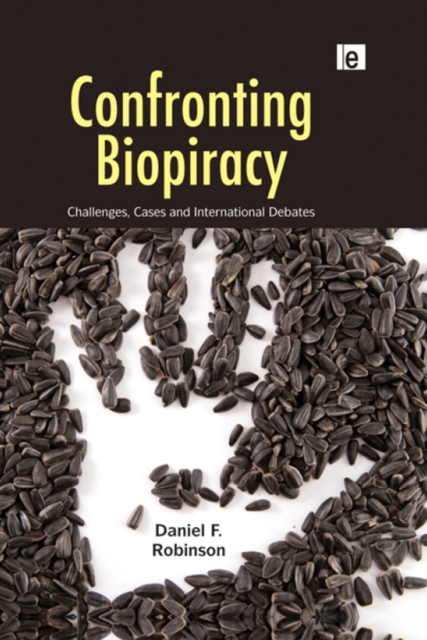
Confronting biopiracy
'Biopiracy' refers either to the unauthorised extraction of biological resources, such as plants with medicinal properties, and associated traditional knowledge from indigenous peoples and local communities, or to the patenting of spurious 'inventions' based on such knowledge or resources without compensation. Biopiracy cases continue to emerge in the media and public eye, yet they remain the source of considerable disagreement, confusion, controversy and grief. The aim of this book is to provide the most detailed, coherent analysis of the issue of biopiracy to date.
The book synthesises the rise of the issue and increasing use of the term by activists and negotiators in the World Trade Organization (WTO) and the Convention on Biological Diversity (CBD), to form a critical understanding of the themes, implications and politics of biopiracy. Taking a case-study based approach, derived from interviews and fieldwork with researchers, government, industry, local farmers, healers and indigenous people, the author sequentially documents events that have occurred in biopiracy and bioprospecting controversies. Implications and ethical dilemmas are explored, particularly relating to work with local communities, and the power relations entailed. Detailing international debates from the WTO, CBD and other fora in an accessible manner, the book provides a unique overview of current institutional limitations and suggests ways forward. Options and solutions are suggested which are relevant for local communities, national governments, international negotiators, NGO and interest groups, researchers and industry.
eBook

Traditional harvest systems as models for advancing understanding of dynamics and resilience in socio‐ecological systems
Traditional harvest entails humans extracting and managing resources from intact, semi‐natural ecosystems. As such, it is inherently comprised of close interactions between humans and ecosystems and may provide unique insight into socio‐ecological systems. Traditional harvest is generally accompanied by traditional resource management and directly influences ecological community dynamics, species reproduction and distribution, and competitive interactions. Meanwhile, ecological processes, seasonality, and natural disturbances influence human behaviors, decision making, activities, and well‐being. As a result of this tight coupling, traditional harvest systems have the potential to serve as important laboratories for the study of ecological community dynamics. Resilience science, in particular, may benefit from greater appreciation of traditional harvest, wherein thresholds and bidirectional feedbacks may be more easily detected and modeled than in more diffuse socio‐ecological systems. Additionally, because traditional harvest links to cultural heritage and traditional ecological knowledge, a greater understanding of these systems may facilitate efforts to support marginalized communities and social equity. We here discuss the value of traditional harvest research for science and society, highlighting as a case study the traditional harvest of Emory oak acorns by Western Apache Tribal Nations. We argue that traditional harvest systems carry important heuristic value but are often assumed to be rare or declining and are therefore relatively neglected by researchers, yet their persistence in modern agriculture‐dominated systems exemplifies resilience. As environmental change persists and natural systems near critical tipping points, understanding the role of humans in ecosystem resilience will be necessary to develop effective and sustainable management.
Journal Article

“Wisdom of the Elders” or “Loss of Experience” as a Mechanism to Explain the Decline in Traditional Ecological Knowledge
Previous studies have reported that older people are more knowledgeable about nature than the younger generation. The relationship between people’s age and level of knowledge can be explained via two mechanisms: knowledge increases with age (wisdom of the elders), and opportunities to acquire knowledge decrease with successive generations (loss of experience). In this study, we examined the association between age and knowledge regarding the use of wild fruits among people living on Awaji Island in Japan. Analysis of the results revealed that the decline in knowledge among young people can be attributed to loss of experience. Furthermore, we found that the channels of knowledge transfer have changed between generations, earlier, children received it from their peers, but in recent years, it has been coming to them from older people and teachers.
Journal Article

Empowering her guardians to nurture our Ocean’s future
Coastal Indigenous and Traditional communities are starting to see changes to their lives from climate change, whether this is from species range changes or displacement from land changes. For many of these communities, the ability to adequately adapt to these changes is limited by the governance structures they are required to live within, which differ from their customary practices and culture. In November 2019, a group of Indigenous and Traditional Peoples, attended the Future Seas 2030 workshop and discussed the consequences of climate change, the biggest barriers for their communities, and barriers for using traditional knowledge in order to contribute towards a more sustainable future that in the end will benefit all of earth’s people. The aim of this workshop was to highlight and give a voice to the various backgrounds and real-life situations impacting on some of the world’s Indigenous and Traditional communities whose connection with the oceans and coasts have been disrupted. This paper presents these issues of oppression, colonisation, language and agency, making it difficult for these groups to contribute to the current management of oceans and coasts, and asks scientists and practitioners in this space to be allies and enable the needed shift to earth’s guardians taking a leading role in nurturing her for our future.
Journal Article
The role of Chinese folk ritual music in biodiversity conservation: an ethnobiological perspective from the Lingnan region
Background
Traditional ecological knowledge embedded in cultural practices is vital for biodiversity conservation but is increasingly under threat from modernization and globalization. This study investigates the role of Chinese folk ritual music in promoting biodiversity conservation, with a focus on Cantonese Opera and agricultural rituals in the Lingnan region of southern China.
Methods
We employed literature review, qualitative fieldwork, and ethnographic analysis, including interviews with local musicians and community members, to investigate how Cantonese Opera and agricultural rituals contribute to ecological sustainability by integrating cultural narratives with environmental stewardship.
Results
The findings reveal three main ways in which Chinese folk ritual music supports biodiversity conservation: (1) fostering ecological understanding through symbolic representations, such as the carp and water buffalo; (2) promoting sustainable practices, including traditional farming techniques and the conservation of wetland ecosystems; and (3) enhancing community cohesion and the transmission of ecological values across generations. Notably, 70% of interviewees highlighted the role of symbolic animals in raising awareness of ecological sustainability.
Conclusions
The study underscores the potential of integrating traditional ecological knowledge with modern conservation strategies. Cultural traditions, such as Cantonese Opera and agricultural rituals, not only preserve biodiversity but also provide a framework for sustainable resource management. These findings highlight the importance of protecting and revitalizing cultural practices to ensure both cultural and ecological resilience in the face of global challenges.
Journal Article
Perception matters: an Indigenous perspective on climate change and its effects on forest-based livelihoods in the Amazon
Indigenous and subsistence-oriented people are particularly sensitive to the impacts of climate change. Strategies to cope and adapt to those changes may rely on traditional ecological knowledge (TEK), which can play an important role for understanding global environmental change at the local level. We aim to provide insights regarding perceptions of climate change, traditional ecological knowledge, and the coping strategies forest-dependent Indigenous people in the Amazon adopt when faced with climate change impacts. The outcomes are based on a mixed set of methods: comprising semi-structured interviews, meteorological data, and photovoice in a case study approach of 49 households of the Indigenous Territory TCO Tacana I in lowland Bolivia. Data were collected in 2013 and 2015; meanwhile, the study area was hit by a severe extreme weather precipitation event and resulting flood in 2014. The results demonstrate that Tacana’s perception of weather trends and those of Western science-trained specialists complement each other because they provide different sets of details. The study revealed 38 traditional weather-related short-term indicators that underline the close interaction of Tacana with the environment. However, their current reliability has been questioned, indicating a need for further observation and research for potential long-term environmental change. Photovoice outcomes suggest that most of the negative effects during the extreme weather event were reported on natural capital in subsistence farming households. Indigenous households relied more on strong bonding and networking social capital (intracommunal and external), less on other capitals to cope with the flood event. Acknowledging TEK insights and changing local ecological indicators contributes information to assist sustainable ecosystem management and build corresponding resilient social systems. Local knowledge can support the understanding of climate and environmental change and local and regional risk management planning, interventions, and policy recommendations. This can considerably enhance the effectiveness and robustness of such strategies while counteracting the loss of traditional ecological knowledge.
Journal Article