
Catalogue Search | MBRL


Are you sure you want to remove the book from the shelf?

{{itemTitle}}
359
result(s) for
"Traditional irrigation"
Sort by:

Enhancing water productivity and wheat (Triticum aestivum L.) production through applying different irrigation manners
The availability and quality of irrigation water in Egypt have become major challenges for the agricultural sector. Thus, increasing water productivity and improving irrigation efficiency are critical goals. A field experiment was conducted under Upper Egypt conditions at the El-Mattana Agricultural Research Station, Luxor governorate, Egypt, to evaluate the effects of different irrigation methods traditional furrow irrigation (Ti), surge furrow irrigation (Si), and alternate furrow irrigation (Ai), on water productivity, growth, and yield of wheat in clay loam soil. The wheat cultivar MISR2 (
Triticum aestivum
L.) was cultivated during the 20/21 and 21/22 growing seasons, using irrigation scheduled after 50% depletion of the soil available water. The results indicated that the treatment of Si produced the greatest plant height (115.0 and 117.7 cm) and grain yield (7.99 and 8.16 t ha⁻¹) for both seasons, respectively. In contrast, the treatment of Ai resulted in the lowest values for these traits (106.4 and 107.2 cm in plant height and 6.94 and 6.24 t ha⁻¹ in grain yield, respectively). The total annual rainfall during the two growing seasons were recorded as 0 mm. The highest amount of irrigation water applied (6522, 6427.2 m
3
ha
-1
) was recorded with the treatment of Ti; while the lowest amount (5493.6, 5175.1 m
3
ha
-1
) was recorded with Ai treatments in 20/21, and 21/22 growing seasons, respectively. The highest irrigation water productivity (1.75 kg m
-3
and 1.35 kg m
-3
in the first season and 1.44 kg m
-3
and 1.20 kg m
-3
in the second season under the treatment of Ai and Si, respectively. The treatment of Ai was most effective for saving water, by 15.8% and 19.48% over the two seasons. These results suggesting that an extra irrigation water amount may be saved without any significant loss in yield of wheat when applying Si irrigation method. This research contributes to developing evidence-based irrigation management strategies for improving wheat production in arid regions.
Journal Article

Traditional Irrigation Systems of Mountainous Agrarian Landscapes: Case Study of Tegalalang Rice Terraces, Bali, Indonesia, and Cacaoiten Rice Terraces, Pangasinan, Philippines
Traditional irrigation systems play a vital role in sustaining agriculture in mountainous agrarian landscapes around the world. However, little is known on how these traditional irrigation systems work, and how they differ from one another. This paper examines the traditional irrigation systems of two distinct regions: the Tegalalang Rice Terraces in Bali, Indonesia, and Cacaoiten Rice Terraces in Pangasinan, Philippines. The aim is to understand their own ways of irrigating their crops, focusing on the source of water, and method how it is being distributed on the fields. The study utilizes a qualitative approach, employing field observations, interviews with local farmers, administrative representatives, and analysis of existing literatures, and documentations. Findings reveal that in Tegalalang, the Subak system prevails, characterized by cooperative water management through a network of embedded pipes regulated by the Subak Management. In contrast, the Inang-ayan system dominates in Cacaoiten, which works through series of canals connected to nearby streams and other sources of water.
Journal Article

Improving rice water productivity using alternative irrigation (case study: north of Iran)
Increasing population and the need for more food has made demands on water resources due to crop productions. One of the strategies for preventing the overuses of safe water resources for agriculture is to increase agricultural productivity by reducing the amount of irrigation water with a slight reduction or even maintaining the yields. Rice production in the northern region of Iran which is strategically and economically very important, requires irrigation management changing with traditional irrigation methods (flood irrigation). This study was conducted in the 2017–2018 crop season to investigate the effect of different irrigation management on water consumption, rice yield and water productivity in paddy field of Babolsar, Mazandaran, Iran. The experiment was performed in the field in a randomized complete block design with three replicates and four treatments in 12 plots. The treatments were TI (Traditional/flood Irrigation), and AI1, AI3 and AI5 (Alternative Irrigation one, three and five days after the disappearance of water from the soil surface, respectively). The number of yield components and the water productivity indexes were determined. The results of this study showed a significant difference (at 1% level) between irrigation treatments in terms of yield components including tiller number, Panicle length, filling percentage, and water productivity, but they did not have any significant effect on plant height and grain yield. The applied irrigation water for TI, AI1, AI3, and AI5 treatments was measured to be 7,940, 4,910, 4,090 and 3,290 m3/ha, respectively. The maximum yield (6.11 ton/ha) belonged to TI treatment and after that with the value of 6.02 ton/ha belonged to AI5 treatment with the least application of water. Rice water productivities for TI, AI1, AI3, and AI5 treatments were calculated to be 0.82, 1.05, 1.38 and 1.83 kg/m3, respectively. Therefore, alternate irrigation five days after the disappearance of surface water (AI5) was accepted to be the best irrigation practices among the other different irrigation management due to 56.07% reduction in water use and only 1.47% reduction in grain yield compared to control treatment.
Journal Article

Factors Influencing the Adoption of Climate-Smart Irrigation Technologies for Sustainable Crop Productivity by Smallholder Farmers in Arid Areas of South Africa
The adoption of climate-smart irrigation technologies amongst smallholder farmers generally remains low beside their role in combating food and nutrition security in a society and in climate change adaptation strategies. This study identified the factors influencing smallholder farmers’ decision to adopt Climate Smart Irrigation Technologies (CSIT) in the Limpopo Province of South Africa. Data were collected through the completion of a face-to-face structured questionnaire by 100 smallholder farmers selected through convenience and purposive sampling. A probit regression and OLS model were used to identify factors that influence the smallholder farmer’s decision to adopt CSIT and the level of adoption. The results indicated that only 46% of the smallholder farmers adopted climate-smart irrigation technologies and suggested that adoption is influenced positively by factors such as gender, age, district, farm size, staple food production and knowledge on CSIT. There is an urgent need for related stakeholders to transform the smallholder farmer subsector through improved extension services, training, adopting resilient crop varieties, promoting underutilized and nutrient-dense crops adapted to harsh local conditions, and other interventions. This should be done by promoting awareness to smallholder farmers regarding these interventions and new technologies that have the potential to improve rural livelihoods and enhance resilience and adaptation.
Journal Article

Comprehensive Proposal for the Rehabilitation of the Acequia del Diablo (Teruel, Spain): Revitalizing Irrigation and Cultural Heritage
The preservation of historic irrigation infrastructure is vital for sustainable water management, especially in regions grappling with rural depopulation, land degradation, and wildfire risk. This study presents a rehabilitation framework for the Acequia del Diablo (Teruel, Spain), a centuries-old gravity-fed canal that supported 60 hectares of agriculture and contributed to ecological connectivity. Its deterioration—following landslides in 1992 and water source loss in 2020—has led to land abandonment, biodiversity decline, and increased wildfire vulnerability. The proposed solution, centered on restoring the original intake at the Azud de Fonseca and stabilizing damaged sections, reestablishes water autonomy and integrates heritage conservation into water governance. A multi-criteria analysis identified this gravity-based alternative as the most technically, economically, and environmentally viable. Drawing from precedents in the literature, the conservation and rehabilitation of historical irrigation systems play a crucial role in sustainable water management in rural areas; this initiative offers a replicable model for other Mediterranean and semi-arid areas. However, challenges include engineering complexity in unstable terrain, administrative delays, and long-term maintenance. Despite these, this intervention enhances rural resilience, wildfire prevention, and biodiversity, while aligning with circular economy principles and European Green Deal objectives.
Journal Article
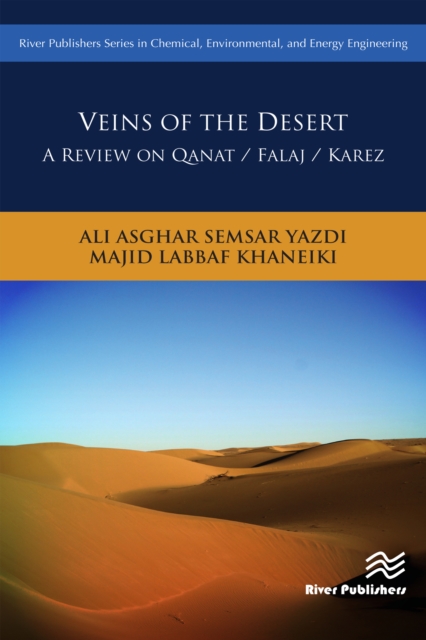
Veins of the Desert: A Review on Qanat / Falaj / Karez
Qanat is a gently sloping subterranean canal, which taps a water-bearing zone at a higher elevation than cultivated lands. A qanat consist of a series of vertical shafts in sloping ground, interconnected at the bottom by a tunnel with a gradient flatter than that of the ground. From the air, this system looks like a line of anthills leading from the foothills across the desert to the greenery of an irrigated settlement. Qanat engages a variety of knowledge and its studying entails an interdisciplinary approach. In a traditional realm, qanats are embraced by a socio-economic system which guarantees their sustainability. The facets of this socio-economic system operate closely together and make it possible for the qanats to remain into future. Veins of the Desert shows that digging a qanat requires a variety of sciences and technologies, though at a glance qanat is just a horizontal tunnel which drains out groundwater. Qanat is a feat of technology left from our ancestors; hidden underground, but its technical importance is apparent, not less valuable than such surface structures as bridges, castles, towers, etc. Qanat enjoys extended structures and sometimes its length reaches tens of kilometers. It passes through geological formations and faces different conditions and obstacles, so the qanat masters' efforts to solve these problems led to the accumulation of knowledge in terms of qanat construction over time, which has been handed down from generation to generation. Qanat is one of the most complicated traditional technologies, which require knowledge on nature ranging from groundwater to management. This indigenous technology used to bring water efficiently from tens of kilometers away to the thirsty lands. This book also gives insight into cultural and social heritages, which have crystalized around this technique. This cultural heritage still influences social life of the people living in such regions as central plateau of Iran where qanat has been the only means of supplying water. This technology is the focal point of the genesis of a particular civilization in the arid and semi-arid regions of Iran. The harsh environment drove those people to invent the technology of qanat and the know-how revolving around it. Qanat carries a tradition of science and technology which used to be practiced in order to overcome the technical obstacles in qanat construction. Thus, qanat is not only an irrigational means, but it should be seen as a technical and cultural legacy which deserves more attention. This book is a small encyclopedia on qanat system, providing the readers with easy answers to their questions about different aspects of this ancient technology.
eBook

Reusing Treated Waste-Water from a Circular Economy Perspective—The Case of the Real Acequia de Moncada in Valencia (Spain)
One of the most important challenges that agriculture faces is sustainable water management and its adaptation to climate change. This adaptation is more important in regions where recurrent draughts and overexploitation of water resources happen. However, historical irrigation systems, such as the Real Acequia de Moncada (RAM) in Valencia, have found innovative approaches to deal with this phenomenon. This paper analyzes the case of Massamagrell and Puçol, which reused the treated waste-water of the closest waste-water treatment plant (WWTP). The study focused from a circular economy perspective on the technological, agronomical, and social implications of this decision. Results show that there are clear benefits for both farmers and WWTP managers. On the one hand, additional nutrients and regularity in their water supply benefit farmers. On the other, WWTP managers can reuse the treated effluent in the system, contributing to the closure of the water cycle and avoiding pumping the treated water into the sea. However, more detailed information and coordination is needed among the different stakeholders. Questions regarding the illegal connection of waste pipes with the traditional irrigation or the payment of pumping costs for reuse have gone unanswered, and there is a need for better reflection from all stakeholders.
Journal Article

A record of N₂O and CH₄ emissions and underlying soil processes of Korean rice paddies as affected by different water management practices
Rice is staple food of half of mankind and paddy soils account for the largest anthropogenic wetlands on earth. Ample of research is being done to find cultivation methods under which the integrative greenhouse effect caused by emitted CH₄ and N₂O would be mitigated. Whereas most of the research focuses on quantifying such emissions, there is a lack of studies on the biogeochemistry of paddy soils. In order to deepen our mechanistic understanding of N₂O and CH₄ fluxes in rice paddies, we also determined NO₃⁻ and N₂O concentrations as well as N₂O isotope abundances and presence of O₂ along soil profiles of paddies which underwent three different water managements during the rice growing season(s) in (2010 and) 2011 in Korea. Largest amounts of N₂O (2 mmol m⁻²) and CH₄ (14.5 mol m⁻²) degassed from the continuously flooded paddy, while paddies with less flooding showed 30–60 % less CH₄ emissions and very low to negative N₂O balances. In accordance, the global warming potential (GWP) was lowest for the Intermittent Irrigation paddy and highest for the Traditional Irrigation paddy. The N₂O emissions could the best be explained (*P < 0.05) with the δ¹⁵N values and N₂O concentrations in 40–50 cm soil depth, implying that major N₂O production/consumption occurs there. No significant effect of NO₃⁻ on N₂O production has been found. Our study gives insight into the soil of a rice paddy and reveals areas along the soil profile where N₂O is being produced. Thereby it contributes to our understanding of subsoil processes of paddy soils.
Journal Article

Comparative Analysis of Animal-Powered Waterwheels in Mediterranean Alluvial Plains: Medjerda (Tunisia) and Jucar Rivers (Spain)
The animal-powered waterwheels of the meandering River Medjerda in Testour, a Tunisian town of Moorish foundation, are compared with those in the alluvial plain of the River Júcar in the region of Ribera Alta (Valencia, Spain). The methodology used in this research is qualitative-analytical and based on the comparative study of groundwater catchment systems on Mediterranean alluvial plains. The environmental characteristics (geological, climatic, hydrological and hydrogeomorphic) of both sectors are analysed to confirm the environmental similarities between both sites. The location and characteristics of these systems have also been analysed, including aspects such as technological evolution and current status, as well as their coexistence with other traditional irrigation systems. The similarity in the location, characteristics, and state of the systems in the two chosen sectors is confirmed, as well as the near absence of significant differences. For this reason, the work highlights the importance of environmental factors as opposed to cultural factors in the use and location of waterwheels.
Journal Article
The Price of Sustainability of a Traditional Irrigation System in Northern Thailand
In recent years in northern Thailand, the traditional surface-water irrigation system known as muang fai has been challenged by the introduction of small-scale, groundwater pumping technology. This trend presents concerns about the sustainability of the system, as the new technology uses more water but produces lower-quality agricultural outputs. In this paper, we provide evidence that farmers who use relatively modern irrigation technology (ground water pumping systems) are willing to switch to a more traditional (hundreds of years old) and more sustainable surface water irrigation system. In the Sop Rong region in northern Thailand, we surveyed 570 longan farmers, approximately half being muang fai members and half using pumped groundwater. We designed an experiment for the second group to check whether they were interested in becoming muang fai members in a scenario where they have access to the canal system. We found that almost half of them were willing to pay fees to become members and that the negative relationship between membership fees and the willingness to join is robust after controlling for all other relevant factors. Despite this positive result for sustainability, suggesting that there is a price at which many farmers would be willing to switch to a more water-saving system, few farmers are making the shift. We conclude that there are strong social pressures that discourage them from doing so. Such social influences are probably an important and often overlooked determinant of efforts to achieve sustainability.
Journal Article