
Catalogue Search | MBRL


Are you sure you want to remove the book from the shelf?

{{itemTitle}}
141,571
result(s) for
"Traditional medicine"
Sort by:
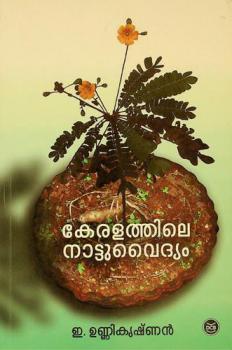
Kēraḷattile nāṭṭuvaidyaṃ : oru paristhitināṭṭar̲iv paṭhanaṃ
Folk medical practices of Kerala, an ethno-anthropological study.
Book

Healing elements
Tibetan medicine has come to represent multiple and sometimes conflicting agendas. On the one hand it must retain a sense of cultural authenticity and a connection to Tibetan Buddhism; on the other it must prove efficacious and safe according to biomedical standards. Recently, Tibetan medicine has found a place within the multibillion-dollar market for complementary, traditional, and herbal medicines as people around the world seek alternative paths to wellness. Healing Elements explores how Tibetan medicine circulates through diverse settings in Nepal, China, and beyond as commercial goods and gifts, and as target therapies and panacea for biophysical and psychosocial ills. Through an exploration of efficacy – what does it mean to say Tibetan medicine \"works\"? – this book illustrates a bio-politics of traditional medicine and the meaningful, if contested, translations of science and healing that occur across distinct social ecologies.
eBook

Healing with poisons : potent medicines in medieval China
\"Open access edition: DOI 10.6069/9780295749013 At first glance, medicine and poison might seem to be opposites. But in China's formative era of pharmacy (200-800 CE), poisons were strategically employed as healing agents to cure everything from abdominal pain to epidemic disease. Healing with Poisons explores the ways physicians, religious figures, court officials, and laypersons used toxic substances to both relieve acute illnesses and enhance life. It illustrates how the Chinese concept of du-a word carrying a core meaning of \"potency\"-led practitioners to devise a variety of methods to transform dangerous poisons into effective medicines. Recounting scandals and controversies involving poisons from the Era of Division to the Tang, historian Yan Liu considers how the concept of du was central to how the people of medieval China perceived both their bodies and the body politic. He also examines the wide range of toxic minerals, plants, and animal products used in classical Chinese pharmacy, including everything from the herb aconite to the popular recreational drug Five-Stone Powder. By recovering alternative modes of understanding wellness and the body's interaction with foreign substances, this study cautions against arbitrary classifications and exemplifies the importance of paying attention to the technical, political, and cultural conditions in which substances become truly meaningful. Healing with Poisons is freely available in an open access edition thanks to TOME (Toward an Open Monograph Ecosystem) and the generous support of the University of Buffalo\"-- Provided by publisher.
BOOK

Therapeutic potential of ayahuasca in grief: a prospective, observational study
RationaleRecent studies have assessed the therapeutic potential of ayahuasca for the treatment of depression with promising preliminary results.ObjectivesHere, we examine the course of grief over 1 year of follow-up in a bereaved sample that attended a center in Peru to participate in indigenous Shipibo ayahuasca ceremonies. We also explore the roles of experiential avoidance and decentering as mechanisms of change.MethodsBereaved participants who attended the ayahuasca center responded to an online survey that included the Texas Revised Inventory of Grief, Symptom Assessment-45, WHO Quality of Life-Bref, Acceptance and Action Questionnaire, and Decentering. Baseline assessment was completed by 50 individuals (T0). Of these, 39 completed the post-assessment at 15 days (T1), 31 at 3 months (T2), 29 at 6 months (T3), and 27 at 12 months (T4) after leaving the retreat. Pearson’s analysis was performed to examine the relationship between the severity of grief and mechanisms of change during the period of T0 and T1.ResultsA significant decrease in Texas Revised Inventory was observed at all time points (T1: Cohen’s d = 0.84; T2: Cohen’s d = 1.38; T3: Cohen’s d = 1.16; T4: Cohen’s d = 1.39). We found a relationship between experiential avoidance (r = 0.55; p < .01), decentering (r = − 0.47; p < .01), and a reduction in the severity of grief.ConclusionsOur results suggest that the ceremonial use of ayahuasca has therapeutic value by reducing the severity of grief. Acceptance and decentering are both psychological processes that mediate the improvement of grief symptoms.
Journal Article

Where dreams come alive : the alchemy of the African healer
\"This work explores the deep archetypal patterns embedded in the African healing initiation, the alchemical opus, and the individuation process through the work of C. G. Jung. The African healer subscribes to dreams the value and meaning that parallels the importance given to dreams in Jungian psychology. As such, this work focuses on the dream and alchemical symbolism within the stages of the African healing initiation, and documents the journey of a Zulu woman's heroic confrontation with her calling to be a healer. The main focus being striving towards wholeness or a transpersonal unity through the direct experience of the unintentional: The numinous \"other\" with respect to the autonomous reality of the objective psyche, the Self. Here we are offered a return, with consciousness, to the instincts, to an inner numinosity, to the phenomenon of psyche and matter, and spirit in nature. The author's direct and personal collaboration with various indigenous healing communities in South and Southern Africa, Namibia and Botswana provides a rich backdrop to and foundation for her work. The meeting of two cultures in the therapeutic temenos and the ceremonial rituals of the African healing initiation provides the vessel for the transformation necessary for the emergence of something new and as yet largely unarticulated\"-- Provided by publisher.
Book

Bodies, Politics, and African Healing
This subtle and powerful ethnography examines African healing and its relationship to medical science. Stacey A. Langwick investigates the practices of healers in Tanzania who confront the most intractable illnesses in the region, including AIDS and malaria. She reveals how healers generate new therapies and shape the bodies of their patients as they address devils and parasites, anti-witchcraft medicine, and child immunization. Transcending the dualisms between tradition and science, culture and nature, belief and knowledge, Langwick tells a new story about the materiality of healing and postcolonial politics. This important work bridges postcolonial theory, science, public health, and anthropology.
eBook


From traditional medicine to modern medicine: the importance of TCM regulatory science (TCMRS) as an emerging discipline
Traditional Chinese medicine (TCM) has become a standardized medical system through systematic development across global healthcare practices. However, concerns persist regarding the safety, efficacy and quality of traditional medicinal products. Traditional Chinese medicine regulatory science (TCMRS) has emerged as an interdisciplinary field to address these challenges. This discipline integrates multidisciplinary knowledge to develop new tools, standards and approaches for systematic evaluation of benefit-risk profiles. This approach aims to ensure the quality, safety, and efficacy of TCM products, while also supporting the development of scientifically grounded regulatory frameworks that accommodate traditional medicine’s distinctive characteristics. Through comprehensive quality management from raw material sourcing to production processes and clinical validation, developing and adopting TCMRS is entrusted to significantly strengthen its regulatory oversight. This review examines the critical scientific challenges in the modernization process of TCM, analyzes the conceptual foundations of TCMRS, evaluates its pivotal role in pharmaceutical transformation, and highlights its essential function in preserving traditional knowledge while fostering therapeutic innovation. Key challenges for TCMRS implementation include reconciling traditional epistemologies with modern pharmaceutical paradigms, standardizing complex herbal formulations, and developing rigorous evaluation protocols for decoctions and compound preparations. The integration of advanced methodologies, including systems biology, network pharmacology, artificial intelligence, and nanotechnology, into regulatory frameworks, combined with enhanced international cooperation, remains a crucial strategy for tackling global public health challenges. Future development trajectories for TCMRS will prioritize lifecycle management strategies, technology-driven innovation systems, and global knowledge-sharing initiatives, propelled by advancements in life sciences and information technology. This evolution requires careful balancing of three fundamental elements: theoretical development in traditional medicine, integration of emerging technologies, and maintenance of regulatory system stability. It is crucial to innovate the working mechanisms of the TCMRS researcher alliance and the global policy-coordination mechanism for TCM regulation, enhance the conversion of basic disciplines into regulatory applications, and support the establishment of an excellent TCM regulatory system with scientific decision-making. These efforts are essential for promoting the high-quality development of the TCM industry and boosting its international influence and presence.
Journal Article


Traditional Indigenous medicine in North America: A scoping review
Despite the documented continued use of traditional healing methods, modalities and its associated practitioners by Indigenous groups across North America, it is presumed that widespread knowledge is elusive amongst most Western trained health professionals and systems. This despite that the approximately 7.5 million Indigenous peoples who currently reside in Canada and the United States (US) are most often served by Western systems of medicine. A state of the literature is currently needed in this area to provide an accessible resource tool for medical practitioners, scholars, and communities to better understand Indigenous traditional medicine in the context of current clinical care delivery and future policy making.
A systematic search of multiple databases was performed utilizing an established scoping review framework. A consequent title and abstract review of articles published on traditional Indigenous medicine in the North American context was completed.
Of the 4,277 published studies identified, 249 met the inclusion criteria divided into the following five categorical themes: General traditional medicine, integration of traditional and Western medicine systems, ceremonial practice for healing, usage of traditional medicine, and traditional healer perspectives.
This scoping review was an attempt to catalogue the wide array of published research in the peer-reviewed and online grey literature on traditional Indigenous medicine in North America in order to provide an accessible database for medical practitioners, scholars, and communities to better inform practice, policymaking, and research in Indigenous communities.
Journal Article