
Catalogue Search | MBRL


Are you sure you want to remove the book from the shelf?

{{itemTitle}}
26,765
result(s) for
"Transfer students."
Sort by:

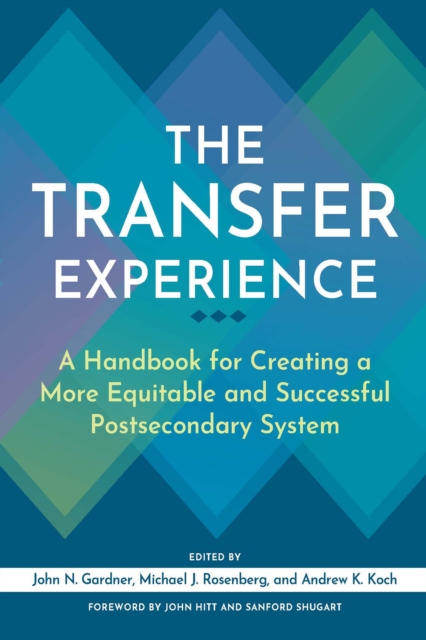
The Transfer Experience
At last there is a handbook that everyone in higher education can use to help increase transfer student success. This comprehensive resource has been brought together to meet the need for a truly holistic approach to the transfer experience. The book brings together research, theory, practical applications, programmatic illustrations, case studies, encouragement, and inspiration, and is supplemented by an online compendium for continual updates of resources, case studies, and new developments in the world of transfer.Based on a totally different way of thinking about, understanding, and acting to increase transfer student success, The Transfer Experience goes far beyond the traditional, limited view of transfer as a technical process simply about articulating credits, a stage of student development, or a novel enrollment management strategy. Rather, the book introduces a stimulating array of new perspectives, resources, options, models, and recommendations for addressing the many needs of this huge cohort - making the academic, civic, and social justice cases for improving transfer at both transfer-sending and transfer-receiving institutions.
eBook

Your letter
\"Sori Lee is hoping for a fresh start at her new school--which is easier said than done when every single thing reminds her of why she transferred. As luck would have it, an anonymous letter taped to the bottom of her desk provides a perfect distraction. Little does Sori know that she's about to embark on the scavenger hunt of a lifetime! What starts off as simple curiosity becomes a healing journey as Sori discovers just how far a small act of kindness can go\"--Back cover.
BOOK

The Multiple Dimensions of Transfer: Examining the Transfer Function in American Higher Education
Purpose: This article examines the literature on the transfer function in American higher education, and it reviews three primary dimensions of transfer: (a) the transfer function and pathways, (b) transfer access and experiences, and (c) state transfer policy. Argument: This literature review engages core transfer concepts and we argue that the literature is dominated by the vertical transfer pathway, despite multiple transfer pathways and definitions. The research also suggests that students’ transfer experiences and outcomes are not equal, institutional cultures and policies are not designed to support diverse students, and the inadequate transfer structures and policies need to be reformed to improve transfer outcomes for students of color, low-income students, and first-generation students. Finally, we argue that the nature and distribution of state transfer policies is uneven and the impact of state transfer policies on student outcomes is mixed, so we know little about their efficacy. Conclusion: We conclude the article with a set of priorities for future transfer research that address gaps and limitations of the existing literature.
Journal Article

Kiniro mosaic. 7
\"Shino and friends are a little uneasy about moving to a higher grade, but a school trip to Nara and Kyoto (and the chance to make new memories!) is just around the corner! As a huge fan of Japanese culture, Alice should be excited, but she's just too worried. The new school year is about to begin-- will everyone still be in class together for their last big high school excursion?\"--Back cover.
Book

Unlocking student potential through engagement: exploring the learning outcomes and career intentions of medical students transferring from junior colleges to undergraduate universities in China
Several studies have examined whether students transferring from junior colleges have a sufficient educational foundation to succeed at the university level. However, a controversy has arisen because prior studies offer conflicting results. Moreover, these studies have not looked at medical transfer students. This study examined the differences in learning outcomes and career intentions (CI) between transfer students and those who began at medical universities in China (native students), focusing on student engagement. The sample data, from the 2020 China Medical Student Survey, included fifth-year (graduate year) medical students from 39 universities (6,712 native and 1,582 transfer students). A conceptual framework was constructed using the input-environment-output model and student engagement theory. Engagement was categorized into behavioral, emotional, and cognitive dimensions. The analysis encompassed t-tests, chi-square tests, multivariable linear and logistic regressions, Shapley value modeling, and path analysis. The results showed that a significantly higher proportion of transfer students came from disadvantaged backgrounds and had lower pre-entry abilities, although their self-reported engagement was higher. Thus, engagement contributed to their ability to catch up in terms of learning outcomes, with emotional engagement having significant direct and indirect positive associations with learning outcomes and CIs. Ultimately, there were no significant differences in learning outcomes and CIs between transfer and native students. The findings suggest that transfer students are more engaged despite their disadvantages and show no significant weakness in their learning outcomes or CI. This underscores the importance of preserving and enhancing access to undergraduate studies for Chinese medical students in junior colleges, thereby promoting educational equity.
Journal Article

The Correlates of Credit Loss: How Demographics, Pre-Transfer Academics, and Institutions Relate to the Loss of Credits for Vertical Transfer Students
Despite the long-standing centrality and growing prevalence of transfer in the American postsecondary system, students, college professionals, and policymakers decry the lack of credit transferability between colleges. However, limited research has examined the factors most related to the magnitude of credit loss students experience. This study investigated how students' pre-transfer academic characteristics, demographic characteristics, and the institutions they transferred to and from influenced the magnitude of credit loss they experienced. Data is drawn from statewide cohorts of vertical transfer students in two states: Hawaii and North Carolina. Although a number of demographic and pre-transfer academic factors were found to relate to credit loss, the predictors of credit loss varied appreciably across states. Given the significant variability in how states and postsecondary systems manage transfer and articulation, the findings point to the need for additional state-level research exploring the determinants of credit loss for transfer students.
Journal Article
Heading in the Right Direction? Examining the Relationship of Transfer Patterns and Income Status on College Student Outcomes
Given the prevalence of transfer activity, education stakeholders must understand how transfer may be associated with student outcomes. Such knowledge is critical, as the COVID-19 pandemic and economic downturn have impacted college enrollment and student transfer behavior. Relying on a sample of 6510 undergraduate students from BPS:12/17 data, we conducted analyses using multiple regression to examine the relationship between student transfer direction and two student outcomes: time to degree and cumulative loan debt. Further, we analyzed whether these relationships varied by income status, using adjusted gross income (AGI) as a proxy. We found that transferring from one postsecondary institution to another may extend time to degree by one academic semester and result in increased student loan debt, with these findings varying by income level.
Journal Article
Student Transfer-Out Behavior at Four-Year Institutions
While abundant studies on college student departure exist, few studies focus on student transfer-out behaviors. One may reasonably believe that transfer students leave their institutions at different times for different reasons. Coupled with the national dataset, this study longitudinally investigated transfer students who left their initial 4-year institutions. Results suggest that student characteristics, such as race and family income, had varying effects on the timing of transfer. Social integration was found to have significant effects on reducing the likelihood of transfer.
Journal Article

Differences in study workload stress and its associated factors between transfer students and freshmen entrants in an Asian higher education context
Unlike the studies of freshmen entrants, the learning experiences of community college transfer (CCT) students in the receiving university is a topic that has only started to gain attention in recent decades. Little is known about the differences between CCT and freshmen entrants with regard to their study workload stress and its relationship with their perceptions of the teaching and learning environment, approaches to learning, self-efficacy and generic skills. The purpose of our study was to address this gap. This was a cross-sectional survey study conducted from April 2018 to November 2018 in a university in Hong Kong. The HowULearn questionnaire was adapted to local usage and validated for data collection. In total, 841 CCT students and 978 freshmen entrants completed the survey. The respondents were aged between 19 and 52 years (mean = 21.6, SD = 1.92), and 66.0% were women. The HowULearn questionnaire was determined by factor analyses to have eight factors. The reliabilities of the eight factors were found to be acceptable (Cronbach alphas = 0.709-0.918). The CCT students scored significantly higher than the freshmen entrants for perceived study workload stress and surface approaches to learning, but lower on teaching for understanding & encouraging learning, peer support, and self-efficacy beliefs. The surface approach to learning, deep & organized studying, alignment & constructive feedback, and generic skills were found to be predictors of study workload stress in both groups of students, and in the overall student data. This study has shown that CCT students and freshmen entrants differed with regard to their study workload stress and learning experiences. Our findings provide a message, both for educators in higher education and policy makers in the government-there is not a one-size-fits-all approach to different student populations when it comes to enhancing their learning experiences.
Journal Article